
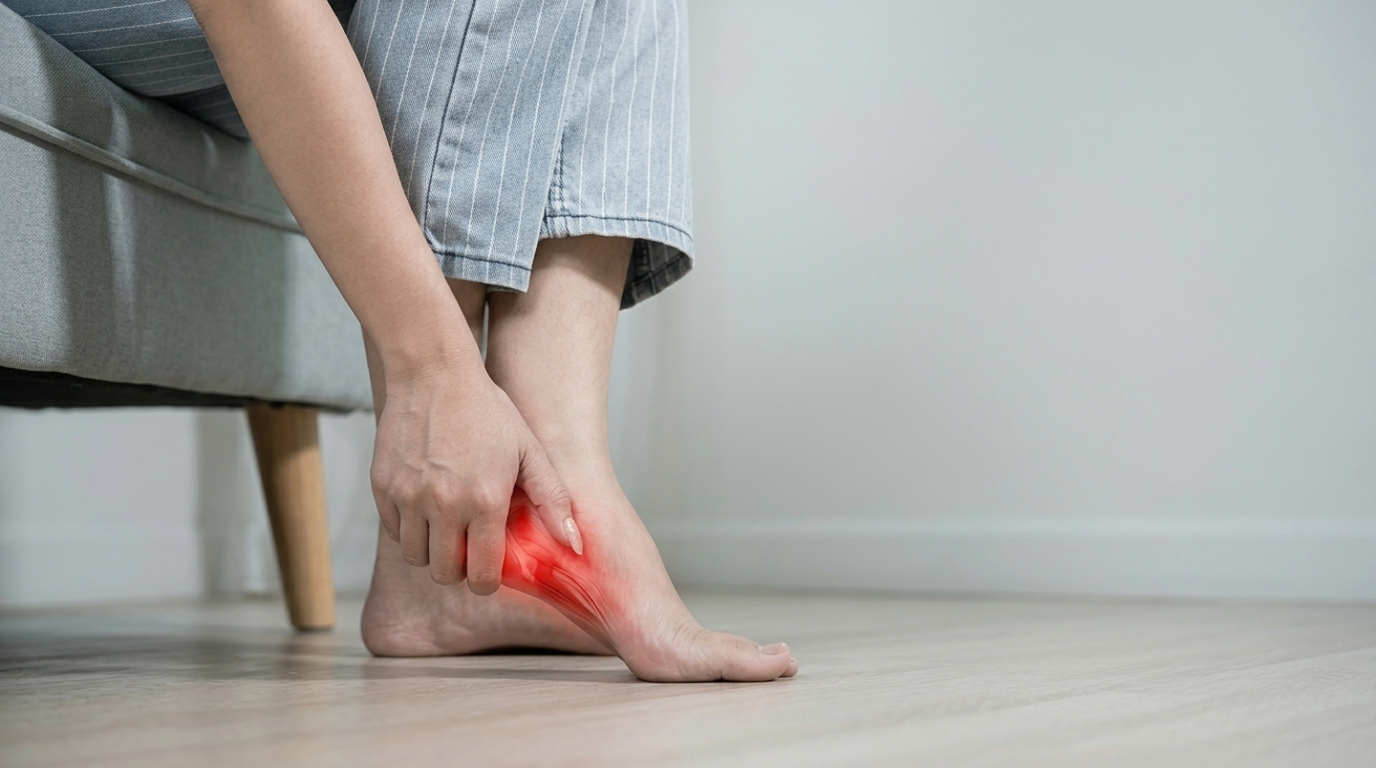
Heel discomfort can make simple activities like walking, standing, or getting out of bed feel difficult. Whether it starts with your first steps in the morning or develops after a long day, finding the right heel pain remedies can help you feel more comfortable and stay active. Understanding the possible causes and making small lifestyle changes can also help protect your feet.
Why Does Heel Pain Occur?
Some nutritional deficiencies, such as vitamin B12 deficiency, may affect nerve health and cause unusual sensations in the feet.
There are several heel pain causes that may affect your ability to walk comfortably. The discomfort can develop gradually or appear after an increase in physical activity.
Common reasons include:
-
Plantar fasciitis: Irritation of the thick band of tissue connecting the heel bone to the toes.
-
Achilles tendon strain: Repeated stress on the tendon connecting the calf muscles to the heel.
-
Unsupportive footwear: Shoes with poor cushioning or inadequate arch support may increase pressure.
-
Prolonged standing: Spending long hours on hard surfaces can place additional stress on the feet.
-
Increased exercise: Suddenly increasing running, walking, or jumping activities may contribute to discomfort.
Understanding the cause of heel pain in foot discomfort can help you choose suitable daily habits. Nutritional health also plays a role in overall bone health, as vitamin K deficiency may affect normal bone health. For example, plantar fasciitis often causes discomfort underneath the heel, particularly during the first steps after waking up.
What Are the Common Signs of Heel Pain?
The symptoms can vary depending on the underlying reason. Some people experience discomfort only during movement, while others notice it even when resting. Certain viral illnesses, such as chikungunya, may also cause joint and muscle pain, as explained in symptoms of chikungunya.
Common signs include:
-
Sharp pain underneath the heel when taking the first steps in the morning.
-
Tenderness after standing or walking for long periods.
-
Stiffness around the heel or bottom of the foot.
- Simple home-care practices may help reduce heel pain and improve everyday comfort.
-
Discomfort after running or jumping.
-
Pain near the back of the heel.
Some people also experience foot pain at the heel after wearing uncomfortable shoes or increasing their daily activity. Recognizing these changes can help you identify activities that increase discomfort.
7 Heel Pain Remedies You Can Try at Home
Simple lifestyle adjustments may help reduce pressure on your feet and improve everyday comfort. Here are seven practical options to consider.
1. Apply an Ice Pack
Cold therapy may help soothe soreness after a long day of walking or standing.
-
Wrap an ice pack in a thin towel.
-
Apply it to the uncomfortable area for 15–20 minutes.
-
Avoid placing ice directly against your skin.
This simple habit may help calm temporary discomfort.
2. Try Gentle Heel Stretches
Stretching the calf muscles and tissues around the foot may improve flexibility and reduce stiffness.
Some useful heel stretches include:
-
Calf stretches against a wall.
-
Gentle towel stretches while sitting.
-
Slowly stretching the bottom of your foot.
Avoid forcing any movement that increases discomfort. Gentle stretching may be particularly helpful for people experiencing plantar fasciitis-related stiffness.
3. Wear Supportive Footwear
Your shoes influence how pressure is distributed across your feet. Wearing comfortable footwear with cushioning and suitable arch support may make walking easier.
Consider these features:
-
Soft, cushioned soles.
-
Proper arch support.
-
Enough room for your toes.
-
A comfortable fit around the heel.
Avoid frequently walking barefoot on hard surfaces if this increases your discomfort.
4. Use Heel Cushions
Heel cushions and supportive shoe inserts can provide additional cushioning. They may help distribute pressure more evenly and reduce direct impact during everyday activities.
Choose inserts that fit comfortably inside your shoes without making them too tight.
5. Reduce High-Impact Activities
Running, jumping, and prolonged walking can increase pressure on sensitive areas of your feet.
Consider switching temporarily to gentler activities, such as:
-
Swimming.
-
Easy cycling.
-
Gentle walking, if comfortable.
When considering heel pain and exercise, choose activities that maintain movement without placing excessive impact on your heels.
6. Massage Your Feet Gently
A gentle foot massage may help relax tight muscles and improve comfort after standing for extended periods.
You can:
-
Massage the sole using your fingers.
-
Slowly roll your foot over a soft ball.
-
Use gentle pressure around the arch.
Avoid pressing directly on areas that feel particularly painful.
7. Give Your Feet Enough Rest
Rest is important when your feet feel overworked. Allowing time between demanding activities may reduce repeated pressure on the heel.
Try alternating active periods with short breaks, especially if your daily routine involves prolonged standing.
How Can You Prevent Heel Pain?
Including vitamin B12-rich foods in your daily meals, such as eggs, dairy products, and fish, can support nerve health. You can find more options in this guide to vitamin B12 foods.
-
Maintain a comfortable body weight to reduce unnecessary pressure on your feet.
-
Choose supportive shoes for walking and exercise.
-
Increase physical activity gradually.
-
Stretch your calves and feet regularly.
-
Avoid standing in one position for extended periods.
-
Include low-impact activities in your fitness routine.
Regular movement also supports overall health by improving mobility, cardiovascular fitness, muscle strength, and mood. The key is choosing activities that feel comfortable for your feet.
When Should You Pay Attention to Heel Pain?
Occasional soreness after increased activity may settle with rest and simple adjustments. However, persistent or worsening discomfort deserves attention.
Muscle discomfort can sometimes occur alongside other physical symptoms, such as muscle cramps at night, which may also affect sleep and daily comfort.
Be mindful of symptoms such as:
-
Severe or sudden heel pain.
-
Significant swelling or redness.
-
Difficulty putting weight on your foot.
-
Numbness or tingling.
-
Pain that continues despite reducing physical activity.
These signs may indicate an underlying issue that needs further evaluation.
Conclusion
Taking care of your feet through supportive footwear, gentle stretching, rest, and suitable daily activities can make a difference. The right Heel Pain Remedies may help reduce everyday discomfort, improve mobility, and support overall well-being. Pay attention to your body’s signals and make gradual changes to keep your feet comfortable and active.
Frequently Asked Questions About Heel Pain Remedies
1. What is plantar fasciitis?
It is irritation of the plantar fascia, a thick band of tissue supporting the foot arch.
2. What are the common plantar fasciitis symptoms?
Plantar fasciitis may cause sharp heel discomfort after waking up, stiffness in the foot, and soreness following long periods of standing.
3. Is heel pain a sign of cancer?
Heel pain alone is rarely a sign of cancer. Persistent unexplained pain or an unusual lump deserves attention.
4. Can exercise make heel pain worse?
Yes. High-impact activities may increase discomfort, while gentle stretching and low-impact exercise may be more comfortable.
References:
- https://my.clevelandclinic.org/health/symptoms/heel-pain
- https://pmc.ncbi.nlm.nih.gov/articles/PMC5962984/

No Comments