
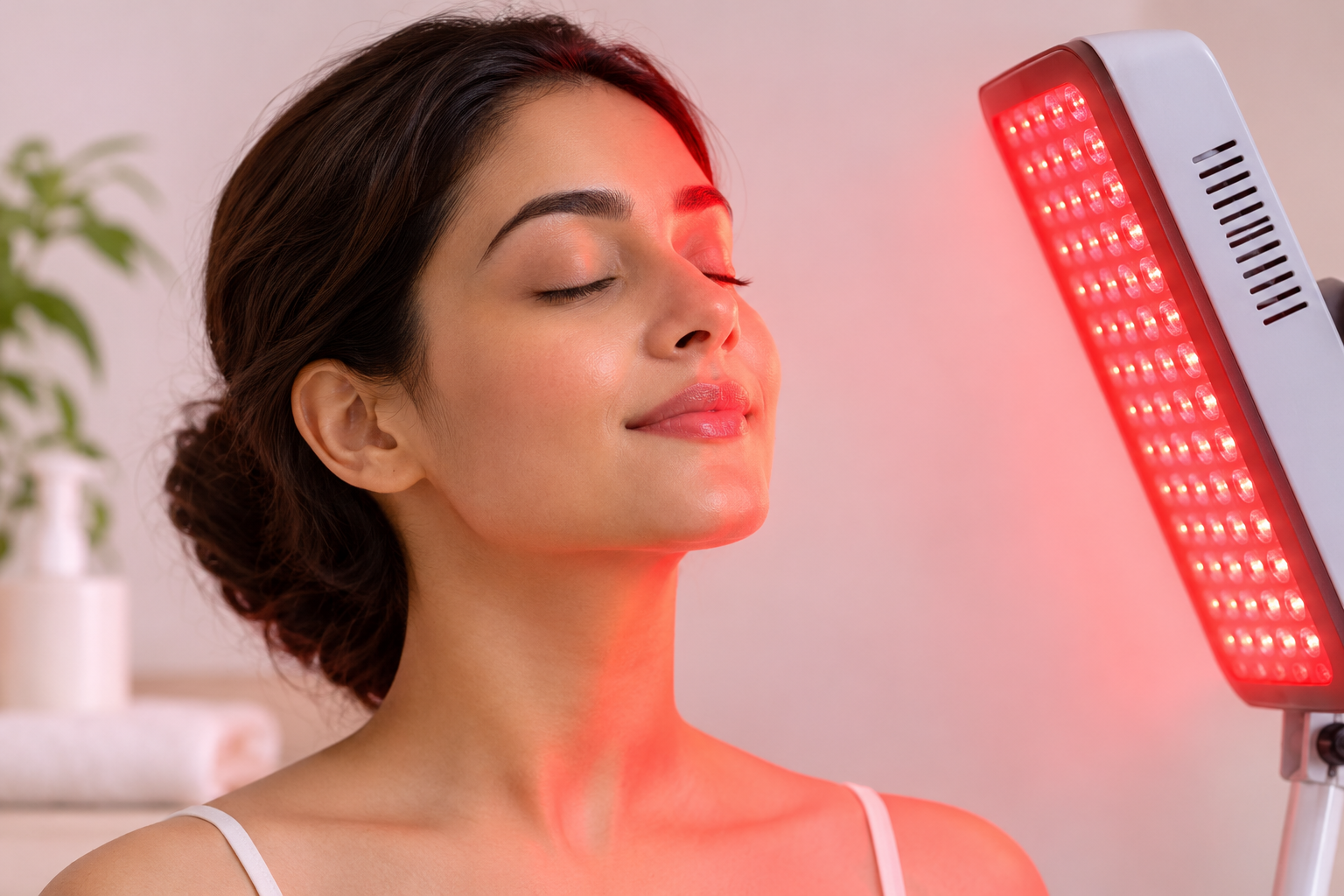
Achieving smooth, healthy-looking skin with an even complexion is a common skincare goal. However, factors such as ageing, sun exposure, inflammation, and environmental stress can lead to uneven skin tone, fine lines, and dullness. Red light therapy has gained attention as a non-invasive skincare treatment that may help improve these concerns. But does it really work?
Red light therapy for skin tone uses specific wavelengths of light to support cellular activity and skin repair. With regular and appropriate use, it may improve skin texture, reduce the appearance of fine lines, and promote a healthier-looking complexion. Let’s understand how it works, its benefits, and how to use it safely.
What Is Red Light Therapy for Skin Tone?
Red light therapy, also known as photobiomodulation, is a non-invasive treatment that uses low-level red or near-infrared light. Unlike ultraviolet (UV) rays, it does not work by tanning or deliberately damaging the skin.
The light interacts with cellular components and may influence energy production, repair processes, and collagen-related activity. These effects can support smoother-looking skin and improve certain visible signs of ageing.
Understanding what does red light therapy do for your face starts with recognising that it supports natural skin functions rather than instantly changing your skin colour.
How Does Red Light Therapy Improve Skin Tone?
Red light therapy may contribute to a more even-looking complexion through several processes:
-
Supports collagen production: Collagen helps maintain skin firmness and elasticity. Supporting collagen activity may reduce the appearance of fine lines.
-
Improves skin texture: Regular treatments may help make rough or uneven skin appear smoother.
-
Supports skin recovery: Red light may influence cellular repair processes and help improve the appearance of reduce stressed skin.
-
Reduces visible redness: Some studies suggest that red light may help improve certain forms of skin redness and inflammation.
However, red light therapy is not a guaranteed treatment for pigmentation, melasma, or deep dark spots. Results depend on the individual’s skin condition and the device used.
Red Light Therapy for Skin Benefits
There are several potential Red light therapy for skin benefits that make this treatment popular in modern skincare routines.
Better-looking skin texture: It may support smoother skin and improve the appearance of rough patches.
Reduced appearance of fine lines: By supporting collagen-related activity, it may help soften visible signs of ageing.
Improved skin firmness: Some research suggests that red light treatments can improve skin elasticity, although results vary.
Healthier-looking complexion: Regular use may support a more refreshed and radiant appearance.
These benefits make red light therapy an interesting complementary option for people looking to improve overall skin appearance.
How to Use Red Light Therapy for Skin at Home
Using Red light therapy for skin at home can be convenient when you choose an appropriate device and follow its instructions.
Here is a step-by-step approach:
Step 1: Choose a suitable device. Look for a reputable LED mask, panel, or handheld device specifically designed for skincare. Check its wavelength specifications and regulatory clearance.
Step 2: Clean your face. Remove makeup, use skin sunscreen, and other skincare products before treatment unless the manufacturer recommends otherwise.
Step 3: Position the device correctly. Position your red light therapy mask or panel at the ideal distance to maximise treatment benefits and support healthier-looking skin.
Step 4: Follow the recommended duration. Every device has different treatment requirements. Follow the manufacturer’s instructions instead of increasing exposure to achieve faster results.
Step 5: Apply skincare products. After treatment, use a gentle moisturiser. Apply broad-spectrum sunscreen during the daytime.
Step 6: Maintain consistency. Follow the recommended treatment schedule and monitor your skin for any irritation or unusual changes.
Understanding how to use red light therapy correctly is essential for maintaining a safe skincare routine.
Red Light Therapy Before and After: What Results Can You Expect?
Looking at Red light therapy before and after results can help set realistic expectations.
Some people may notice smoother skin texture, improved firmness, and softer-looking fine lines after consistent treatment. However, these changes generally develop gradually rather than overnight.
Results depend on the device’s specifications, treatment frequency, individual skin characteristics, and the concern being addressed.
Taking photographs under similar lighting conditions can help you monitor changes over time. Remember that online before-and-after photographs may be influenced by lighting, camera angles, filters, and other skincare treatments.
Choosing the Best Red Light Therapy for Skin Health
The Best red light therapy for skin health is not necessarily the most expensive or powerful device. It should be designed for your specific skincare concern and have clear safety and usage instructions.
Consider these options:
-
LED masks: Convenient for facial skincare routines.
-
LED panels: Useful for treating larger areas of the face or body.
-
Handheld devices: Suitable for targeted treatment areas.
-
Professional LED equipment: Available at dermatology clinics and aesthetic centres.
The red light therapy mask benefits may include convenience, hands-free treatment, and consistent light exposure across the face.
If you are considering the Strongest red light therapy at home, remember that higher intensity does not automatically mean better results. Appropriate treatment parameters and safety are more important than maximum power.
Red Light Therapy Dangers and Side Effects
Although red light therapy is generally considered well tolerated when used correctly, it is important to understand potential risks.
Common red light therapy side effects may include temporary redness, irritation, discomfort, or mild dryness. Excessive exposure may increase the likelihood of unwanted reactions.
Some important Red light therapy dangers include:
-
Eye discomfort when appropriate protection is not used.
-
Skin irritation from excessive exposure.
-
Potential worsening of pigmentation in susceptible individuals.
-
Reactions in people with photosensitivity or certain medical conditions.
People taking photosensitising medications or living with light-sensitive conditions should consult a dermatologist before starting treatment.
Individuals with darker skin toners should also seek professional advice because visible light can trigger unwanted pigmentation in susceptible skin.
Full Body Red Light Therapy and Red Light Bed Therapy
Beyond facial skincare, full body red light therapy uses larger panels or specialised equipment to expose multiple body areas to red or near-infrared light.
Similarly, red light bed therapy involves lying on a specialised light-emitting bed designed to deliver exposure across larger skin surfaces.
These treatments may be convenient for people interested in broader skin-related goals. However, full-body exposure does not automatically provide better results than targeted treatment. Evidence also varies depending on the condition being treated.
How Much Is Red Light Therapy?
If you are wondering how much is red light therapy, the cost depends on the device, treatment area, brand, and whether you choose professional or home-based treatment.
Home devices may involve a one-time purchase, while clinics generally charge per session or treatment package. Prices can vary considerably by location and equipment.
Before investing, compare device specifications, safety information, warranties, and treatment requirements. A dermatologist can help determine whether the expense is worthwhile for your particular skin concern.
FAQs
1. Does red light therapy help achieve an even skin tone?
Red light therapy may improve skin texture and the appearance of certain types of redness and discolouration. However, evidence for treating pigmentation directly is limited, and it may not effectively address melasma or stubborn dark spots.
2. How often should you use red light therapy on your face?
The recommended frequency depends on the device and its treatment specifications. Follow the manufacturer’s instructions and consult a dermatologist if you are unsure about the appropriate schedule.
3. How long does it take to see red light therapy results?
Results vary between individuals. Some people may notice changes in skin texture after several weeks of consistent use, while improvements in fine lines and firmness may take longer.
4. Can I use red light therapy every day?
Not every device is designed for daily use. Excessive exposure does not guarantee faster results and may cause irritation. Always follow the recommended treatment schedule.
5. Is red light therapy safe for all skin types?
Red light therapy is generally well tolerated, but it may not be suitable for everyone. People with darker skin tones, photosensitivity, existing skin conditions, or medications that increase light sensitivity should seek dermatological advice before treatment.
Reference
https://pmc.ncbi.nlm.nih.gov/articles/PMC3926176/
https://my.clevelandclinic.org/health/articles/22114-red-light-therapy
0 200
No Comments