
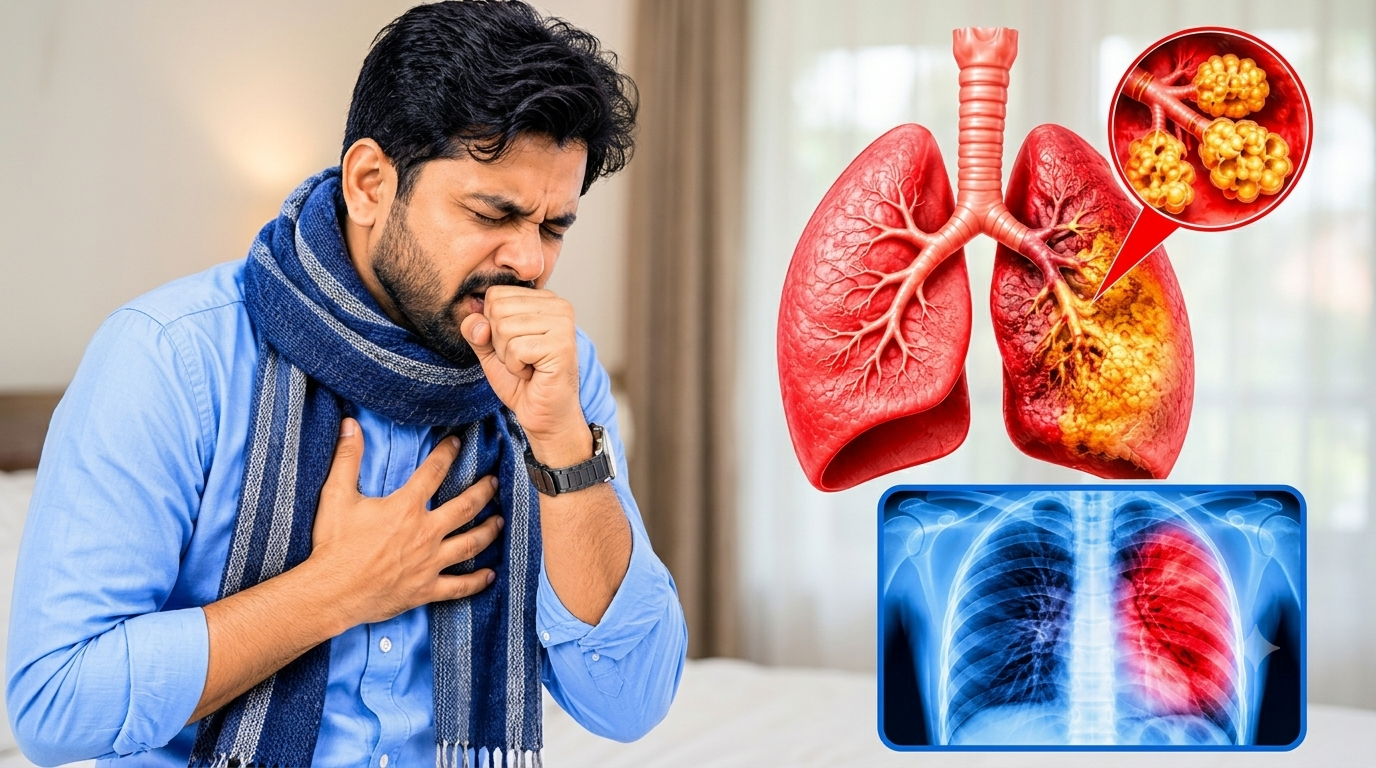
Lung Infection Causes include bacterial, viral, and fungal infections that affect the respiratory system. These infections can cause inflammation, fluid buildup, and breathing difficulties. Pneumonia is one of the major types of lung infection, affecting the tiny air sacs responsible for oxygen exchange.
Recognising Pneumonia symptoms, understanding different infection types, and identifying possible risk factors can help people make informed decisions about their respiratory health. Knowing how these infections develop, progress, and recover is important for maintaining healthy lungs.
Lung Infection: How This Condition Affects the Lungs
Lung infections develop when infectious organisms affect the respiratory tract and trigger inflammation. The condition can involve either one or both lungs.
The lungs contain millions of tiny air sacs called alveoli, which help transfer oxygen into the bloodstream and remove carbon dioxide. Pneumonia is one of the recognised conditions that affects the lungs and causes respiratory infection. It can affect people of different ages, although young children and older adults may face a higher risk of complications.
Some people use foot reflexology for relaxation, and a reflexology chart feet explains commonly discussed pressure points, although reflexology does not prevent or cure lung infections.
The respiratory system also works closely with the heart to circulate oxygen throughout the body.
Major Causes Behind Lung Infections
Several microorganisms can enter the lungs and cause infection. The main Lung Infection Causes include:
-
Bacteria: Organisms such as Streptococcus pneumoniae can cause bacterial pneumonia.
-
Viruses: Influenza, respiratory syncytial virus (RSV), and other viruses can affect lung tissues.
-
Fungi: Certain fungi can enter the lungs through inhaled spores.
-
Aspiration: Inhaling food, liquids, or stomach contents into the lungs can cause aspiration pneumonia.
-
Weakened immunity: Reduced immune protection can increase susceptibility to infections.
Smoking, air pollution, older age, and existing respiratory conditions may also increase the risk.
Childhood pneumonia causes commonly include bacterial and viral infections. A balanced diet supports general health, and vitamin B12 foods provide a nutrient important for normal nerve function and red blood cell formation.
Types of Lung Infections: Viral, Bacterial, and Fungal
Lung infections are classified according to the microorganisms responsible for them. Their symptoms and severity can vary.
-
Viral pneumonia: Develops when viruses infect lung tissues. Influenza and RSV are possible causes.
-
Bacterial pneumonia: Occurs when bacteria cause inflammation in the lungs. It may involve fever, coughing, and chest discomfort.
-
Fungal lung infection: Develops when certain fungi enter the respiratory system. These infections can be more concerning for people with weakened immune systems.
Each type requires a different approach depending on its cause and severity. Symptoms alone cannot always identify the microorganism responsible.
Pneumonia Symptoms and Warning Signs
Pneumonia symptoms may develop gradually or suddenly. Common warning signs include:
-
Persistent cough, sometimes with mucus
-
Fever, chills, or sweating
-
Shortness of breath
-
Chest pain while breathing
-
Tiredness and weakness
-
Reduced appetite
-
Rapid breathing
Older adults may also experience confusion or unusual weakness.
Some breathing difficulties may have other causes. For example, peanut allergy symptoms can include wheezing and breathing problems.
However, an allergic reaction is different from a lung infection.
Potential Complications of Lung Infections
Severe lung infections can sometimes lead to complications, particularly among young children, older adults and people with existing health conditions.
Possible complications include:
-
Respiratory failure: Severe inflammation may prevent the lungs from supplying enough oxygen.
-
Pleural effusion: Fluid collects in the space surrounding the lungs.
-
Sepsis: A serious response to infection can affect multiple organs.
-
Lung abscess: A collection of pus develops inside lung tissue.
It is also important to distinguish infections from other lung conditions. A lung embolism, or pulmonary embolism, involves a blood clot blocking an artery in the lungs.
Lung Infection Diagnosis and Treatment
Identifying the infection’s cause helps determine the appropriate care. The assessment may include:
-
Reviewing symptoms and medical history
-
Checking breathing sounds
-
Measuring oxygen levels
-
Chest X-rays
-
Blood or mucus tests
Pneumonia treatment depends on whether the infection is bacterial, viral, or fungal. Bacterial infections may require antibiotics, while other types need different approaches.
Rest, fluids, and balanced nutrition can support recovery. The benefits of eating sprouts daily include fibre, vitamins, and minerals. Adding nutrient-rich foods to meals can support overall health.
Severe breathing difficulty, blue lips, confusion, or worsening chest pain require urgent medical attention.
Lung Infection Recovery: Timeline and Progress Signs
The lung infection recovery time varies depending on the infection’s severity and overall health. Fever, coughing, and breathing difficulties may gradually improve.
Signs that pneumonia is improving include:
-
Reduced fever and coughing
-
Easier breathing
-
Better appetite
-
Improved energy levels
Good sleep and stress management contribute to general wellness. Meditation can encourage calmness and emotional stability. The benefits of meditation include relaxation and emotional balance.
Making time for relaxation can also support a balanced daily routine.
Effective Ways to Prevent Lung Infections
Simple habits can help reduce the risk of respiratory infections:
-
Wash your hands regularly.
-
Avoid smoking and secondhand smoke.
-
Keep indoor spaces ventilated.
-
Follow recommended vaccinations.
-
Cover your mouth when coughing.
-
Eat a balanced diet.
-
Get enough sleep and stay active.
Include vitamin B12 vegetables and fruits in your diet to support overall health and nutrition.
Including different nutritious foods in daily meals contributes to better general health.
Frequently Asked Questions
1. Is pneumonia contagious?
Pneumonia itself is not always contagious, but the viruses and bacteria responsible for some cases can spread between people through respiratory droplets.
2. Can pneumonia become life-threatening?
Yes. Severe pneumonia can cause respiratory failure, low oxygen levels, and other serious complications.
3. Is pneumonia a curable disease?
Many cases can be successfully treated. Recovery depends on the infection type, severity, and overall health.
4. Can children develop pneumonia?
Yes. Children can develop pneumonia due to bacterial and viral infections. Symptoms may include fever, coughing, and rapid breathing.
5. Can fungal infections affect the lungs?
Yes. Certain fungi can enter the lungs through inhaled spores and cause respiratory infections.
Conclusion
Recognising Lung Infection Causes, symptoms, and different infection types helps people understand respiratory health. From viral and bacterial pneumonia to fungal infections, each condition can affect the lungs differently. Early recognition, appropriate care, balanced nutrition, and healthy daily habits all contribute to better respiratory health and recovery.
References:
- https://my.clevelandclinic.org/health/diseases/4471-pneumonia
- https://pmc.ncbi.nlm.nih.gov/articles/PMC7106184/
0 200

No Comments