
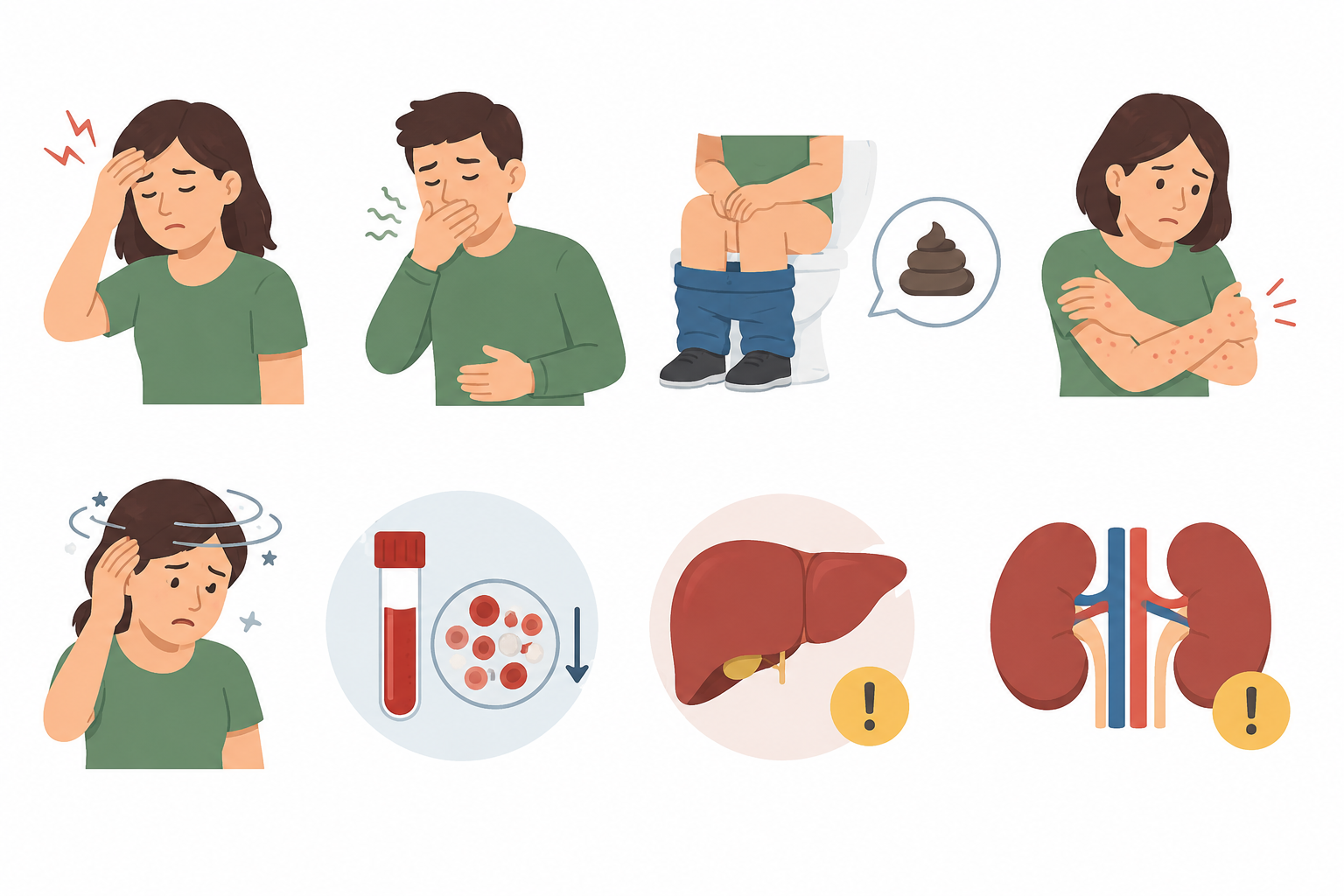
Bactrim is a commonly prescribed antibiotic used to treat a variety of bacterial infections, including urinary tract infections (UTIs), respiratory infections, and certain types of intestinal infections. It contains a combination of two active ingredients: sulfamethoxazole and trimethoprim. While effective, like all antibiotics, Bactrim can cause side effects in some people.
Understanding these effects is important so you can use the medicine safely and know when to seek medical help.
Common Side Effects of Bactrim
Most people tolerate Bactrim well, but some may experience mild side effects, especially during the first few days of treatment. These effects are typically mild and tend to resolve on their own without treatment.
Common side effects include:
- Nausea or vomiting
- Loss of appetite
- Mild diarrhea
- Headache
- Dizziness
- Skin sensitivity to sunlight
These symptoms are generally temporary. Drinking plenty of water and taking the medicine after food can sometimes reduce discomfort.
Serious Side Effects to Watch For
Although rare, Bactrim can sometimes cause serious reactions. If any of the following occur, medical attention is needed immediately:
- Severe skin rash or peeling
- Difficulty breathing
- Swelling of the face, lips, or throat
- Persistent sore throat or fever
- Yellowing of the eyes or skin (liver issues)
- Unusual bruising or bleeding
These reactions may indicate an allergic response or a more severe condition affecting the blood or liver.
Bactrim DS and Its Side Effects
Bactrim DS (double strength) is a stronger version of the standard tablet. It contains a higher dose of the same active ingredients and is usually prescribed for more serious infections.
Because of the higher dosage, side effects of Bactrim DS may feel slightly more noticeable in some patients. These can include stronger nausea, increased dizziness, or more pronounced stomach upset. However, most people still tolerate it well when taken as prescribed.
Bactrim Syrup in Children
Bactrim syrup is often given to children who need this antibiotic but cannot swallow tablets. It is used for similar infections, such as ear infections, UTIs, or respiratory infections.
Children may experience side effects similar to adults, such as:
- Mild diarrhea
- Stomach discomfort
- Loss of appetite
- Mild skin rash
Parents should monitor children carefully and ensure the correct dosage is followed. If any unusual symptoms appear, a doctor should be contacted immediately.
Bactrim Side Effects in Senior Patients
Common concerns in Senior patients include:
- Higher risk of kidney problems
- Increased chance of electrolyte imbalance
- Greater sensitivity to dizziness or confusion
- Higher risk of severe skin reactions
Doctors often adjust the dose for older adults and monitor them closely during treatment.
How Long Do Side Effects of Bactrim Last?
One of the most common questions patients ask is: how long do side effects of Bactrim last?
In most cases:
- Mild side effects like nausea or headache last 1 to 3 days
- Digestive issues may continue for the duration of treatment
- Skin sensitivity usually resolves shortly after stopping the medication
Serious side effects, although rare, may take longer to resolve and require medical treatment. If side effects persist beyond a few days or worsen, it is important to consult a healthcare provider.
Precautions While Taking Bactrim
To reduce the risk of side effects:
- Drink plenty of water to prevent kidney-related issues
- Avoid excessive sun exposure
- Do not skip or double doses
- Let your doctor know about any allergies or existing medical conditions before taking the medication.
- Avoid self-medication with other antibiotics
Following these precautions helps improve safety and effectiveness.
Conclusion
Bactrim is a powerful and widely used antibiotic that treats many bacterial infections effectively. However, like all medications, it can cause side effects ranging from mild discomfort to rare but serious reactions.
Whether you are taking antibiotics Bactrim, Bactrim DS, or Bactrim syrup, it is important to understand how your body may respond. Older adults require extra caution, and any unusual symptoms should be taken seriously and not ignored.
By understanding possible reactions and how long Bactrim side effects may last, patients can use this medication more safely and with greater confidence.
FAQs
1. What are the common side effects of Bactrim?
The most common side effects include nausea, vomiting, headache, dizziness, and mild diarrhea.
2. Is Bactrim safe for everyone?
No. People with kidney disease, sulfa allergies, or certain blood disorders should avoid it unless advised by a doctor.
3. Can Bactrim cause allergic reactions?
Yes. Some individuals may experience skin rashes, swelling, or difficulty breathing, which need immediate medical attention.
4. How long do side effects last?
Mild side effects usually last 1–3 days, while some digestive symptoms may continue during treatment.
5. Are the side effects of Bactrim worse in Senior patients?
Yes, Bactrim side effects in Senior patients can be stronger due to reduced kidney function and slower drug processing.
Reference
https://www.medicalnewstoday.com/articles/drugs-bactrim-side-effects
https://www.drugs.com/bactrim.html
0 200

Visitor Rating: 3 Stars