
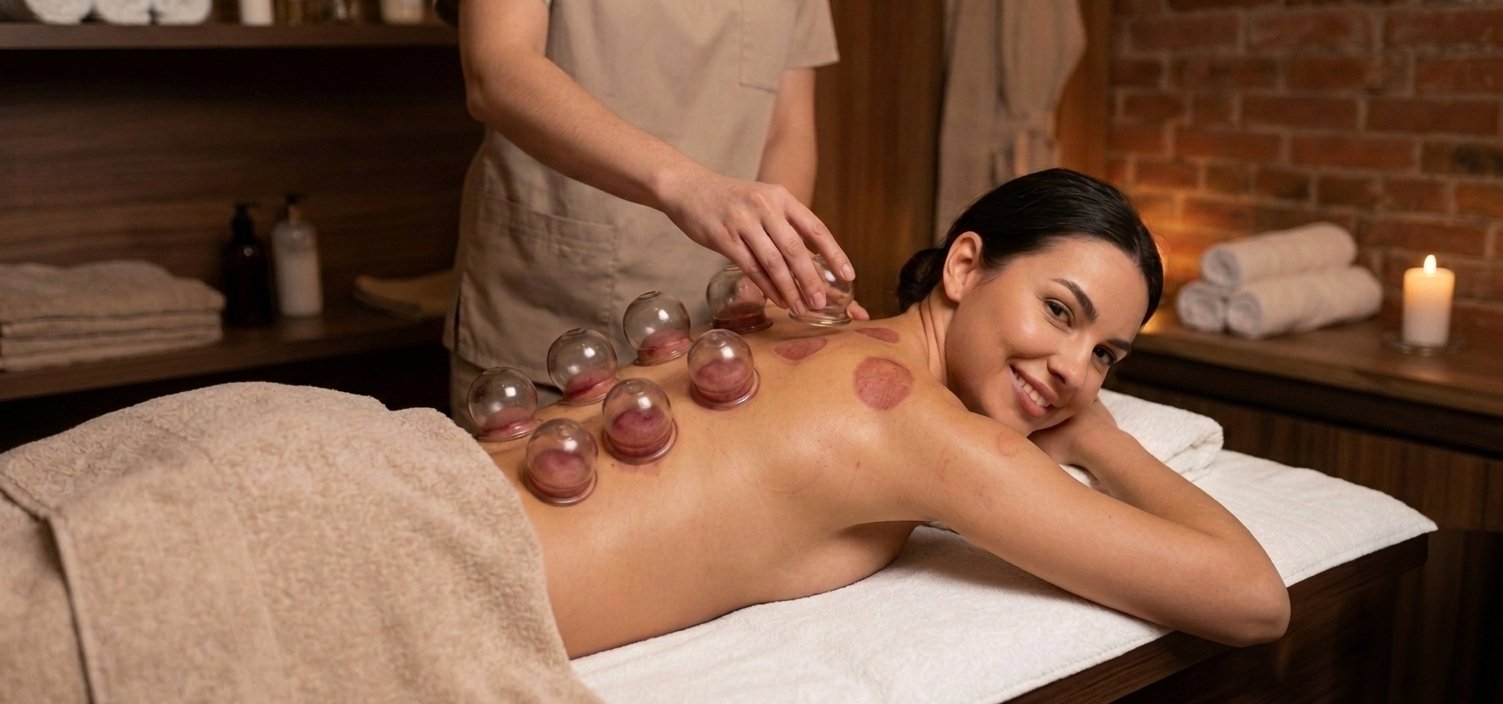
Before and after cupping therapy can look different because temporary circular marks may appear on the skin after treatment. Cupping uses suction to lift the skin and is commonly used for relaxation and temporary muscle discomfort.
The technique may involve dry, wet, or fire cupping, and the experience can vary from person to person. Knowing what to expect can help you understand the changes before and after a session.
Why Are People Turning to Cupping Therapy?
Cupping therapy has gained attention as a complementary wellness practice. Some people are interested in traditional approaches, while others try it for relaxation or temporary muscle comfort.
Cupping is often applied to areas such as the back, shoulders, neck, and legs. Some people choose it as part of a complementary wellness routine for relaxation or temporary muscle discomfort. Staying properly hydrated is also important for overall well-being, especially after physical activity. If you experience recurring headaches, you can learn more about does dehydration cause headaches and the possible connection between fluid loss and headaches.
People may consider cupping for:
-
Muscle tension or tightness
-
General relaxation
-
Temporary discomfort after physical activity
-
Interest in traditional wellness practices
Cupping should not replace medical evaluation when pain or other symptoms are severe, persistent, or unexplained.
What Happens During a Cupping Session?
During a session, the practitioner positions cups on selected areas of the skin and uses suction to gently draw the skin upward into each cup.
Depending on the method, cups may stay in one position or move across the skin. A session generally involves:
-
Cleaning and preparing the skin.
-
Selecting the treatment areas.
-
Creating suction inside the cups.
-
Leaving or moving the cups for a set time.
-
Removing the cups and checking the skin.
The experience can vary depending on the technique, suction level, treatment area, and skin sensitivity.
What Can You Expect Before and After Cupping Therapy?
When considering before and after cupping therapy, the most noticeable change is usually the appearance of the treated skin. Circular red, purple, or darker marks may develop where the cups were placed.
These marks can resemble bruises because suction affects small blood vessels near the skin’s surface. You may also notice:
-
Mild tenderness
-
Temporary redness
-
A tight or sensitive feeling
-
Relaxation around treated muscles
The marks usually fade gradually. Darker marks do not necessarily mean the treatment was more effective.
What Health Benefits Are Linked to Cupping Therapy?
Interest in Cupping therapy benefits often focuses on relaxation and physical comfort. Some research has explored cupping for back, neck, and shoulder discomfort, but the evidence remains mixed.
Possible reasons people use cupping include:
-
Temporary muscle comfort
-
Reduced feeling of muscle tightness
-
Relaxation
-
Supporting a general wellness routine
The benefit of cup therapy can differ from person to person. Cupping should be viewed as a complementary practice rather than a cure or replacement for medical care.
Why Does Cupping Leave Marks on Your Skin?
Cupping marks occur because suction pulls the skin into the cup and affects tiny blood vessels near the surface.
Their appearance can depend on:
-
Suction strength
-
Treatment duration
-
Skin sensitivity
-
Treatment area
-
Type of cupping
The discoloration left by cupping usually becomes lighter over time as the skin gradually returns to its normal appearance. Exploring simple wellness practices, such as rose water benefits for skin, can also be part of a broader personal care routine. Avoid scratching or aggressively rubbing the area while it is sensitive.
How Do Dry, Wet and Fire Cupping Compare?
Different cupping techniques create different experiences and risks.
| Type of cupping | How it works | What you may notice | Main consideration |
|---|---|---|---|
| Dry cupping therapy | Suction is created without intentionally breaking the skin. | Circular marks may appear. | Mild tenderness may occur. |
| Wet cupping | The skin is superficially pierced before suction. | Marks and a small amount of blood may appear. | Careful hygiene is essential. |
| Fire cupping | Heat is traditionally used to create suction. | Circular marks and pulling may occur. | Improper use can cause burns. |
What Makes Cup Therapy Massage Different?
Cup therapy massage involves moving a suctioned cup across the skin rather than keeping it in one place. The skin is usually lubricated first to help the cup glide.
This can create a different sensation from stationary cupping. If the pressure feels painful or uncomfortable, tell the practitioner. Stronger suction is not necessarily better. The technique may be used on larger muscle areas where gentle movement feels more comfortable than keeping the cups stationary. The amount of pressure and movement should be adjusted according to individual comfort.
What Side Effects Can Cupping Therapy Cause?
Understanding the Side effects of cupping therapy is important before a session. Temporary marks are common, but other reactions may occur.
Possible effects include:
-
Skin tenderness or irritation
-
Bruising-like marks
-
Burns from heat-based methods
-
Blisters or scarring
-
Infection when hygiene is inadequate
Cup therapy side effects can be more concerning when the skin is broken. Wet cupping requires particularly careful hygiene.
Seek medical attention if the treated area becomes increasingly painful, swollen, hot, severely red, or develops discharge.
How Can You Care for Your Skin After Cupping?
After treatment, simple skin care can help keep the area comfortable while the temporary marks gradually fade.
-
Keep the treated area clean.
-
Avoid scratching or rubbing the marks.
-
Follow the practitioner’s aftercare instructions.
-
Give the skin enough time to recover.
-
Avoid irritating products on sensitive skin.
Supporting your overall nutrition can also be part of a healthy skin-care routine. For example, learning about vitamin B12 foods can help you understand which foods provide this important nutrient.
The advantage of cupping therapy should not be judged by how dramatic the marks look. These marks are a temporary skin response and do not prove how effective the session was.
Who Should Be Cautious About Cupping Therapy?
Cupping is not suitable for everyone. Consider speaking with a healthcare professional before trying it if you have a medical condition, take medicines that affect bleeding, or have damaged or infected skin.
Extra caution may be needed if you:
-
Have a bleeding disorder
-
Take blood-thinning medicines
-
Have damaged or infected skin
-
Are prone to fainting
-
Are pregnant and considering treatment
Choosing a practitioner who follows proper hygiene and safe techniques is especially important for wet cupping.
Conclusion
Understanding before and after cupping therapy can help you know what to expect. Temporary circular marks, redness, or mild tenderness may appear after a session.
Dry, wet, and fire cupping work differently and have different risks. Cupping may support relaxation or temporary muscle comfort, but it should be viewed as a complementary practice rather than a replacement for medical care.
Frequently Asked Questions
1. What is cup therapy?
When people ask what is a cup therapy, they are generally referring to a complementary practice in which cups create suction against the skin. Depending on the technique, the cups may remain in one position or be gently moved across the treated area.
2. How long do cupping marks last?
Cupping marks are temporary for most people. The time they take to fade varies depending on skin sensitivity, suction strength, and treatment duration.
3. Is wet cupping different from dry cupping?
Yes. Dry cupping does not intentionally break the skin, while wet cupping involves superficial skin piercing followed by suction.
4. Can cupping help with muscle discomfort?
Cupping may provide temporary relief from certain types of muscle discomfort, but research remains limited, and results can vary.
5. Is cupping therapy safe?
Cupping can cause temporary marks, tenderness, burns, skin injury, infection, or scarring. Proper hygiene and safe technique can help reduce potential risks.

No Comments