
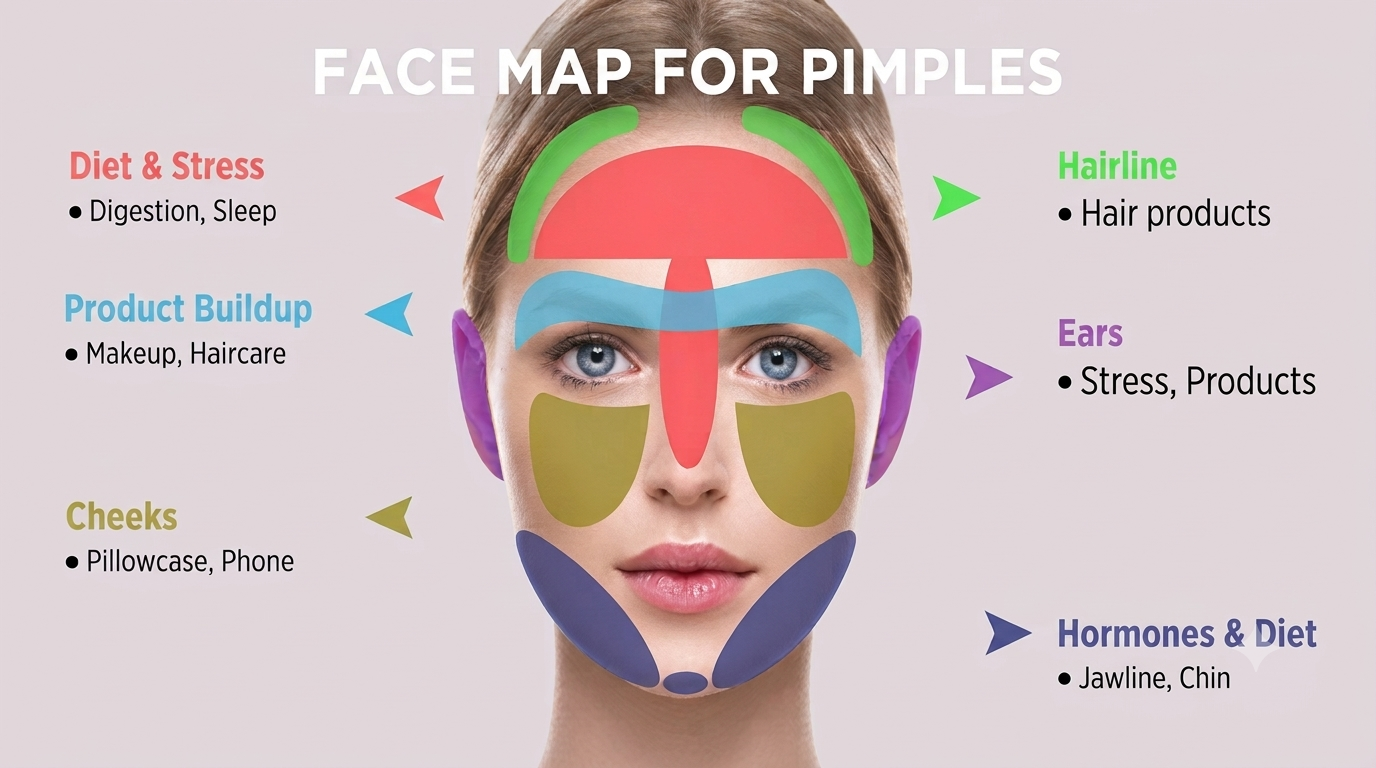
Pimples do not always appear in the same areas of the face. Some people experience forehead breakouts, while others notice acne around their cheeks, nose, or chin. A Face Map for Pimples helps you understand these breakout patterns and their possible causes.
From excess oil and clogged pores to hormonal changes and everyday habits, several factors can affect your skin. Let’s look at different facial areas, common acne triggers, and simple ways to care for your skin.
Face Mapping: How Acne Appears on Different Areas
A face map divides the face into zones to understand where pimples commonly develop. Traditional face mapping Chinese practices connect these areas with internal organs, but these connections are not scientifically established.
Modern skincare focuses on more familiar causes, including:
-
Excess oil and clogged pores
-
Hormonal fluctuations
-
Sweat and friction
-
Skincare and hair products
-
Bacteria and skin irritation
Nutrition also plays a role in overall skin health. Foods such as eggs, dairy products and fish provide vitamin B12, and you can find more examples in this guide to vitamin B12 foods.
An acne pimple face map can help you observe breakout patterns, but the location of a pimple cannot confirm an internal health problem.
Forehead and Nose Acne: Common Causes
The forehead and nose form the T-zone, which often produces more oil than other facial areas. This can make them more prone to clogged pores and pimples.
Common triggers include:
-
Excess oil and sweat
-
Hair oils and styling products
-
Dead skin cells blocking pores
-
Frequent touching of the face
If you are wondering how to cure pimples on forehead, start by keeping the area clean and avoiding heavy hair products that touch your skin.
Nose breakouts may also include blackheads, which appear when clogged pores remain open.
Cheek and Jawline Acne: Possible Triggers
Cheek acne may be connected to everyday habits, including phone contact, pillowcases, makeup, and friction.
Jawline acne may sometimes be linked to hormonal fluctuations. These changes can occur alongside other signs discussed in our guide to symptoms of hormonal imbalance.
Some common breakouts on face causes include:
-
Unclean phone screens and pillowcases
-
Heavy or unsuitable skincare products
-
Sweat and friction
-
Excess oil production
Chin, Mouth and Between-Brow Pimples
Pimples around the chin and mouth can develop due to hormonal changes, clogged pores, or irritation from skincare and lip products. Some people also notice recurring breakouts around the chin during hormonal fluctuations.
Between the eyebrows, breakouts may be associated with excess oil, sweat, and products that come into contact with the skin. Hair products, sunscreen, or makeup residue may also contribute to clogged pores in this area.
The face mapping of pimples can help you notice these patterns, but it cannot identify the exact cause of every breakout. Track when and where breakouts appear to understand possible triggers and make suitable skincare adjustments.
Types of Pimples: Blackheads and Whiteheads
Not all pimples look alike. Knowing the types of pimples on face can help you recognise common forms of acne.
-
Blackheads: Dark bumps caused by open clogged pores.
-
Whiteheads: Small bumps formed when pores become blocked.
-
Papules: Small, raised, red bumps.
-
Pustules: Pimples with visible pus.
-
Cysts: Deeper bumps that may feel painful.
Both blackheads and whiteheads on face are common forms of clogged pores. Avoid squeezing them, as this can increase irritation.
How to Control and Prevent Breakouts on Your Face
If you want to know how to control breakouts on face, start with simple daily habits:
-
Wash your face gently twice a day.
-
Remove makeup before sleeping.
-
Choose non-comedogenic skincare products.
-
Change pillowcases regularly.
-
Avoid picking or squeezing pimples.
-
Use sunscreen suitable for your skin.
These habits can help you understand how to avoid breakouts on face and maintain a consistent skincare routine.
How to Remove Pimples Naturally at Home
Many people look for ways to remove pimples naturally at home, but not every home remedy suits every skin type. Gentle skincare is a better starting point.
Try these simple habits:
-
Clean your face with a mild cleanser.
-
Avoid harsh scrubs and strong home remedies.
-
Keep your hands away from active pimples.
-
Use gentle, skin-friendly products.
-
Maintain a regular skincare routine.
Some people include rose water in their skincare routine because of its refreshing feel. The rose water benefits for skin are often discussed in natural skincare, although it is not a proven acne cure.
There is no guaranteed way to remove pimples naturally and permanently or make them disappear overnight. Avoid harsh home remedies that may irritate your skin.
FAQs About Face Map for Pimples
1. Does face mapping really explain acne causes?
Face mapping helps describe breakout locations, but traditional connections between facial areas and internal organs are not scientifically proven.
2. Which daily habits may help prevent facial pimples?
3. How to stop pimples coming on face at home?
Follow gentle skincare habits, remove makeup before bed, and avoid touching or squeezing pimples.
4. Can pimples disappear overnight?
Most pimples do not disappear overnight. Gentle skincare and avoiding irritation may help prevent them from getting worse.
5. What causes whiteheads and blackheads?
Both can form when excess oil and dead skin build up inside the pores. Blackheads remain open, while whiteheads stay closed.
Conclusion
A Face Map for Pimples helps you understand common breakout areas, from the forehead to the chin. However, acne location does not confirm an internal health issue. Pay attention to your skincare habits, possible triggers, and daily routine. Gentle care and balanced nutrition can support healthier-looking skin. If breakouts keep returning, noticing their patterns may help you identify habits or products that could be irritating your skin. Consistent skincare is more useful than relying on face-mapping claims.


No Comments