
Many people search for natural vaginal tightening methods because they notice changes in vaginal sensation, pelvic floor strength, or muscle control. These changes can happen after childbirth, with aging, hormonal changes, or simply over time. The good news is that there are safe ways to improve pelvic floor strength and function.
However, it’s important to separate evidence-based approaches from products that promise instant or permanent results. The vagina is designed to stretch and return to its usual shape, and there is no proven home remedy that permanently makes the vagina “tight.”
What can help with vaginal tightness?
One of the most practical approaches is strengthening the pelvic floor muscles. These muscles support the bladder, bowel, and reproductive organs and play an important role in sexual function.
Vaginal tightening exercises
Pelvic floor exercises, commonly called Kegel exercises, can help strengthen these muscles when performed correctly.
To try a basic pelvic floor exercise:
- Identify the muscles used to stop urine flow. Don’t routinely practice by stopping your urine while using the bathroom.
- Once you know the muscles, contract them gently for about 3–5 seconds.
- Relax for the same amount of time.
- Repeat around 10 times.
- Gradually work toward several sets throughout the day.
Consistency matters more than doing a large number of repetitions. A pelvic floor physiotherapist can also help if you’re unsure whether you’re contracting the correct muscles.
Vaginal tightening home remedies
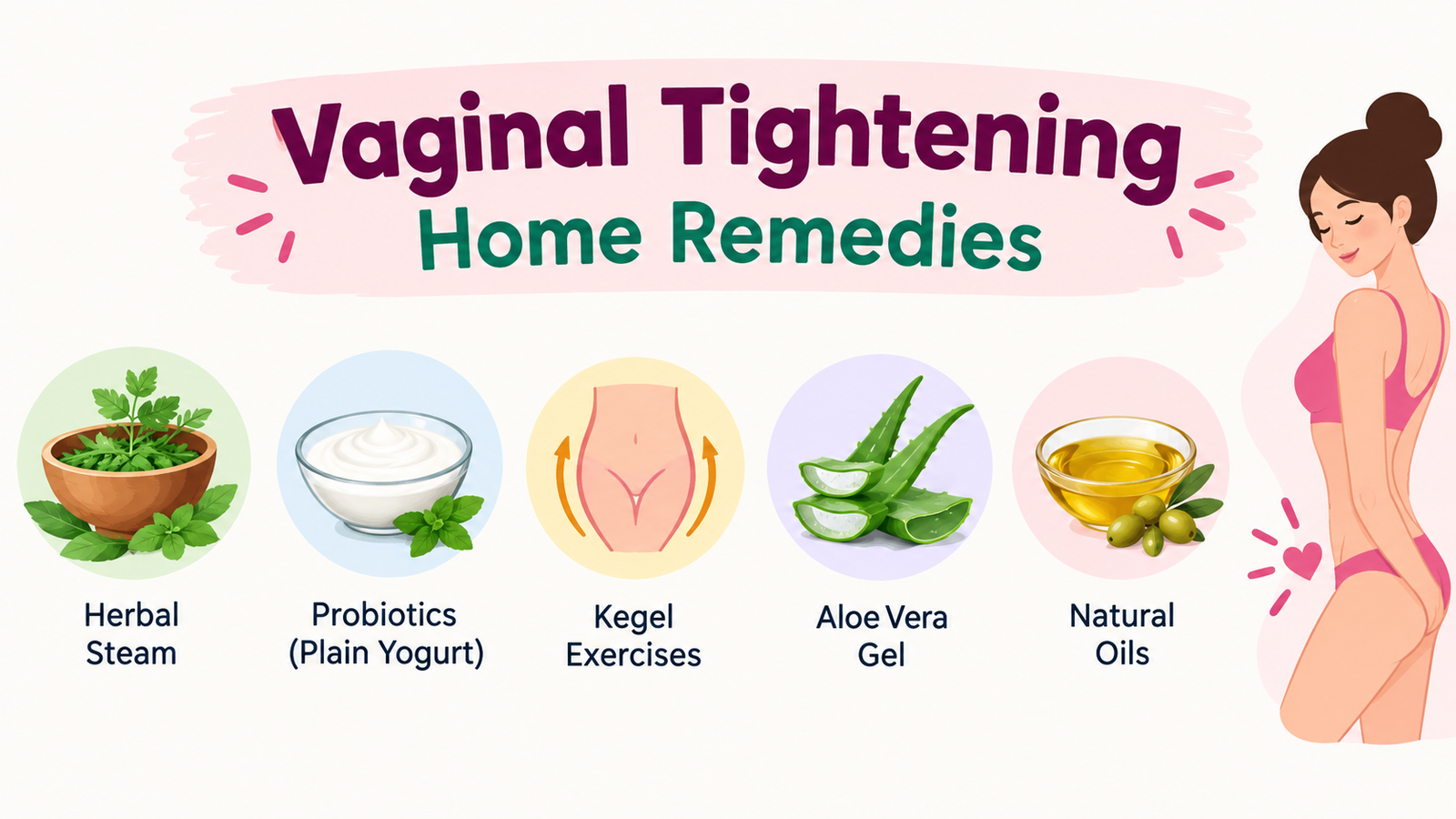
Searches for vaginal tightening home remedies are common, particularly remedies involving herbs, oils, or household ingredients. There is currently no good evidence that applying herbs, oils, powders, or other substances inside the vagina permanently tightens vaginal tissue.
How to tighten your vagina home remedies with herbs
If you’re searching for how to tighten your vagina home remedies with herbs, be cautious. Herbs marketed for vaginal tightening have not been established as a safe or effective way to permanently tighten the vagina. Putting herbal mixtures, astringents, or other substances inside the vagina can irritate delicate tissue and disturb its natural balance.
The vagina generally does not require cleansing products or herbal treatments. Gentle external washing with water and a mild, fragrance-free cleanser is usually sufficient.
How to tighten your vagina home remedies after delivery
After pregnancy and delivery, the pelvic floor can become stretched or weakened. This does not necessarily mean that the vagina needs to be “tightened.”
If you’re wondering how to tighten your vagina home remedies after delivery, pelvic floor exercises are a more appropriate option than inserting creams or herbal preparations. Recovery takes time, and the right exercises can depend on whether you had a vaginal delivery, cesarean delivery, tearing, or other complications.
If you experience urinary leakage, pelvic pressure, pain during sex, or persistent pelvic discomfort after childbirth, consider speaking with a healthcare professional or pelvic floor physiotherapist.
What about vaginal tightening creams and gels?
A Best Vaginal Tightening Cream may sound appealing when shopping online, but consumers should be careful with products advertised as providing permanent tightening. There is limited evidence that over-the-counter creams can permanently change vaginal tightness.
Similarly, a vaginal tightening gel may temporarily create a sensation of dryness or firmness, but that is not the same as strengthening the underlying pelvic floor muscles.
Some products may also contain fragrances, acids, astringents, or other ingredients that can cause irritation.
V tightening cream side effects
Possible V tightening cream side effects can include burning, itching, redness, dryness, irritation, allergic reactions, or changes in the vaginal environment. Stop using a product if it causes significant discomfort.
Avoid products that require you to insert unknown ingredients into the vagina, particularly if the manufacturer does not provide clear ingredient information or safety instructions.
Do vaginal tightening pills work?
Vaginal tightening pills are another popular online product category. However, there is no established oral pill that can safely and permanently tighten the vagina.
Some supplements contain herbs or other ingredients marketed for sexual wellness, but marketing claims are not the same as clinical evidence. Supplements can also interact with medications or cause side effects.
Medical vaginal tightening treatments
For people with specific pelvic floor concerns, a healthcare professional may discuss a vaginal tightening treatment based on the underlying problem.
A vaginal tightening procedure may include surgical or non-surgical approaches, but these aren’t appropriate for everyone. Surgery can involve risks such as bleeding, infection, scarring, pain, and changes in sexual function.
You may also see advertisements for vaginal tightening laser treatment or other energy-based treatments. Evidence and regulatory status vary depending on the specific device and intended use. These treatments should not be assumed to be risk-free simply because they are described as non-surgical or minimally invasive.
FAQs
1. Can you naturally tighten your vagina?
You can strengthen the pelvic floor muscles with exercises such as Kegels. This may improve muscle control and some symptoms associated with pelvic floor weakness, but it does not permanently shrink the vagina.
2. Do vaginal tightening creams really work?
There is limited evidence that over-the-counter vaginal tightening creams permanently tighten vaginal tissue. Some products can cause irritation, dryness, or other side effects, especially when used internally.
3. Are vaginal tightening pills safe?
There is no established pill proven to permanently tighten the vagina. Supplements marketed for this purpose may contain ingredients with potential side effects or medication interactions.
4. What is the best natural vaginal tightening method after childbirth?
Pelvic floor exercises are commonly used to rebuild pelvic floor strength after childbirth. If you have pain, leakage, pelvic pressure, or other ongoing symptoms, a pelvic floor specialist can provide individualized guidance.
5. Is vaginal laser treatment necessary for vaginal tightening?
Laser or other energy-based treatments aren’t automatically necessary for vaginal changes. Their benefits and risks depend on the specific condition and treatment being considered. Discuss the option with a qualified gynecologist before undergoing a procedure.
Reference
https://www.webmd.com/women/vaginoplasty-and-labiaplasty-procedures
https://www.healthline.com/health/tight-vagina
0 200

No Comments