
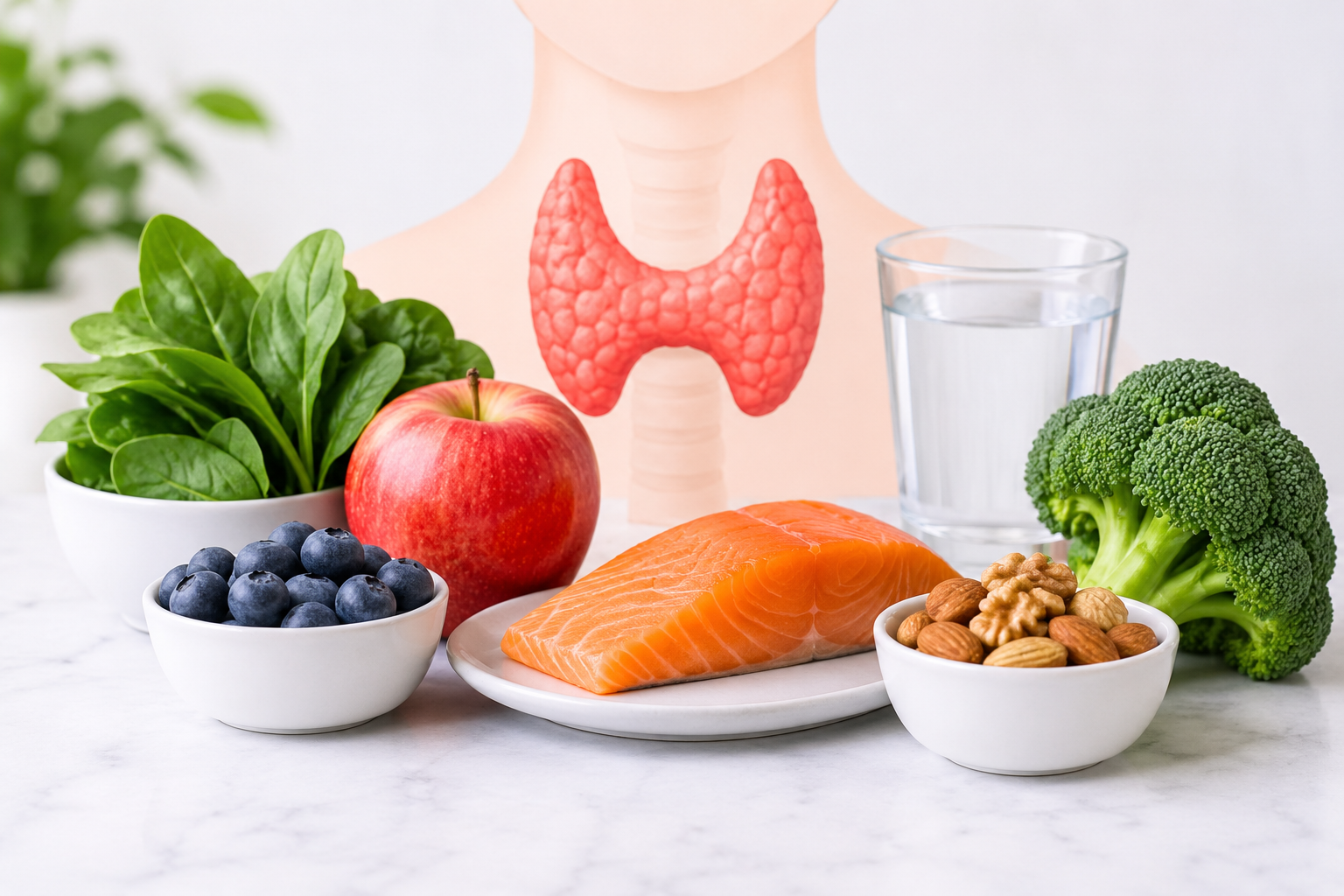
The thyroid is a small, butterfly-shaped gland in the neck that plays an important role in regulating metabolism, energy levels, body temperature and several other body functions. When the thyroid gland produces too much or too little hormone, it can affect your overall health and well-being. A balanced diet can support thyroid function and help manage symptoms alongside the right medical treatment.
Following a healthy thyroid diet plan can also help maintain a healthy weight, improve energy levels and provide essential nutrients. However, no single food or diet can cure a thyroid disorder. Understanding what to eat and what to avoid is an important step towards better thyroid health.
What Is the Thyroid Diet?
If you are wondering what is the thyroid diet, it refers to a balanced eating pattern that provides nutrients required for normal thyroid function. It includes foods rich in iodine, selenium, zinc, iron and protein, which support different processes involved in thyroid hormone production and metabolism.
The ideal diet may differ depending on whether you have hypothyroidism (underactive thyroid) or hyperthyroidism (overactive thyroid). Your nutritional needs, medication and overall health should guide your food choices.
Thyroid Diet Plan for Weight Loss
Weight management can be challenging for people with hypothyroidism because a slower metabolism may contribute to weight gain. A suitable thyroid diet plan for weight loss focuses on balanced meals, adequate protein, fibre-rich foods and controlled portions.
Here are some practical dietary habits to follow:
-
Eat protein-rich foods: Include eggs, lentils, beans, fish, chicken and low-fat dairy to support muscle health and keep you full.
-
Choose whole grains: Replace refined grains with oats, brown rice, whole wheat and millets for better fibre intake.
-
Include vegetables: Add spinach, carrots, cucumber, broccoli and other seasonal vegetables to your meals.
-
Choose healthy fats: Include nuts, seeds, olive oil and other unsaturated fat sources in moderate quantities.
-
Limit processed foods: Reduce sugary drinks, packaged snacks, deep-fried foods and excess refined sugar.
A healthy thyroid diet plan weight loss approach should focus on gradual, sustainable weight management rather than crash diets or extreme calorie restriction.
Woman Thyroid Diet Chart for Weight Loss
Women with thyroid conditions may experience changes in weight, energy levels and menstrual health. A balanced meal schedule can help meet daily nutritional requirements and support healthy weight management.
Here is a sample woman thyroid diet chart for weight loss:
| Meal | Food options |
|---|---|
| Early morning | A glass of water and a few soaked almonds |
| Breakfast | Vegetable oats, boiled eggs or besan chilla |
| Mid-morning | One seasonal fruit |
| Lunch | Whole wheat roti, dal, cooked vegetables and curd |
| Evening snack | Roasted chana or a handful of nuts |
| Dinner | Vegetable soup, paneer or grilled fish with roti |
| Bedtime | Milk, if suitable for your dietary needs |
This Woman thyroid diet chart for weight loss is a general example. Portion sizes should be adjusted according to age, activity level, calorie requirements and medical advice.
Thyroid Foods to Eat and Avoid
Choosing nutritious foods can help you maintain a balanced diet and support normal thyroid function. Knowing the right thyroid foods to eat and avoid can make everyday meal planning easier.
Foods good for thyroid issues
Consider including these nutrient-rich foods in your regular diet:
-
Iodine-rich foods: Iodised salt, dairy products, eggs and seafood provide iodine, which the body needs to produce thyroid hormones.
-
Selenium-rich foods: Fish, eggs, sunflower oil, seeds and Brazil nuts contain selenium, which supports thyroid hormone metabolism.
-
Zinc-rich foods: Pumpkin seeds, lentils, chickpeas and dairy products provide zinc.
-
Iron-rich foods: Spinach, beans, lentils and lean meats help meet iron requirements.
-
Protein-rich foods: Eggs, paneer, tofu, fish and pulses support muscle maintenance and overall health.
-
Fruits and vegetables: Berries, apples, oranges, carrots and leafy greens provide vitamins, minerals and antioxidants.
These are some of the foods good for thyroid issues that can form part of a balanced eating pattern.
Foods to limit or avoid
There is no universal list of foods that everyone with thyroid disease must avoid. However, certain dietary habits deserve attention:
-
Excess iodine: Too much iodine from supplements or seaweed products can worsen some thyroid conditions.
-
Highly processed foods: Frequent consumption of packaged snacks, sugary foods and fried items may make weight management harder.
-
Excess soy around medication: Soy foods can interfere with the absorption of levothyroxine if consumed too close to the medication.
-
Excessive raw cruciferous vegetables: Large quantities of raw cabbage, cauliflower and broccoli may affect iodine use, particularly when iodine intake is inadequate. Normal servings, especially cooked, are generally safe.
-
Excessive caffeine: Coffee consumed too close to thyroid medication may reduce its absorption.
How to Reduce Thyroid Level by Food?
Many people search for How to reduce thyroid level by food, particularly when their thyroid test results are abnormal. However, it is important to understand that diet alone cannot reliably lower or regulate thyroid hormone levels.
If you have hyperthyroidism, your doctor may recommend medication or other treatments depending on the cause. Avoid taking iodine supplements or making major dietary changes without medical advice.
If you have hypothyroidism, eating a balanced diet can support your health, but prescribed thyroid hormone medication is often necessary. Avoid replacing medical treatment with dietary remedies.
Important Dietary Tips for Better Thyroid Health
Follow these simple habits to support your overall well-being:
-
Take thyroid medication as prescribed, usually on an empty stomach with water.
-
Keep a consistent gap between levothyroxine and calcium or iron supplements, as advised by your doctor.
-
Include a variety of fruits, vegetables, whole grains, and protein sources.
-
Stay physically active with walking, strength training, or other suitable exercises.
-
Drink enough water throughout the day.
-
Get adequate sleep and manage daily stress.
-
Monitor thyroid hormone levels through regular medical check-ups.
FAQs
1. What is the best diet plan for thyroid patients?
A balanced diet containing fruits, vegetables, whole grains, lean protein, healthy fats and essential minerals is suitable for many people with thyroid conditions. Individual needs depend on the type of thyroid disorder.
2. Can a thyroid diet plan help with weight loss?
Yes. A balanced thyroid diet plan can support gradual weight loss by improving food quality, managing portions and providing adequate protein and fibre. However, thyroid hormone levels should also be properly managed.
3. Which foods should thyroid patients avoid?
There is no universal list of foods to avoid. However, excessive iodine supplements, highly processed foods and consuming certain foods too close to thyroid medication may be problematic.
4. Can I eat cabbage and broccoli if I have thyroid problems?
Yes. Most people with thyroid conditions can safely eat normal portions of cabbage, broccoli and cauliflower. Cooking these vegetables can further reduce their goitrogenic activity.
5. Can thyroid problems be controlled through diet alone?
No. Diet supports general health but cannot replace medical treatment. People with hypothyroidism or hyperthyroidism should follow their doctor’s treatment plan and monitor thyroid hormone levels regularly..
Reference
https://www.healthline.com/nutrition/hypothyroidism-diet
0 200
No Comments