
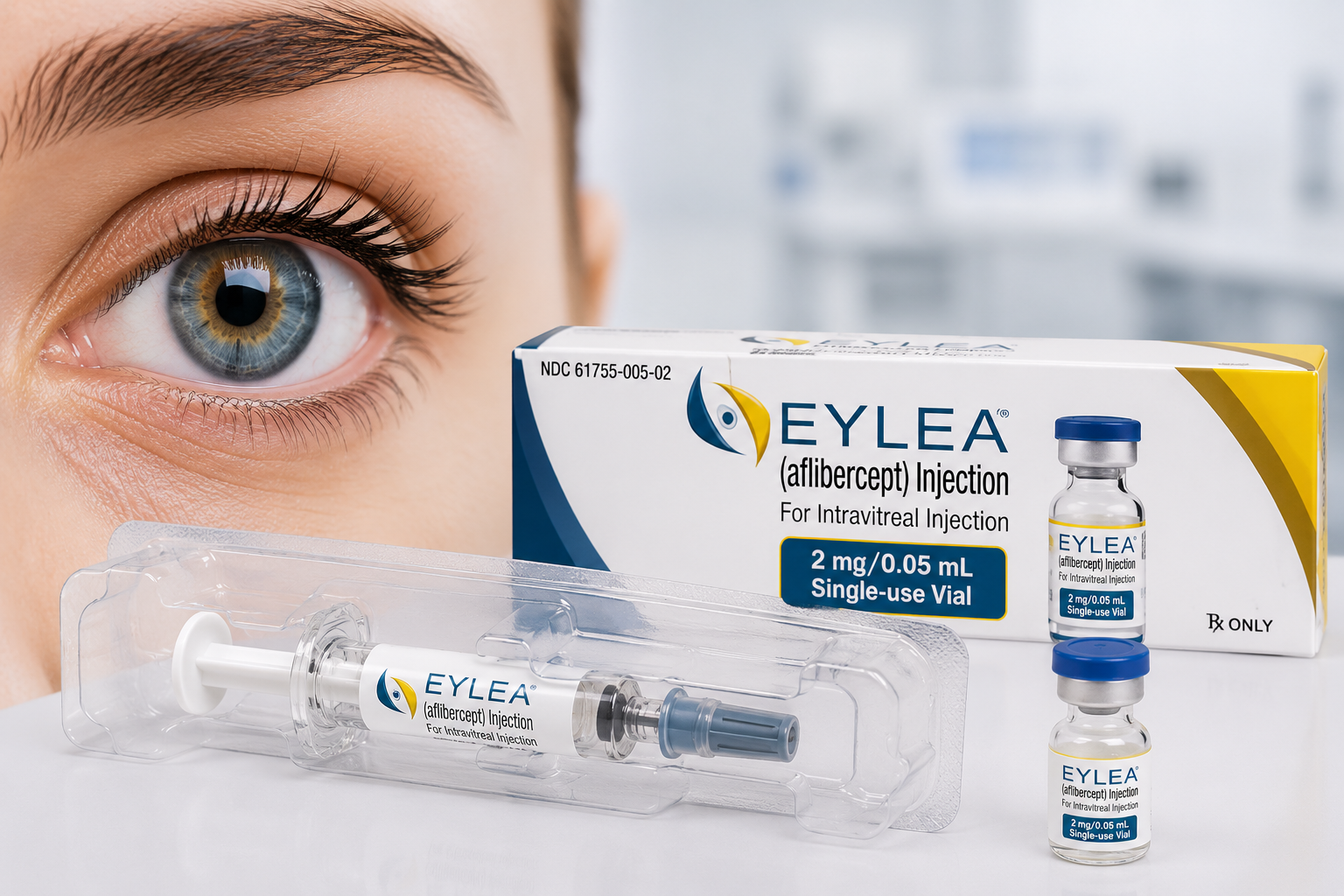
Eylea is an anti-VEGF (vascular endothelial growth factor) medication administered directly into the eye by a qualified ophthalmologist. It is manufactured and marketed by Bayer Eylea and Regeneron in various regions. The medicine is designed to treat retinal disorders that affect central vision.
Many people ask, “What does Eylea treat?” Eylea is approved for conditions such as:
- Wet age-related macular degeneration (AMD)
- Diabetic macular edema (DME)
- Diabetic retinopathy
- Macular edema following retinal vein occlusion
- Retinopathy of prematurity in certain cases
Among the various names of eye injections available for retinal diseases, Eylea remains one of the most commonly prescribed options.
Eylea Drug Class
A common question is about the Eylea drug class. Eylea belongs to a class of medications known as anti-VEGF agents. These drugs work by blocking VEGF proteins that cause abnormal blood vessel growth and leakage inside the eye.
Other medications in the same category include:
- Avastin (bevacizumab)
- Lucentis (ranibizumab)
- Macugen (pegaptanib)
Because it is an anti-VEGF medication, many patients ask, “Is Eylea a steroid?” The answer is no. Eylea is not a steroid. It works differently by targeting VEGF proteins rather than reducing inflammation through steroid mechanisms.
Eylea Mechanism of Action
The Eylea mechanism of action involves binding to VEGF-A and placental growth factor (PlGF), preventing these proteins from stimulating abnormal blood vessel growth.
This action helps:
- Reduce retinal swelling
- Prevent leakage from damaged blood vessels
- Improve or stabilize vision
- Slow disease progression
Due to this targeted approach, Eylea has become one of the most effective eye injection medicines used in retinal care.
Eylea Dosage and Administration
The standard Eylea 2mg formulation is administered as an intravitreal injection directly into the eye. Treatment schedules vary depending on the condition being treated.
Typically:
- Initial injections may be given monthly.
- Maintenance injections may be administered every 8 weeks or as recommended by the physician.
Patients may also hear about newer formulations and the Eylea HD package insert, which contains detailed prescribing information for higher-dose versions designed to extend treatment intervals.
Eylea Shot Benefits
An Eylea shot offers several benefits for patients with retinal diseases:
- Helps preserve vision
- Reduces retinal fluid accumulation
- May improve visual acuity
- Requires fewer injections in some patients compared with certain alternatives
- Supported by extensive clinical research
Programs such as Eylea for You may also provide patient support resources, insurance assistance, and educational materials, depending on location and eligibility.
Price of Eylea
The price of Eylea can vary significantly based on country, healthcare provider, insurance coverage, and treatment schedule. Because multiple injections may be required annually, treatment costs can become substantial.
Many patients also ask, “How much does Medicare pay for Eylea injections?” Coverage varies according to Medicare plans, supplemental insurance, and local reimbursement policies. Patients should consult their healthcare provider and insurance carrier for the most up-to-date coverage details.
Side Effects of Eylea Injection
Like all medications, Eylea may cause side effects. Common side effects of Eylea injection include:
- Eye redness
- Eye discomfort
- Temporary blurred vision
- Increased tearing
- Sensitivity to light
Rare but serious side effects may include:
- Eye infection
- Retinal detachment
- Increased eye pressure
- Inflammation inside the eye
- Vision loss
Patients should contact their ophthalmologist immediately if severe pain, vision changes, or persistent redness occur after treatment.
How Long Does Eylea Stay in Your System?
Many patients search for “how long does Eylea stay in your system?” While the medication is injected into the eye, small amounts can enter the bloodstream. The exact duration varies among individuals, but Eylea generally remains active in the eye for several weeks, which supports extended treatment intervals.
Your ophthalmologist can provide personalized information based on your treatment plan and medical history.
Eylea Reviews and Patient Experience
When reading Eylea reviews, many patients report stabilization or improvement in vision after consistent treatment. Outcomes depend on the severity of the underlying condition, treatment adherence, and overall eye health.
Although individual experiences differ, Eylea is considered a leading therapy for retinal diseases worldwide.
Eylea vs Avastin and Other Alternatives
Comparisons between anti-VEGF medications are common.
Difference Between Eylea and Avastin
The difference between Eylea and Avastin primarily involves formulation, approval status, and dosing schedules. Avastin was originally developed for cancer treatment but is commonly used off-label in ophthalmology.
Advantages of Eylea vs Avastin
Some reported advantages of Eylea vs Avastin include:
- Longer treatment intervals in some patients
- Strong VEGF binding activity
- FDA-approved specifically for retinal diseases
Avastin Eye Injection vs Eylea
When comparing Avastin eye injection vs Eylea, physicians consider factors such as effectiveness, cost, patient response, and disease severity.
Avastin vs Eylea for Macular Degeneration
Studies evaluating Avastin vs Eylea for macular degeneration suggest both treatments can be effective, though certain patients may respond better to one option over another.
Eylea vs Avastin Side Effects
Regarding Eylea vs Avastin side effects, both medications share similar injection-related risks. Individual responses may vary.
Eylea Versus Avastin
The choice between Eylea versus Avastin, Eylea injection vs Avastin, or simply Avastin vs Eylea should always be made in consultation with a retinal specialist.
Eylea and Lucentis
Another common comparison is Eylea and Lucentis. Both are anti-VEGF therapies with strong clinical evidence supporting their use in retinal diseases. Treatment selection often depends on physician preference, patient response, and insurance coverage.
Macugen vs Eylea
When evaluating Macugen vs Eylea, Eylea is generally considered a newer and more widely used treatment option due to broader indications and clinical effectiveness.
How Safe Is Eylea Treatment?
Many patients ask, “How safe is Eylea treatment?” Clinical studies and real-world use have demonstrated a strong safety profile when administered by experienced eye specialists. Like all intravitreal injections, there are risks, but serious complications are uncommon when proper procedures are followed.
FAQs
1. What does Eylea treat?
Eylea treats wet age-related macular degeneration, diabetic macular edema, diabetic retinopathy, and other retinal conditions that can affect vision.
2. Is Eylea a steroid?
No. Eylea is an anti-VEGF medication and is not classified as a steroid.
3. How often is an Eylea shot given?
Treatment frequency varies, but many patients receive injections every 4–8 weeks, depending on their condition and physician recommendations.
4. How safe is Eylea treatment?
Eylea is generally considered safe when administered by trained ophthalmologists, though rare complications can occur.
5. What is the difference between Eylea and Avastin?
The main difference between Eylea and Avastin involves formulation, approval status, treatment intervals, and cost. Your eye specialist can help determine the most suitable option for your condition.
Reference
https://www.drugs.com/eylea.html
https://www.ema.europa.eu/en/medicines/human/EPAR/eylea
0 200

1 Comment