
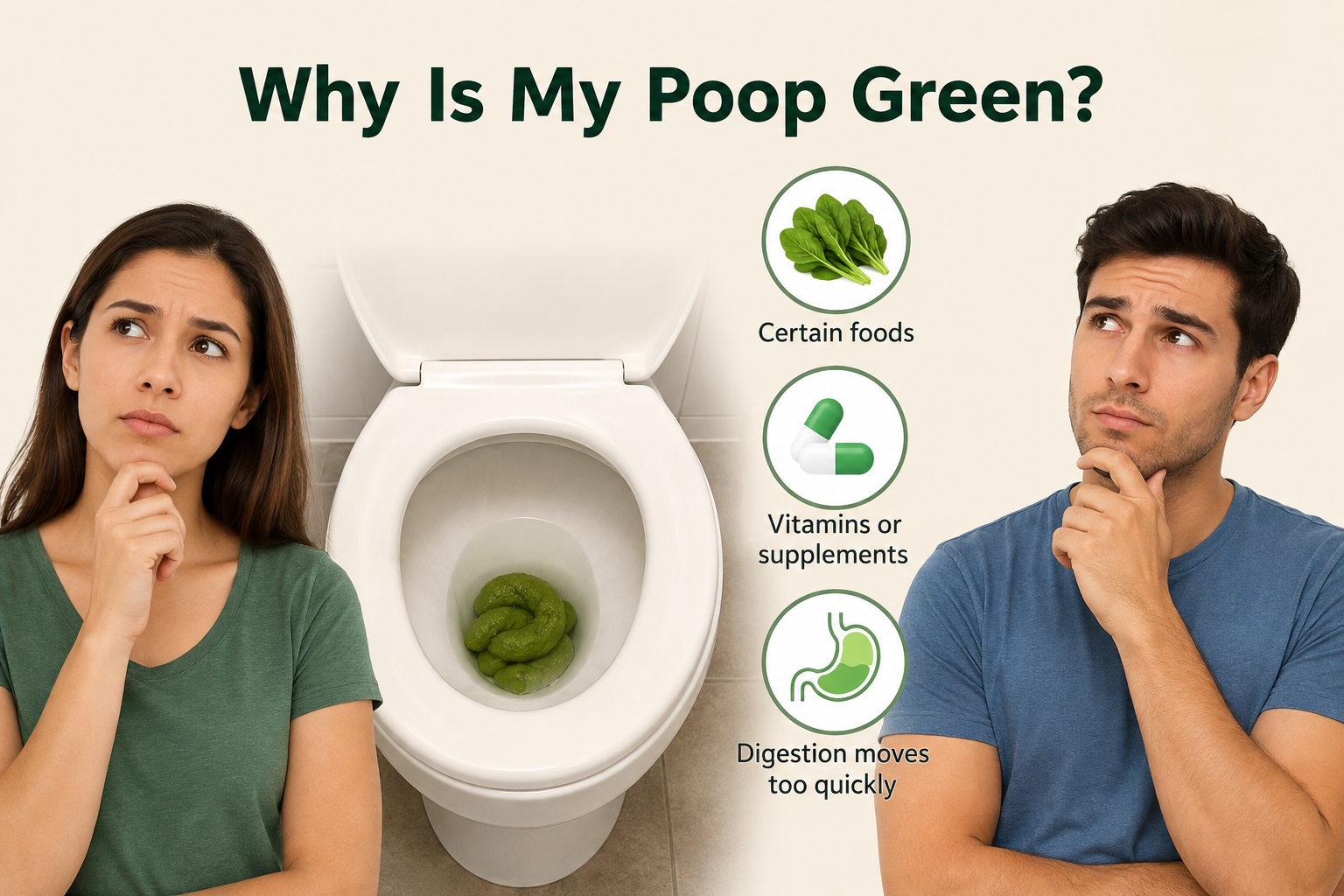
Have you noticed that your stool looks green and wondered, why is my poop green? Green poop can be surprising, but in many cases, it is temporary and harmless. The color of your stool can change because of the foods you eat, food coloring, medications, supplements, or the speed at which food moves through your digestive system.
So, what does green poop mean? While green stool is often linked to diet or digestion, other symptoms can sometimes provide important clues about the underlying cause. Understanding the possible reasons can help you decide whether you simply need to monitor the change or speak with a healthcare professional.
5 Common Reasons for Green Poop
1. Eating Green Vegetables
One of the most common reasons for green stool is eating large amounts of green vegetables. Foods such as spinach, kale, broccoli, and other leafy greens contain chlorophyll, a natural green pigment that can sometimes affect stool color.
Usually, this type of color change is completely harmless and disappears once your diet returns to normal.
2. Foods With Green or Blue Food Coloring
Artificial food coloring can also turn stool green. Green frosting, candies, colorful drinks, and other foods containing blue or green dyes may temporarily change the color of your bowel movements.
If you recently ate brightly colored foods, this may explain the change.
3. Green Poop Diarrhea
Green poop diarrhea can happen when stool moves rapidly through the intestines. Infections, food intolerance, dietary changes, and other digestive problems may cause diarrhea along with green stool.
If diarrhea is mild and lasts only a short time, staying hydrated and monitoring your symptoms may be enough. However, persistent diarrhea, severe abdominal pain, fever, dehydration, or blood in the stool should be evaluated by a healthcare professional.
4. Stomach Bugs and Infections
Gastrointestinal infections can cause diarrhea, abdominal discomfort, nausea, and changes in stool color. A stomach infection may cause food to move through the constipation system faster than usual, contributing to green stool.
If green stool occurs together with significant nausea and vomiting, fever, dehydration, or persistent diarrhea, medical evaluation may be appropriate.
5. Digestive Conditions
Less commonly, persistent green stool may be associated with an underlying digestive condition. If stool color remains unusual for an extended period or occurs with ongoing abdominal pain, unexplained weight loss, repeated diarrhea, or other concerning symptoms, talk with a healthcare professional.
Is Green Poop Normal?
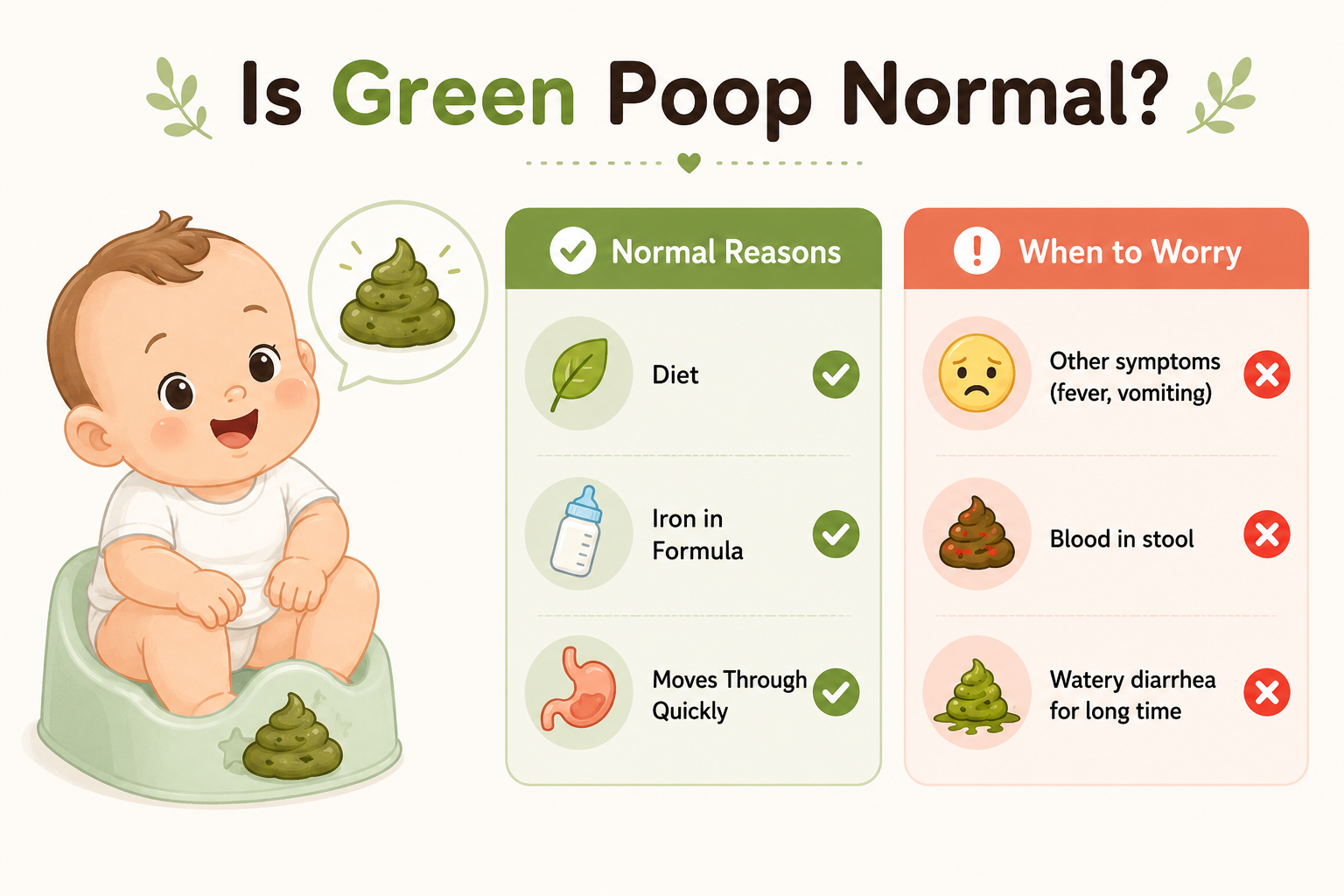
Is green poop normal? In many situations, yes. Occasional green stool is common and may simply reflect something you ate or how quickly food passed through your digestive system.
For example, eating spinach or foods with green coloring can temporarily produce green bowel movements. If you feel well and the color returns to normal within a few days, there is often no reason to be concerned.
However, the color itself is not the only factor to consider. Other symptoms, how long the change lasts, and your overall health are also important. Dark green stool in adults can happen due to diet, supplements, or faster digestion.
Is Green Poop Dangerous?
Is green poop dangerous? Usually, green stool by itself is not dangerous. The more important question is whether it occurs with other symptoms.
Seek medical advice if green stool is persistent or accompanied by severe stomach pain, high fever, repeated vomiting, significant dehydration, blood in the stool, unexplained weight loss, or ongoing diarrhea.
What About Green Poop in Women?
Green poop in woman can have the same common causes as green stool in anyone, including diet, food coloring, supplements, medications, and rapid digestion.
Hormonal changes and dietary changes can also affect digestion and bowel habits. Pregnancy, for example, may involve changes in diet, supplements, and digestion that can influence stool appearance. diarrhoea green watery may occur when food moves quickly through the digestive system.
What If You Have Watery Green Diarrhea for 2 Days?
Experiencing watery green diarrhea for 2 days can occur with a stomach infection, food-related illness, dietary changes, or another digestive issue. The biggest immediate concern with ongoing watery diarrhea is dehydration.
Does Green Poop Mean Cancer?
Searches for green poop cancer can understandably cause worry, but green stool alone is not considered a typical sign of cancer. Diet, rapid intestinal transit, diarrhea, medications, and other much more common causes are usually responsible.
If you have persistent changes in bowel habits along with unexplained weight loss, blood in the stool, persistent abdominal pain, or other concerning symptoms, consult a healthcare professional rather than assuming the stool color indicates a specific disease.
FAQs
1. Why is my poop green and my stomach hurts?
If you are wondering, why is my poop green and my stomach hurts, possible causes include a stomach infection, food intolerance, diarrhea, dietary changes, or food poisoning. Severe or persistent abdominal pain should be assessed by a healthcare professional.
2. What does green stool mean?
What does green poop mean? It can mean that you recently ate green vegetables or foods with artificial coloring, or that stool moved through your digestive system faster than usual. Diarrhea commonly causes this faster transit.
3. Is green stool normal?
Is green poop normal? Occasional green stool can be normal, especially after eating certain foods or taking certain supplements. If it persists or occurs with concerning symptoms, seek medical advice.
4. Is green poop dangerous?
Is green poop dangerous? Green stool is usually not dangerous by itself. However, green stool accompanied by severe pain, dehydration, blood, fever, or persistent diarrhea warrants medical attention.
5. Can green stool be a sign of cancer?
Green stool alone is not usually a sign of cancer. Most cases have common explanations such as diet, food coloring, medications, or rapid digestion. Persistent bowel changes or symptoms such as blood in the stool and unexplained weight loss should be evaluated by a healthcare professional.
Reference
https://www.mayoclinic.org/diseases-conditions/diarrhea/expert-answers/stool-color/faq-20058080
https://www.narayanahealth.org/blog/green-poop-meaning-6-possible-causes
0 200

No Comments