
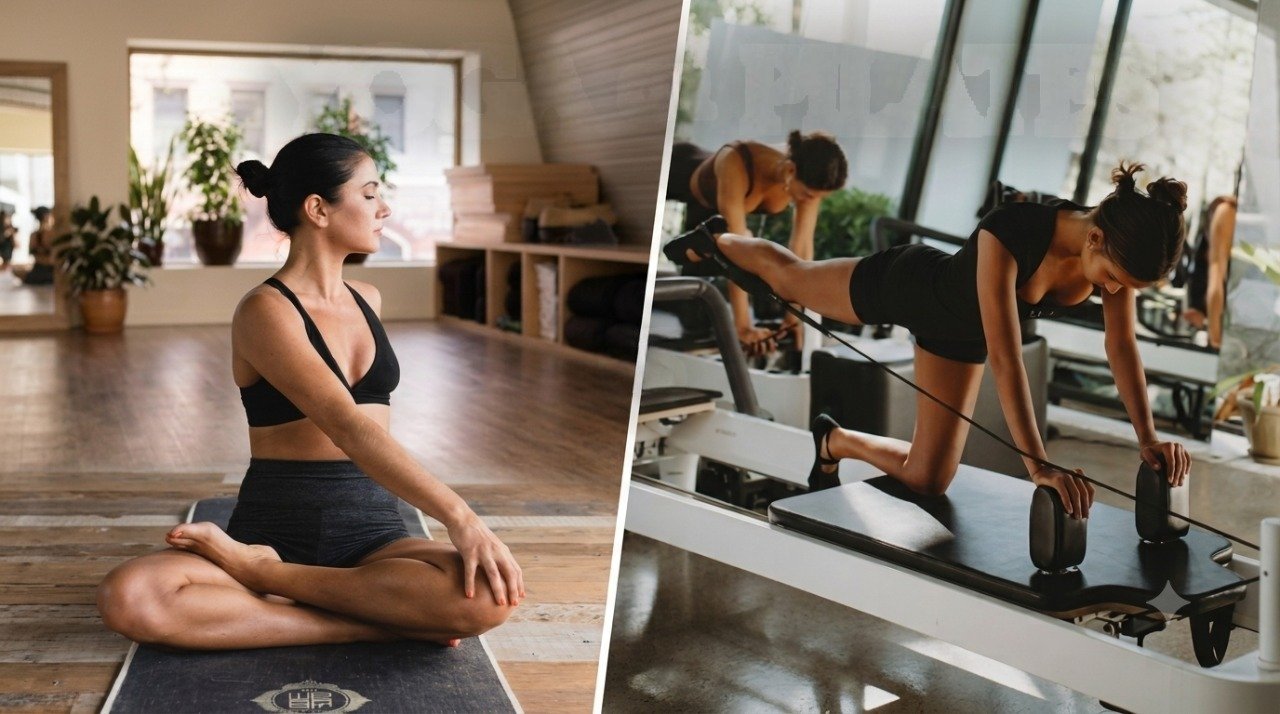
Yoga vs Pilates may look similar at first, but what happens to your body during each practice is quite different. One focuses on flexibility, balance, and mindfulness, while the other puts core strength, stability, and muscle control in the spotlight. Both offer impressive benefits, but which one gives your body what it really needs?
Let’s compare their benefits, differences, and fitness goals to find out.
Yoga vs Pilates: What Sets Them Apart?
At first glance, yoga and Pilates seem almost alike. But look closer, and their goals are quite different. Yoga brings together stretching, breathing, and mindfulness, while Pilates focuses on core strength, muscle control, and stability.
Here is what makes them different:
| Feature | Yoga | Pilates |
|---|---|---|
| Main focus | Flexibility and mindfulness | Core strength and stability |
| Movements | Poses and stretches | Controlled exercises |
| Breathing | Deep, mindful breathing | Coordinated breathing |
| Equipment | Mat and blocks | Mat, bands, and reformer |
| Key benefit | Balance and relaxation | Strength and posture |
The difference between yoga and Pilates comes down to what you want to improve: flexibility and relaxation or strength and body control.
What Does Yoga Do for Your Body?
Yoga does more than improve flexibility. Regular yoga exercise can benefit your body and mind in several ways:
-
Flexibility and mobility: Helps stretch muscles and improve comfortable movement.
-
Stress relief and better sleep: Breathing exercises and mindfulness encourage relaxation.
-
Strength and balance: Yoga poses engage muscles while improving coordination and stability.
-
Heart health: Active yoga styles add physical activity to your routine.
-
Better posture: Builds body awareness and encourages proper movement.
Along with regular exercise, a balanced diet containing vitamin B12 foods can support normal energy metabolism and healthy nerve function.
Regular practice can support overall fitness and make everyday movement more comfortable.
How Does Pilates Change Your Body?
Pilates uses controlled movements to engage different muscle groups, especially the core. You can practise it on a mat or with specialised equipment.
The benefits of Pilates include:
-
Stronger core and better posture: Engages abdominal and back muscles to support stability and body alignment.
-
Improved flexibility and balance: Encourages controlled movement, coordination, and a comfortable range of motion.
-
Better muscle control and endurance: Repeated exercises help muscles work efficiently and improve body awareness.
Beginners can try Pilates exercise at home using a mat and simple movements.
Which Builds More Strength and Flexibility?
Pilates generally places greater emphasis on core strength, muscle control, and stability. It is useful for people who want to strengthen their abdominal muscles and improve movement coordination.
Yoga mainly works on improving flexibility, body balance, and overall mobility. However, strength-focused styles can also challenge muscles through bodyweight poses.
| Fitness goal | Better-suited option |
|---|---|
| Core strength | Pilates |
| Flexibility | Yoga |
| Balance | Both |
| Body awareness | Both |
| Controlled muscle movement | Pilates |
| Relaxation and mindfulness | Yoga |
Along with regular exercise, eating vitamin B12 vegetables and fruits can help provide nutrients that support normal nerve function and energy metabolism.
In the Pilates vs yoga comparison, neither practice is universally better. Your choice depends on which benefits matter most to you.
Which Is Better for Weight Loss?
Both yoga and Pilates can support an active lifestyle, but neither guarantees weight loss. More active yoga styles may burn more calories, while Pilates helps build muscle strength and improve fitness.
For better weight management, focus on:
-
Eating a balanced diet.
-
Staying physically active.
-
Getting enough sleep.
-
Including activities like walking, cycling, or swimming.
Along with these habits, belly fat exercises can add variety to your fitness routine and support overall physical activity.
Your overall routine and consistency matter more than choosing one workout over the other.
Yoga vs Pilates During Pregnancy: Which Is Safer?
Pregnancy changes what your body needs from exercise. Prenatal yoga focuses on gentle stretching, breathing, and relaxation, while pregnancy-friendly Pilates supports posture, stability, and controlled movement.
Before choosing either practice, keep these points in mind:
-
Choose pregnancy-specific classes.
-
Avoid heated yoga and strenuous movements.
-
Skip exercises that cause discomfort or abdominal pressure.
-
Avoid positions that affect your balance.
Gentle, pregnancy-appropriate normal delivery exercises may also be part of an active pregnancy routine, depending on individual needs and suitability.
Both may be suitable during pregnancy with individual guidance from a qualified prenatal instructor and professionals.
Which One Should Beginners Choose?
New to fitness? Start with the practice that matches your goals. Yoga is a good option for gentle stretching, flexibility, and relaxation, while Pilates is ideal if you want to build core strength and improve body control.
If you want to learn how to do Pilates, begin with simple mat exercises such as:
-
Pelvic tilts
-
Glute bridges
-
Knee folds
-
Modified leg stretches
Wondering what Pilates exercise routines are like? These beginner movements help you understand proper control before moving on to more challenging exercises. Start slowly and increase the difficulty as you become comfortable.
Can You Combine Yoga and Pilates?
Absolutely! Combining yoga and Pilates gives you the benefits of both practices.
Pilates emphasizes core strength and muscle control, whereas yoga combines stretching, balance, and relaxation techniques.
You can create a simple weekly routine:
-
2 days: Pilates for core strength.
-
2 days: Yoga for flexibility and balance.
-
Other days: Walking or light activity.
Along with exercise, including foods with B12 in a balanced diet can help support normal energy metabolism and nerve function.
You don’t need to do both every day. A consistent routine that suits your fitness level is what matters most.
Conclusion
Choosing between Yoga vs Pilates comes down to your fitness goals. Yoga can help improve flexibility and relaxation, while Pilates focuses on core strength, stability, and body control. Both offer valuable benefits for overall fitness. Choose the one that suits your needs, or combine both to make your fitness routine more effective.
Frequently Asked Questions
1. Which is better for improving posture?
Both practices can help improve posture. Pilates builds core strength and body control, whereas yoga supports flexibility, balance, and proper alignment.
2. Can Pilates help build lean muscle?
Yes. Pilates uses controlled resistance and repeated movements that can strengthen muscles and improve muscular endurance. Results depend on exercise intensity and consistency.
3. Is yoga easier than Pilates?
Not necessarily. Gentle yoga may feel easier for some beginners, while other yoga styles can be physically demanding. Pilates also ranges from beginner-friendly to advanced.
4. How often should you practice yoga or Pilates?
Beginners can start with two or three sessions per week and gradually adjust according to their fitness level, recovery, and schedule.
References:
- https://health.clevelandclinic.org/yoga-vs-pilates
- https://pmc.ncbi.nlm.nih.gov/articles/PMC8038747/
0 200

No Comments