
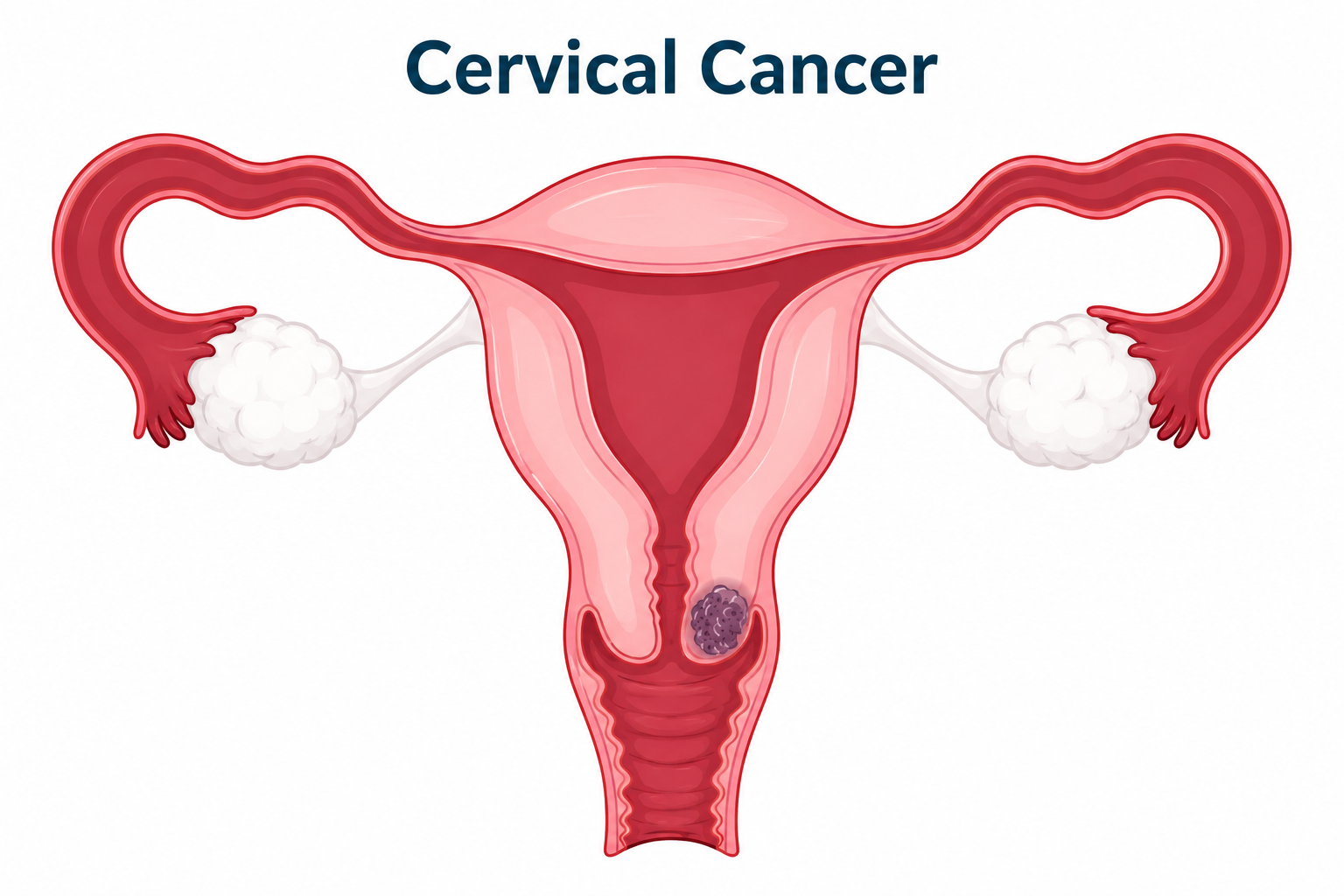
Cervical cancer is a type of cancer that develops in the cells of the cervix, the lower part of the uterus that connects to the vagina. Understanding what is cervical anatomy and the role of the cervix is essential for recognizing potential health concerns and seeking timely medical care. Cervical cancer is one of the most preventable cancers because screening and vaccination can help detect or reduce the risk of the disease.
What Is the Cervix?
The cervix is the narrow, lower portion of the uterus that opens into the vagina. The term cervical meaning refers to anything related to the cervix. In medical terminology, the meaning of “cervical” may vary depending on the body part involved; however, in gynecology, it specifically refers to the cervix.
The cervix has two main parts:
- Exocervix: The outer portion of the cervix that extends into the vagina.
- Endocervix: The inner canal that connects the uterus to the vagina.
Healthcare providers may describe different anatomical features, such as a prominent cervix, a barrel-shaped cervix, or other variations in the type of cervix during a pelvic examination. These findings do not necessarily indicate cancer but may require further evaluation depending on symptoms and medical history.
What Is Cervical Cancer?
Cervical cancer occurs when abnormal cells in the cervix grow uncontrollably and form a tumor. The medical term neoplasm cervix or neoplasm of cervix refers to an abnormal growth of cells in the cervix. While some cervical neoplasms are benign, others may become cancerous over time.
A common cervical carcinoma definition is a malignant tumor that originates from the epithelial cells lining the cervix. The majority of cervical cancers are classified as squamous cell carcinomas or adenocarcinomas.
Causes and Risk Factors
The leading cause of cervical cancer is a persistent infection with high-risk strains of the Human Papillomavirus (HPV), a common virus that is primarily spread through sexual contact.
While many HPV infections clear naturally, some persist and can lead to precancerous changes in cervical cells.
Other risk factors include:
- Smoking
- Weakened immune system
- Multiple sexual partners
- Early sexual activity
- Long-term use of oral contraceptives
- Family history of cervical cancer
- Lack of regular cervical screening
Regular Pap tests and HPV testing can help identify abnormal changes before cancer develops.
Symptoms of Cervical Cancer
In the early stages, cervical cancer often develops without causing any obvious signs or symptoms. As the disease progresses, various symptoms of cervical cancer may appear.
Common cervical cancer symptoms include:
- Abnormal vaginal bleeding between periods
- Bleeding after sexual intercourse
- Bleeding after menopause
- Unusual vaginal discharge
- Pelvic pain
- Pain during intercourse
- Lower back pain
- Fatigue
- Unexplained weight loss
Some women may notice a cervix lump or abnormal tissue changes during a medical examination. However, a lump does not always indicate cancer and should be evaluated by a healthcare provider.
Because early detection significantly improves treatment outcomes, it is important not to ignore persistent symptoms.
Diagnosis of Cervical Cancer
Doctors use several methods to diagnose cervical cancer, including:
Pap Test
A Pap smear collects cells from the cervix to identify abnormal or precancerous changes.
HPV Test
This test checks for high-risk HPV strains associated with cervical cancer.
Colposcopy
A colposcopy uses a specialized microscope to examine the cervix more closely.
Biopsy
If abnormal cells are detected, a small tissue sample may be removed and examined under a microscope to confirm the diagnosis.
Imaging studies such as CT scans, MRI scans, or PET scans may also be used to determine whether cancer has spread.
Stages of Cervical Cancer
Cervical cancer is generally classified into four stages:
Stage I
Cancer is confined to the cervix.
Stage II
Cancer has spread beyond the cervix but not to the pelvic wall.
Stage III
Cancer has extended to the pelvic wall or lower vagina.
Stage IV
The cancer has advanced beyond its original location and spread to nearby organs or other areas of the body.
The stage of cancer helps determine the most appropriate treatment plan.
Treatment Options
Treatment depends on the stage of cancer, overall healthy health, and patient preferences.
Surgery
Early-stage cervical cancer may be treated with surgery to remove the tumor, cervix, uterus, or surrounding tissues.
Radiation Therapy
Radiation therapy treats cancer by using high-energy radiation to target and destroy cancer cells.
Chemotherapy
Chemotherapy uses drugs to kill cancer cells or stop their growth.
Targeted Therapy
Targeted medications focus on specific molecular changes within cancer cells.
Immunotherapy
Immunotherapy works by strengthening the body’s immune system, enabling it to identify and fight cancer cells more effectively.
Many patients receive a combination of treatments to achieve the best possible outcome.
Prevention Strategies
Several measures can help reduce the risk of cervical cancer:
- Receive the HPV vaccine
- Attend regular cervical screening appointments
- Avoid smoking
- Practice safe sex
- Maintain a healthy immune system
- Seek prompt medical evaluation for abnormal symptoms
Routine screening remains one of the most effective tools for preventing cervical cancer.
Understanding Cervical Cancer Resources
Many people search online for information using terms such as cervical cancer wiki or cervical cancer graphic to better understand the disease. Educational graphics, diagrams, and reputable medical resources can help explain how cervical cancer develops, the location of the cervix, and available treatment options. However, information should always be verified through trusted healthcare organizations and medical professionals.
Conclusion
Cervical cancer is a serious but largely preventable disease. Understanding the cervix, recognizing cervical cancer symptoms, and participating in regular screening can help detect abnormalities early when treatment is most effective. With advances in HPV vaccination, screening programs, and modern therapies, many women can successfully prevent or manage cervical cancer. If you experience unusual symptoms or have concerns about your cervical health, consult a healthcare professional for evaluation and guidance.
FAQs
1. What are the early symptoms of cervical cancer?
Early cancer may not cause symptoms. When symptoms occur, they often include abnormal vaginal bleeding, unusual discharge, and pelvic pain.
2. What causes cervical cancer to develop?
Persistent infection with high-risk HPV strains is the leading cause of cancer.
3. Can cervical cancer be prevented?
Yes. HPV vaccination, regular Pap tests, HPV screening, and healthy lifestyle habits can significantly reduce the risk.
4. What does a neoplasm of the cervix mean?
A neoplasm of the cervix refers to an abnormal growth of cells in the cervix. It may be benign, precancerous, or cancerous depending on the findings.
5. What is the function of the exocervix?
The exocervix is the outer part of the cervix that projects into the vagina and serves as an important area examined during cervical screening tests.
Reference
https://www.cancer.gov/types/cervical
https://www.mayoclinic.org/diseases-conditions/cervical-cancer/symptoms-causes/syc-20352501


No Comments