
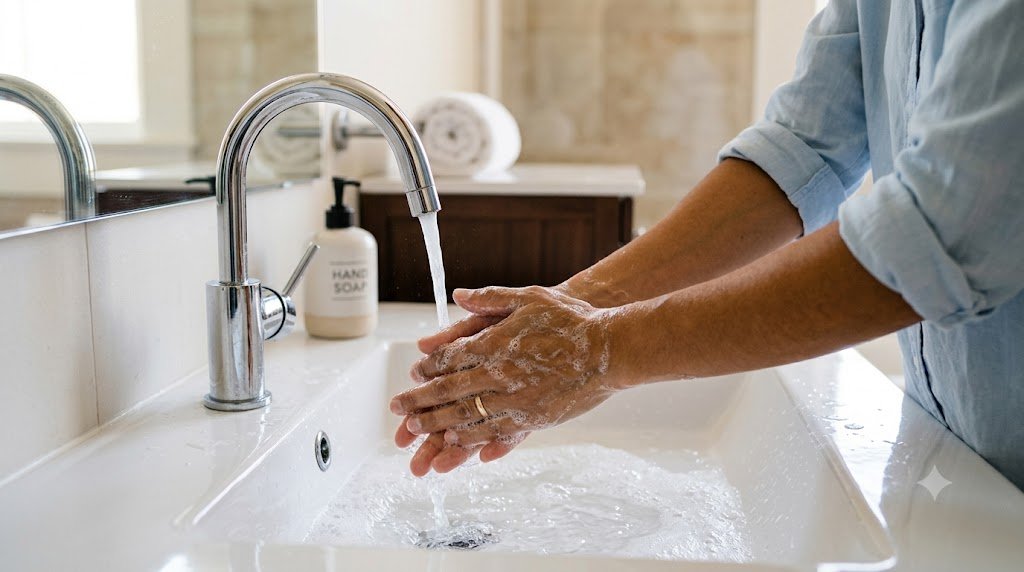
Proper hand hygiene is one of the easiest and most effective ways to protect yourself from germs, bacteria, and infections. During the day, our hands touch many different surfaces, such as phones, door handles, money, and commonly used items, which can carry germs. Learning the correct method for hand washing can help prevent the spread of harmful microorganisms and support a healthier lifestyle. This guide explains the 7 steps to washing your hands properly, along with important tips about hand hygiene hand washing, cleaning hands, and maintaining healthy normal hands.
Why Is Proper Hand Washing Important?
Our hands carry countless germs that can easily enter our bodies when we touch our eyes, nose, or mouth. Regular hand washing before eating is especially important because food can transfer germs directly into our system. Practicing good hand hygiene and handwashing habits can reduce the risk of common illnesses and help keep you and your family healthier.
Many people wash their hands quickly without following the correct process. However, washing hands correctly requires enough time and proper technique to remove dirt, bacteria, and viruses effectively. Knowing what is the proper way to wash your hands allows you to build a simple healthy habit that provides long-term health benefits.
7 Steps to Washing Your Hands Properly
Step 1: Moisten Your Hands With Clean Running Water
The first step to wash your hands is to wet your hands completely with clean, running water. Warm or cold water can both be used. Make sure your hands are fully covered with water before applying soap.
Step 2: Apply Soap and Create Lather
Use enough soap to cover the entire surface of your hands. Soap helps remove germs, dirt, and oils from your skin. Rub your hands together to create a good lather, making sure the soap reaches every part of your hands.
Step 3: Rub Your Hands Together Properly
One of the most important washing your hands steps is rubbing your hands thoroughly. Rub your palms, the backs of your hands, between your fingers, and around your nails to remove dirt and germs effectively. These areas often collect germs and require careful cleaning.
Remember that effective washing hands correctly is not just about adding soap; it is about using the right technique and giving enough attention to every area.
Step 4: Scrub for the Recommended Time
A common question is, how long should you wash your hands? Health experts generally recommend washing hands with soap for at least 20 seconds. If you’re wondering how long it takes to wash your hands properly, you should scrub with soap for about 20 seconds, then rinse and dry your hands thoroughly.
You can count slowly to 20 or sing a short song to make sure you spend enough time cleaning your hands.
Step 5: Rinse Your Hands Thoroughly
After scrubbing, rinse your hands under clean running water. Make sure all soap and remaining dirt are removed. Proper rinsing is an important part of cleaning hands because leftover soap or germs can remain if this step is rushed.
Step 6: Dry Your Hands Completely
Drying is another essential part of good hygiene. Use a clean towel, paper towel, or an air dryer. Wiping hands properly prevents moisture from remaining on your skin, as wet hands can spread germs more easily.
Step 7: Keep Your Hands Clean After Washing
After completing the handwashing process, avoid touching dirty surfaces immediately. Use a clean towel or tissue when opening doors in public places if possible. Maintaining good habits after washing helps protect your healthy normal hands and keeps germs away.
When Should You Wash Your Hands?

Knowing when to wash your hands is just as important as knowing the correct technique. You should practice regular hand hygiene hand washing at important times, including:
- Before eating or preparing food
- After using the restroom
- After coughing, sneezing, or blowing your nose
- After touching garbage
- After handling animals
- Before and after providing care to someone who is ill
- After returning home from public places
Regular washing your hands before eating is one of the simplest ways to reduce the chance of swallowing harmful germs.
Common Hand Washing Mistakes to Avoid
Many people make mistakes while washing their hands. Some common problems include washing for too little time, skipping areas like fingertips and thumbs, or not drying hands properly.
Another mistake is assuming that a quick rinse with water is enough. Effective hand hygiene and handwashing requires soap, proper rubbing, rinsing, and drying. Following the complete steps of handwashing ensures your hands are cleaned properly.
Benefits of Proper Hand Hygiene
Good hand hygiene offers many benefits, including:
- Reducing the spread of infections
- Protecting yourself and others from germs
- Supporting healthier daily routines
- Keeping hands cleaner and fresher
- Preventing contamination during food preparation
Learning how to wash hands properly is a simple skill that can make a big difference in personal health.
FAQs
1. What Is the Correct Method for Washing Your Hands?
The proper way to wash your hands is to wet them with clean water, apply soap, scrub all areas for at least 20 seconds, rinse thoroughly, and dry completely. Following these steps helps remove germs effectively.
2. What Is the Recommended Time for Hand Washing?
You should wash your hands with soap for at least 20 seconds. This amount of time allows soap and friction to remove most germs and dirt from your skin.
3. How long does it take to wash your hands properly?
The complete process usually takes around 30 seconds or more, including wettin g, scrubbing, rinsing, and drying your hands.
4. Why is hand washing before eating important?
Washing your hands before eating helps remove germs that may have collected on your hands throughout the day. This reduces the chance of transferring bacteria and viruses into your food.
5. Can rinsing hands with water alone remove germs?
Rinsing with water can remove some dirt, but using soap and following proper handwashing techniques is much more effective for removing germs and maintaining good hygiene.
Reference
https://www.healthline.com/health/how-long-should-you-wash-your-hands
https://www.webmd.com/cold-and-flu/cold-prevention-hand-washing
0 200

No Comments