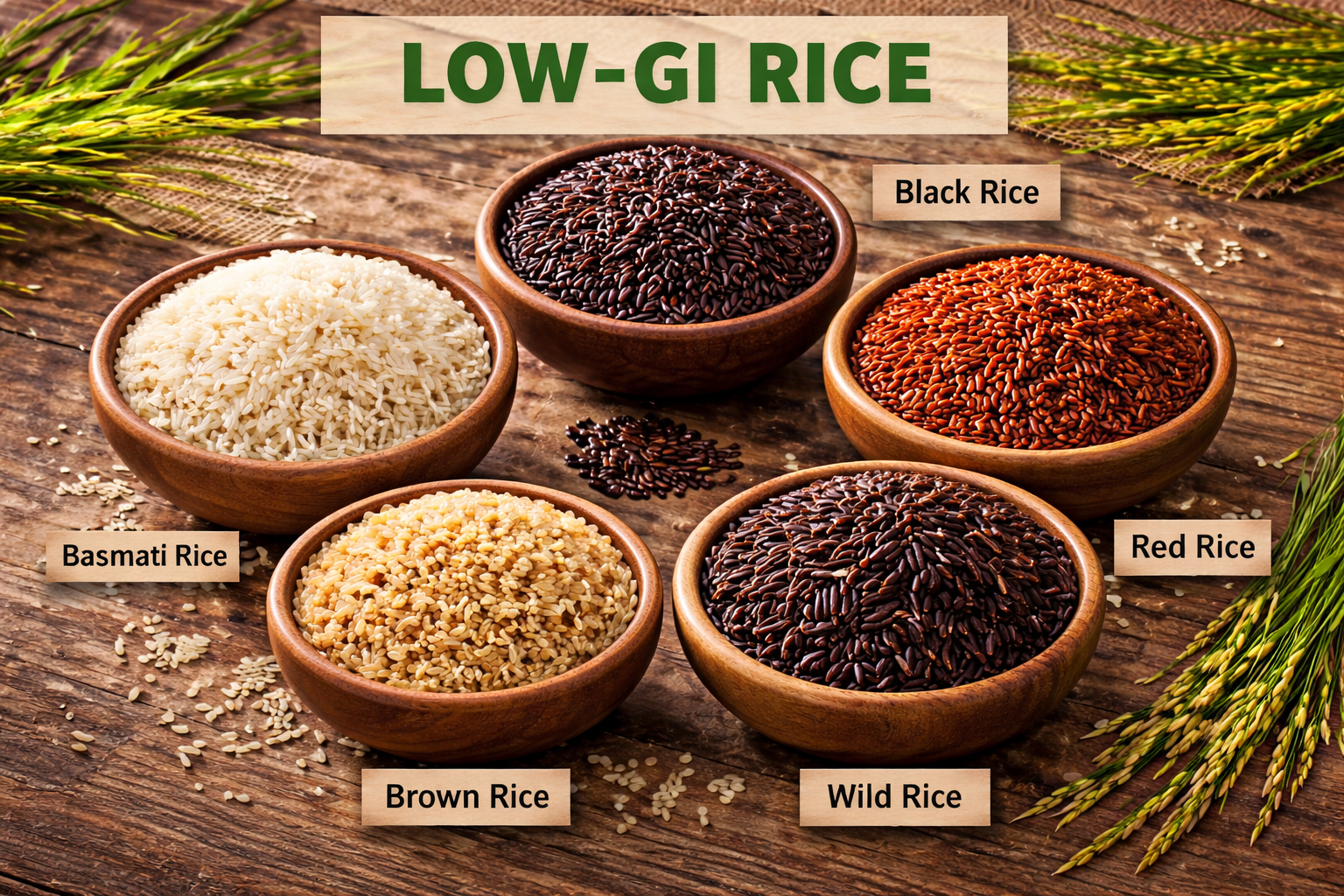
Low GI rice varieties have a GI of 55 or below, helping release glucose more slowly and steadily for a gentler rise in blood sugar. This means it can help promote a more gradual rise in blood sugar instead of a sudden spike. But is low-GI rice really healthier, and which types are best? Keep reading to discover the benefits, GI levels, and best low-GI rice choices for blood sugar management, weight goals, and everyday meals.
What Does Low GI Rice Mean?
Low GI rice is digested and absorbed more slowly, resulting in a more gradual increase in blood glucose. The amount of amylose, a type of starch, is one factor that can influence how quickly rice is digested. Black rice is a low-glycemic option that may support better blood sugar management.
It is important to remember that glycemic index is not the same as overall nutritional quality. Portion size, total carbohydrate intake, fiber, protein, fats, and the other foods eaten with rice can all affect the body’s blood sugar response.
Benefits of Low GI Rice
1. Helps Manage Blood Sugar
Low glycemic index rice is digested more slowly, which may help reduce rapid blood sugar spikes after meals. Wondering which rice has less sugar? Choose varieties with a lower glycemic index.
2. Supports Better Blood Sugar Control
Choosing lower-glycemic index foods can be helpful for people who are trying to maintain steadier blood glucose levels.
3. May Support Weight Management
Low glycemic index rice can be part of a balanced diet and may help with fullness when combined with vegetables, protein, and other high-fiber foods.
4. Provides Longer-Lasting Energy
Because it releases glucose more gradually, low glycemic index rice may provide more sustained energy compared with rapidly digested carbohydrates.
5. Works Well in Balanced Meals
Pairing low glycemic index rice with vegetables, legumes, lean protein, or healthy fats can create a more balanced and satisfying meal.
6. May Help Reduce Blood Sugar Fluctuations
Replacing higher-GI carbohydrate choices with lower-GI options may help reduce sharp rises and falls in blood glucose for some people.
7. Can Be an Alternative to Giving Up Rice
People who enjoy rice don’t necessarily have to eliminate it from their diet. Choosing an appropriate variety and portion can make rice easier to fit into a balanced eating pattern.
What Is the Best Low GI Rice?
When looking for the Best low gi rice, check the product’s nutrition information and any reliable glycemic index testing or certification rather than relying only on the words “healthy” or “brown.” A rice glycemic index chart helps compare the GI levels of different rice varieties.
A useful low-glycemic-index rice list may include certain basmati rice varieties, parboiled rice, and some high-amylose rice varieties. The exact glycemic index should be checked for the particular product because rice varieties are not interchangeable.
Is Basmati Rice Low GI?
Is basmati rice low GI? Some basmati rice varieties have a relatively low or moderate glycemic index, but not every basmati rice product has the same glycemic index. Low GI rice for diabetes can help support better blood sugar management.
Low GI Rice vs Brown Rice
When comparing Low GI rice vs brown rice, it is important to understand that these are different concepts. Low glycemic index describes the expected effect of a food on blood glucose, while brown rice describes a form of rice that retains more of the bran and germ than white rice.
Disadvantages of eating brown rice may include longer cooking time, a firmer texture, and potentially higher arsenic exposure compared with some other rice choices.
The comparison of Brown rice vs white rice glycemic index therefore cannot be reduced to a single universal number. Different varieties and cooking methods can produce different results.
Low GI Rice vs Normal Rice
The main difference in Low GI rice vs normal rice is the expected speed at which carbohydrates are digested and absorbed. Conventional white rice can have a moderate or high glycemic index depending on the variety and preparation, while some low-glycemic index products are specifically selected or processed to produce a slower glucose response.
Low GI Rice Side Effects and Considerations
Most people can eat rice safely as part of a balanced diet. However, Low GI rice side effects may occur in some people if a particular product causes digestive discomfort or if large portions are eaten. Some packaged products may also contain added ingredients, so checking the label is worthwhile.
While rice can be part of a healthy diet, side effects of eating rice daily may include excess calorie or carbohydrate intake, especially when portions are large and meals lack enough fiber, vegetables, and protein.
FAQs
1. What does low GI rice mean?
Low glycemic index rice has a GI score of 55 or below and causes a slower rise in blood sugar than high-glycemic index rice.
2. Is basmati rice low GI?
Some basmati rice varieties have a low to moderate GI, but the exact score depends on the variety and cooking method.
3. Is low GI rice genetically modified?
Not necessarily. Low GI rice can come from naturally occurring varieties, selective breeding, or processing methods such as parboiling.
4. Is low GI rice better than brown rice?
Both can be healthy choices. Low GI rice focuses on blood sugar response, while brown rice generally provides more fiber.
5. Can I eat low GI rice every day?
Yes, it can fit into a balanced diet when eaten in moderate portions with vegetables, protein, and other nutritious foods.
Reference
https://www.mayoclinic.org/healthy-lifestyle/nutrition-and-healthy-eating/in-depth/low-glycemic-index-diet/art-20048478
https://pmc.ncbi.nlm.nih.gov/articles/PMC9319176/
0 200



No Comments