
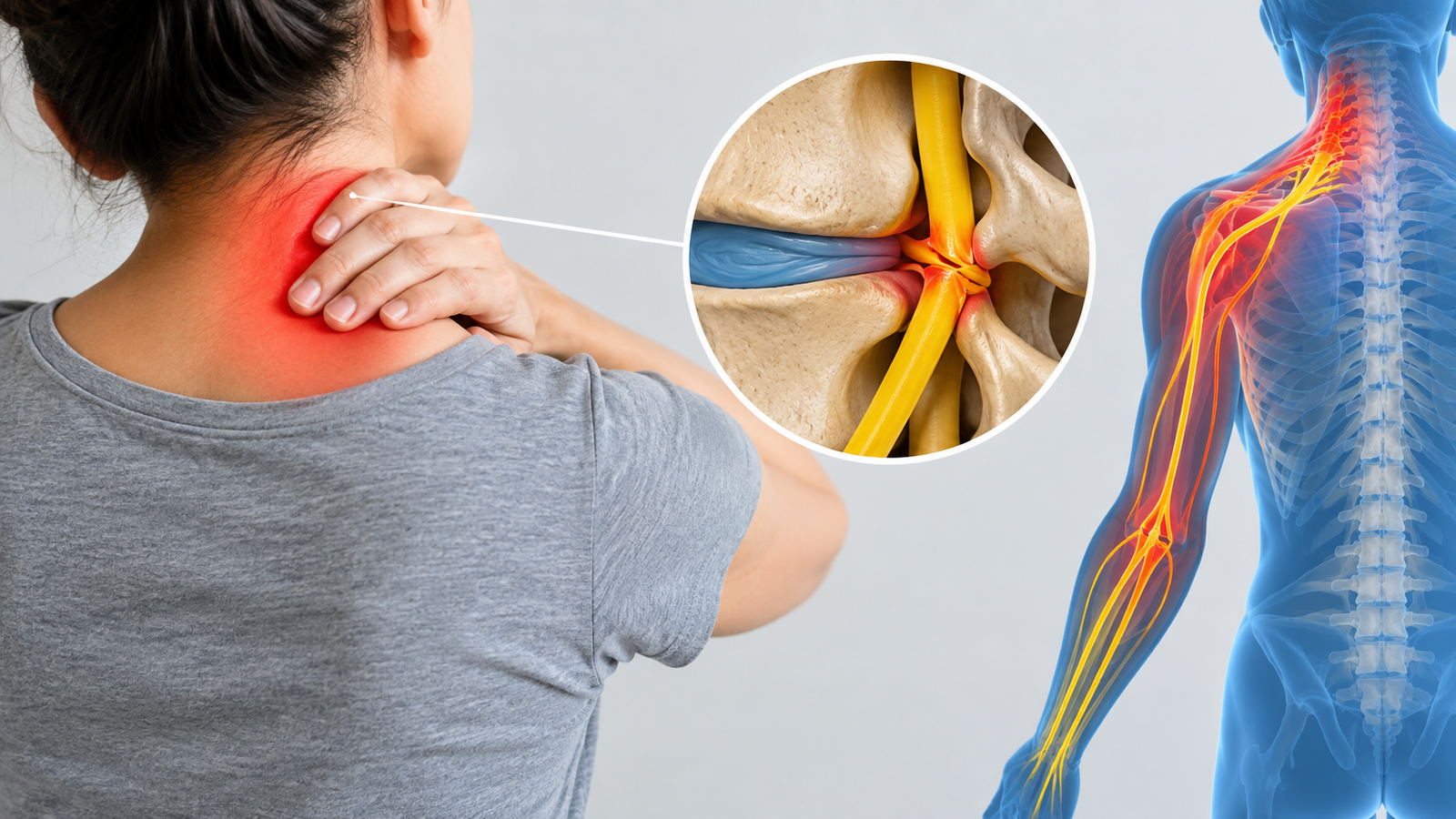
A pinched nerve happens when surrounding tissues such as bones, muscles, cartilage, or tendons put pressure on a nerve, interfering with normal nerve signals. This can trigger sharp pain, tingling, numbness, or weakness that may spread from the affected area into the shoulder, arm, or other parts of the body. Pinched nerve in the neck symptoms may include pain, numbness, tingling, or weakness that can spread to the shoulder and arm.
What Is a Pinched Nerve?
If you are wondering what is a pinched nerve, it is a condition that occurs when surrounding tissues put excessive pressure on a nerve. This pressure may come from a bulging or herniated disc, arthritis-related changes, muscle tension, bone density, or an injury.
The pinched nerve meaning is therefore fairly straightforward: a nerve is being compressed or irritated, interfering with its normal function. Symptoms may vary from mild discomfort to severe pain and weakness, depending on how much the nerve is compressed and where the pressure occurs.
5 Symptoms You Shouldn’t Ignore
1. Neck Pain
Neck pain is one of the most common symptoms of a pinched nerve. The discomfort may feel sharp, aching, burning, or electric. It may become worse when turning your head, looking down, or maintaining the same position for an extended period.
Neck pain associated with nerve irritation can sometimes travel beyond the neck rather than remaining in one specific area.
2. Pain That Travels Into the Shoulder or Arm
Nerve compression in the cervical spine can cause pain that radiates toward the shoulder, upper back, arm, or hand. The sensation may follow a particular pathway depending on which nerve is affected.
This is why many people search for can a pinched nerve cause neck and shoulder pain when experiencing discomfort in both areas. Yes, nerve irritation in the neck can contribute to pain affecting the shoulder and arm.
3. Tingling or Pins-and-Needles Sensation
Tingling is another characteristic symptom. You may feel pins and needles, crawling sensations, or brief electrical sensations in the shoulder, arm, hand, or fingers.
These sensations may come and go or become more noticeable when your neck is positioned in a certain way.
4. Numbness
Nerve compression can interfere with normal sensation. As a result, part of the arm, hand, or fingers may feel numb or less sensitive than usual.
Persistent or worsening numbness deserves medical attention, particularly if it occurs alongside weakness or difficulty using the affected limb.
5. Muscle Weakness
A compressed nerve may affect the signals traveling between the nervous system and muscles. This can result in weakness in the shoulder, arm, wrist, or hand.
For example, you might find it harder to grip objects, lift something, or perform movements that were previously easy. New or progressive weakness should be evaluated by a healthcare professional.
Common Causes
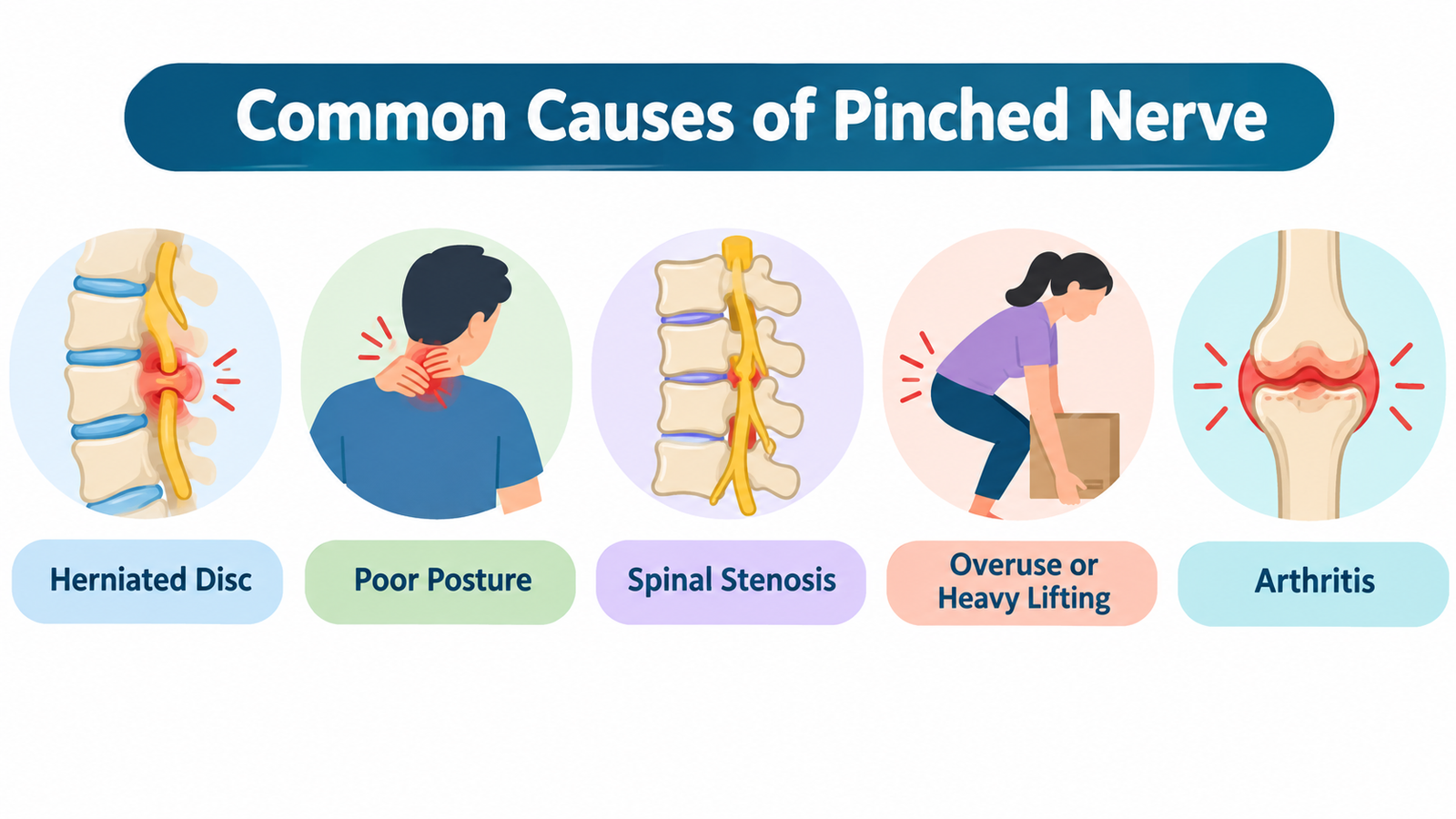
There are several possible reasons a nerve in the neck can become irritated. Spine changes that occur naturally with age are common. Discs between the vertebrae can lose flexibility over time, while arthritis may contribute to narrowing around the nerves.
The symptoms of a pinched nerve in the neck or shoulder can vary depending on the affected nerve and the level of compression.
Can Symptoms Come From Somewhere Else?
Nerve-related symptoms are not limited to the neck. Similar problems can occur in other areas of the spine. For example, symptoms of pinched nerve in lower back may include lower-back pain, numbness, tingling, or weakness that travels into the buttock or leg.
A pinched nerve in lower back can have different causes and symptoms from cervical nerve compression, so identifying the location of the problem is important.
Similarly, a pinched nerve arm may actually originate from the neck rather than from the arm itself. A healthcare professional can help determine where the nerve is being affected.
How Is a Pinched Nerve Treated?
The appropriate treatment varies based on the cause and severity of the condition. Mild cases may improve with time and conservative measures. Resting from activities that aggravate symptoms, maintaining comfortable posture, and using appropriate heat or cold therapy may provide temporary relief.
A healthcare professional may recommend physical therapy to improve posture, mobility, flexibility, and muscle support around the neck. Depending on the diagnosis, medications or other treatments may also be considered.
If you are asking how to treat a pinched nerve, the safest approach is to first determine why the nerve is compressed rather than trying to treat the symptoms alone.
Likewise, how to remedy a pinched nerve depends on its cause. There isn’t a one-size-fits-all treatment, as the right approach depends on the underlying cause and severity. Some cases improve within days or weeks, while persistent compression may require additional medical evaluation.
Despite the common search for How to cure a pinched nerve, it is important to understand that treatment should be based on the underlying condition. A healthcare professional can recommend an appropriate plan after reviewing your symptoms and, when necessary, performing an examination or imaging tests.
FAQs
1. How long does a pinched nerve in the neck usually last?
Many mild cases improve over several days or weeks with appropriate conservative care. The recovery time depends on the underlying cause, degree of nerve irritation, and overall health.
2. Can a pinched nerve cause headaches?
Neck nerve irritation and associated muscle tension can sometimes occur alongside headaches. However, headaches have many possible causes, so persistent, severe, or unusual headaches should be discussed with a healthcare professional.
3. Can exercise make the condition worse?
Certain movements may aggravate an irritated nerve, particularly exercises that place excessive strain on the neck. Gentle, appropriate movement may be beneficial, but exercises should be selected according to the underlying condition.
4. Is numbness in the arm always caused by a nerve problem?
No. Numbness can have several causes, including nerve compression in the neck, problems affecting nerves farther down the arm, circulation issues, and other medical conditions. Persistent numbness should be assessed.
5. What are the warning signs that require medical care?
The signs and symptoms of pinched nerve in the neck that deserve prompt attention include worsening weakness, persistent or increasing numbness, severe pain, coordination problems, or symptoms after a significant injury. Sudden neurological symptoms require urgent medical evaluation.
Reference
https://my.clevelandclinic.org/health/diseases/22639-cervical-radiculopathy-pinched-nerve
https://www.mayoclinic.org/diseases-conditions/pinched-nerve/symptoms-causes/syc-20354746
0 200

No Comments