
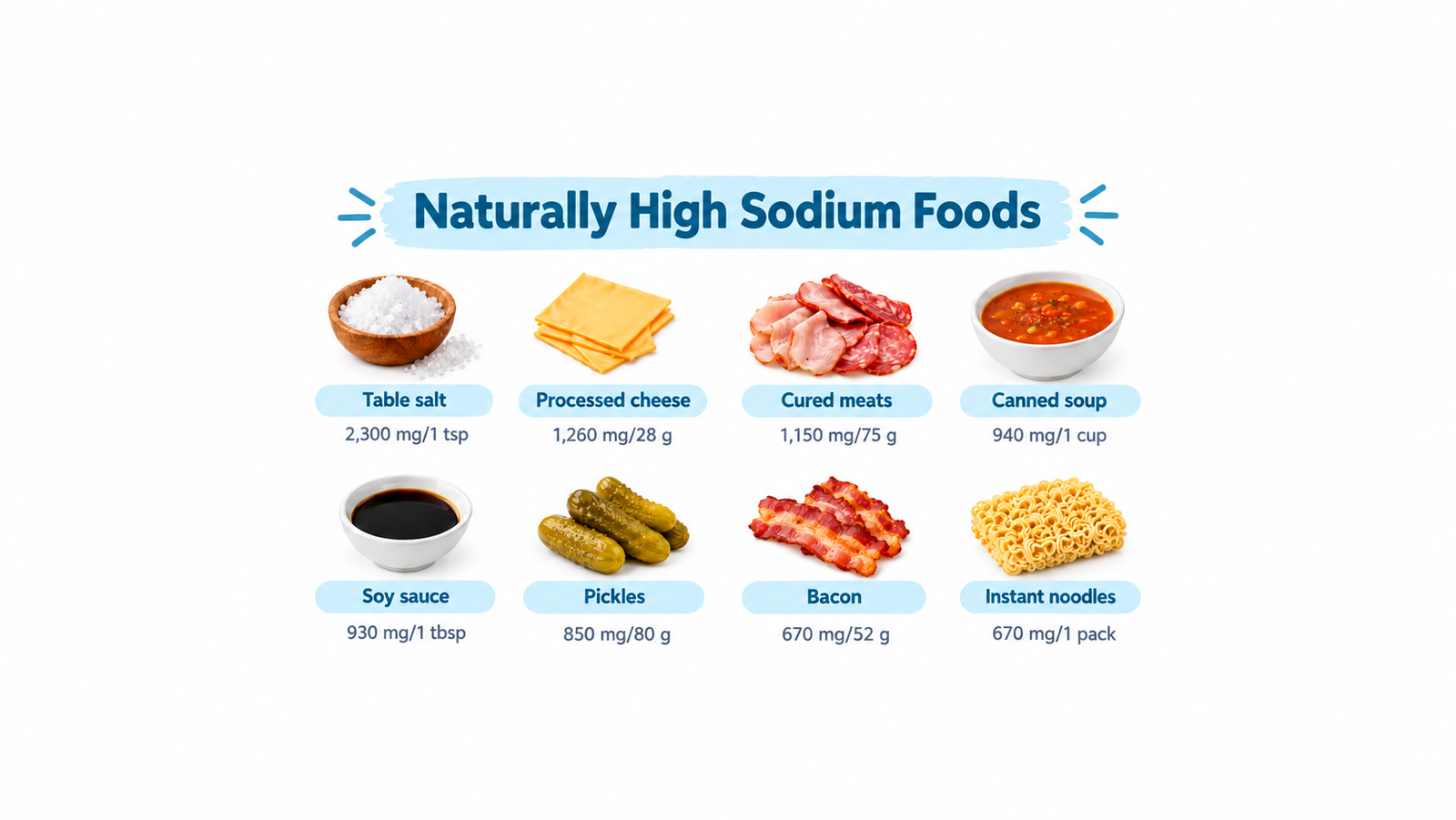
Sodium is an essential mineral that helps the body maintain fluid balance, support nerve signals, and regulate muscle function. While many people associate sodium with processed foods, some foods naturally contain meaningful amounts of this mineral. Understanding where sodium comes from can help you make informed choices and maintain a balanced diet.
If you are researching a high sodium foods chart, it is useful to remember that sodium levels can vary depending on the food variety, preparation method, serving size, and whether salt has been added. Naturally occurring sodium is generally found in smaller amounts than the sodium added to many packaged and restaurant foods.
What Are Naturally High Sodium Foods?
Some foods naturally contain more sodium because of their mineral composition. These include certain seafood, dairy products, meats, vegetables, and fermented foods. Sea vegetables such as kelp and dulse can be particularly mineral-rich, while foods such as cow’s milk, eggs, and shellfish provide smaller but measurable amounts.
People often ask what are high sodium foods when trying to understand which foods may contribute significantly to their daily intake. Foods that are cured, pickled, fermented, canned, or heavily seasoned can contain considerably more sodium than their fresh counterparts. Reading nutrition labels is therefore important when comparing similar products.
15 Foods That Naturally Contain Sodium
Here are examples of foods that can contribute sodium to your diet:
Seaweed – Kelp, nori, and other sea vegetables naturally absorb minerals from seawater.
Clams – Fresh clams provide sodium along with protein, iron, and other nutrients.
Oysters – These shellfish contain naturally occurring sodium and several important minerals.
Mussels – Mussels provide protein, vitamins and minerals, including naturally occurring sodium.
Shrimp – Fresh shrimp contains sodium even before salt or seasoning is added.
Milk – Dairy naturally contains sodium along with calcium and protein.
Cheese – Sodium occurs naturally in dairy, although many cheeses also have additional salt.
Eggs – Eggs contain a modest amount of naturally occurring sodium.
Beets – Fresh beets provide small amounts of sodium along with folate and other nutrients.
Celery – Celery is naturally higher in sodium than many other common vegetables.
Spinach – Fresh spinach contributes sodium while also providing folate, iron, and vitamin K.
Carrots – Although not extremely high in sodium, carrots contain naturally occurring sodium.
Artichokes – Fresh artichokes contain sodium and provide fiber and several micronutrients.
Coconut water – This beverage naturally contains electrolytes, including sodium and potassium.
Meat and poultry – Fresh, unprocessed meat contains naturally occurring sodium.
Sodium-Rich Fruits and Vegetables
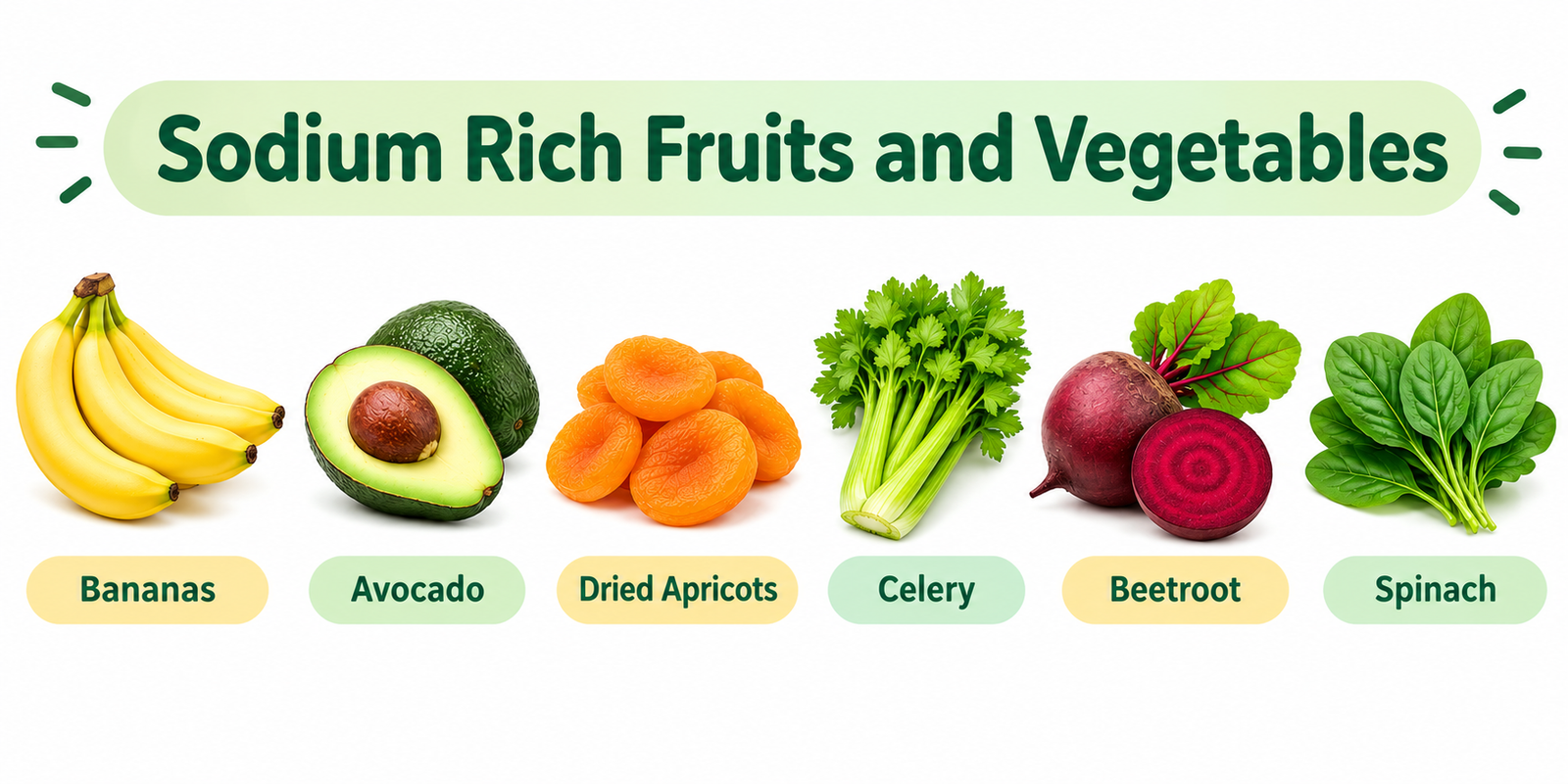
When people search for sodium rich fruits and vegetables, it is important to put the numbers into perspective. Most fresh fruits are naturally low in sodium. Vegetables generally contain more sodium than fruit, but most are still not considered extremely high-sodium foods.
Celery, spinach, beets, and artichokes are examples of vegetables that naturally contribute sodium. Coconut water is also notable because it contains electrolytes. However, naturally occurring sodium should not be confused with foods that have large amounts of added salt.
Sodium and High Blood Pressure
For people managing blood pressure, total dietary sodium is often more important than whether sodium comes naturally from a particular food. Many major sources of sodium come from packaged meals, processed meats, sauces, salty snacks, canned foods, and restaurant meals.
Some high sodium foods to avoid with high blood pressure may include processed meats, instant noodles, salty chips, packaged soups, heavily salted sauces, and many fast-food meals. Choosing fresh ingredients and checking nutrition labels can make it easier to control overall sodium intake.
It is also important not to eliminate sodium completely unless advised by a healthcare professional. Sodium is required for normal physiological functions, and individual dietary needs can differ.
Understanding High Sodium Symptoms
A person’s symptoms cannot reliably determine their blood sodium level. Mild changes may cause no obvious symptoms, while significant abnormalities can produce more noticeable effects.
Possible high sodium symptoms can include excessive thirst, weakness, confusion, restlessness, muscle twitching, or neurological symptoms when blood sodium becomes severely elevated. Severe symptoms require prompt medical attention.
The phrase high sodium levels in blood refers to hypernatremia, a condition in which the concentration of sodium in the blood is above the normal range. It is often related to insufficient water relative to sodium rather than simply eating salty food.
Similarly, high sodium in blood should not be diagnosed based on diet or symptoms alone. A blood test is needed to determine the actual sodium concentration. Dehydration, certain medical conditions, and some medications can contribute to abnormal sodium levels.
FAQs
1. Which foods naturally contain the most sodium?
Sea vegetables and some seafood tend to contain notable amounts of naturally occurring sodium. Dairy products, eggs, meat, and certain vegetables also provide sodium, although the amount varies considerably.
2. Are fruits naturally high in sodium?
Most fresh fruits are naturally low in sodium. Coconut water is an example of a fruit-derived beverage that naturally contains sodium and other electrolytes.
3. Can eating salty food cause high blood sodium?
Eating excessive sodium does not automatically mean that blood sodium will become high. The body’s sodium concentration is closely regulated by water balance, and abnormal blood levels can have several causes.
4. How can I lower sodium in my diet?
Prioritize fresh foods, limit heavily processed products, compare nutrition labels, rinse canned foods, and use herbs and spices to add flavor without relying heavily on salt.
5. Should everyone avoid sodium?
No. Sodium is an essential nutrient. The appropriate amount depends on overall health, diet, age, medications, and medical conditions. People with specific health concerns should follow individualized advice from their healthcare professional.
Reference
https://www.ncbi.nlm.nih.gov/books/NBK133307/
https://www.healthline.com/nutrition/foods-high-in-sodium
0 200
No Comments