
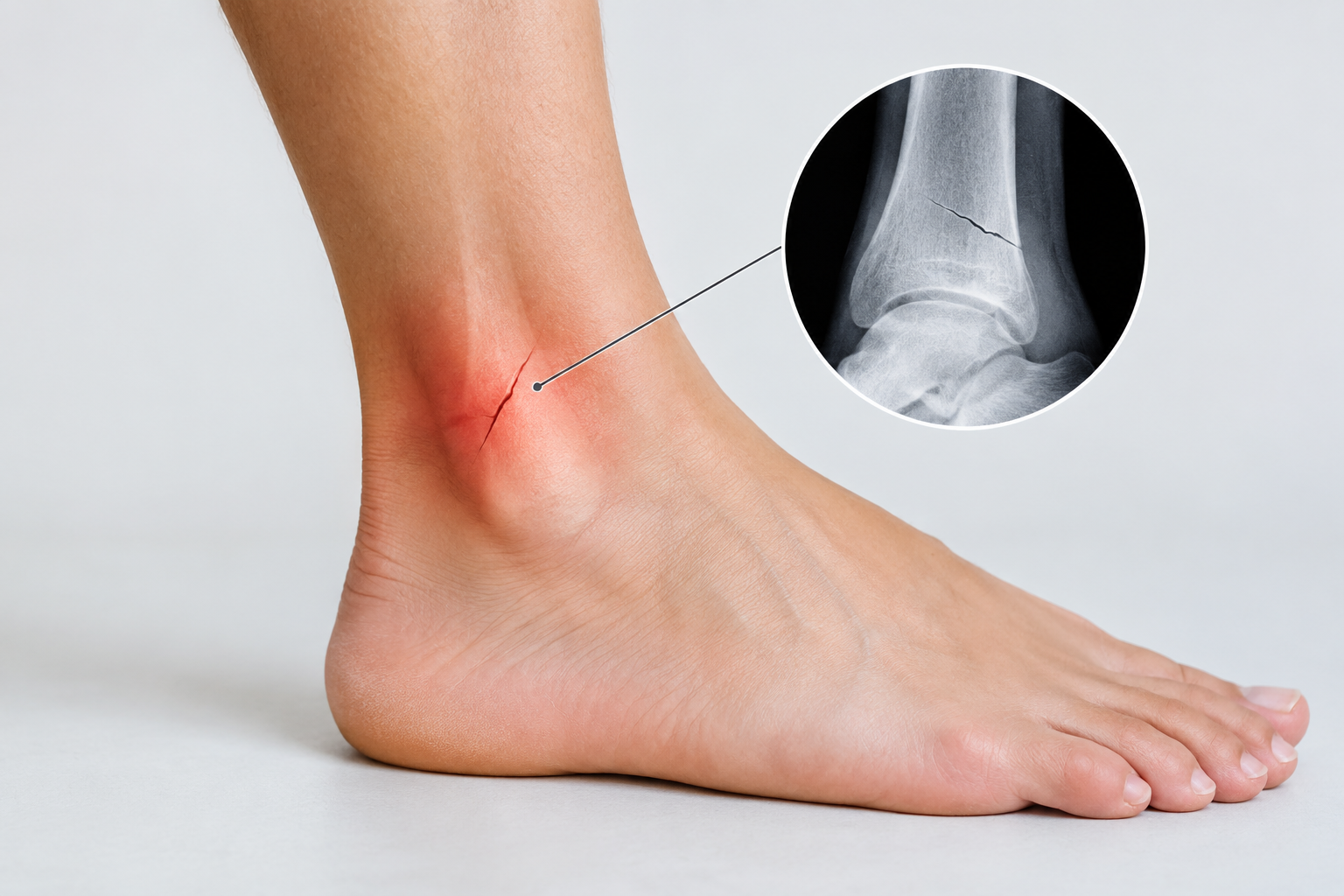
A hairline fracture is a small crack in a bone that usually develops due to repeated stress, overuse, or an injury. Although it may seem minor compared to a complete fracture, it can cause persistent pain and become more serious if left untreated. Hairline fractures commonly affect the feet, wrists, hands, arms, and knees.
Recognising the early hairline fracture symptoms is important because the injury may not always cause visible swelling or deformity. With timely diagnosis, proper rest, and appropriate treatment, most hairline fractures heal successfully.
What Is a Hairline Fracture?
A hairline fracture is a thin crack in a bone that does not completely separate it into two pieces. It is also known as a stress fractures when it develops due to repeated pressure on the bone. Many people ask, is a hairline fracture a break? Yes. It is a type of bone fractures, but the damage is usually smaller than a complete break.
Understanding is a hairline fracture bad depends on its location, severity, and how quickly treatment begins. Some injuries heal with conservative care, while others may require medical intervention.
Signs and Symptoms of a Hairline Fracture
The signs of a hairline fracture can develop gradually or appear after an accident. Symptoms may become more noticeable during movement or physical activity.
Common hairline fracture symptoms include:
-
Pain that increases during movement or weight-bearing activities.
-
Swelling around the injured area.
-
Tenderness when touching the affected bone.
-
Bruising on the body or mild skin discolouration.
-
Difficulty walking or performing everyday activities.
-
Pain that improves with rest but returns during activity.
The symptoms of hairline fractures in arm injuries may include discomfort while lifting objects, reduced arm movement, and tenderness around the affected bone.
Early diagnosis helps prevent further bone damage.
Different Types of Hairline Fractures
Hairline fractures can affect different parts of the body depending on the injury or repeated pressure.
1. Hairline fractures foot
A hairline fracture foot injury commonly affects the metatarsal bones. It may develop after running, jumping, increasing exercise intensity, or wearing unsuitable footwear. Pain usually increases while walking or standing.
2. Hairline fractures in hand
A hairline fracture in hand can occur after a fall, direct impact, or sports injury. Symptoms include swelling, tenderness, pain while gripping objects, and difficulty moving the fingers.
3. Hairline fractures wrist
A hairline fracture wrist injury may occur when someone falls and uses their hand to break the fall. Pain, swelling, and tenderness around the wrist are common symptoms.
4. Arm hairline fractures
An arm hairline fracture may affect the upper arm or forearm bones. Common hairline fracture arm symptoms include localised pain, swelling, tenderness, and discomfort when rotating or lifting the arm.
5. Hairline fractures in knee
A hairline fracture around the knee may affect the kneecap or nearby bones. Pain, swelling, and difficulty bending the knee are common symptoms. The hairline fracture in knee recovery time depends on the affected bone and injury severity.
Who Is at Risk of Developing a Hairline Fracture?
People who participate in high-impact sports and activities are more likely to develop hairline fractures because of repeated stress on their bones. Activities associated with a higher risk include:
-
Basketball
-
Tennis
-
Ballet and other forms of dance
-
Football and rugby
-
Track and field events
-
Soccer
-
Hockey
Hairline fractures can also occur when there is a sudden increase in the intensity, duration, or frequency of physical activity. For example, increasing running distance too quickly or starting a demanding workout routine without adequate preparation can put excessive pressure on the bones.
However, these injuries are not limited to professional athletes. Anyone can develop a hairline fractures, regardless of their fitness level, particularly when bones are exposed to reduced stress or sudden physical strain.
Step-by-Step Diagnosis of a Hairline Fracture
Doctors use a combination of physical examinations and imaging tests to identify a hairline fractures.
Step 1: Physical examination
The doctor checks the injured area for swelling, tenderness, pain, and restricted movement.
Step 2: Medical history
You may be asked about recent injuries, exercise habits, repetitive activities, and when the pain started.
Step 3: Imaging tests
An X-ray is commonly performed to examine bone health. However, small fractures may not appear on an early X-ray. An MRI or other imaging test may be recommended if symptoms continue despite normal X-ray findings.
Step 4: Treatment planning
After confirming the injury, the doctor recommends treatment according to the fracture’s location and severity.
Hairline Fracture Treatments: What Are Your Options?
Appropriate hairline fracture treatments help reduce pain, protect the injured bone, and support healing.
Here are the common treatment approaches:
1. Rest and activity restriction
Avoid activities that put pressure on the injured bone. Running, jumping, heavy lifting, and strenuous exercise should be avoided until a healthcare professional confirms that they are safe.
2. Ice therapy
Applying an ice pack wrapped in a towel for 15–20 minutes can help reduce swelling and discomfort. Avoid applying ice directly to the skin.
3. Support and immobilisation
Depending on the injury, a doctor may recommend a brace, splint, walking boot, or plaster cast.
Many patients ask, Does hairline fracture need plaster? Not always. Minor fractures may heal with activity modification and suitable support, while some injuries require immobilisation.
4. Pain management
A doctor may recommend suitable pain-relief medication depending on your medical history and injury.
5. Physiotherapy
Once the bone has healed sufficiently, guided exercises can help restore strength, flexibility, and normal movement.
Hairline Fracture: How Long Does It Take to Heal?
The hairline fracture how long to heal question depends on several factors, including the affected bone, severity, age, general health, and treatment approach.
Many uncomplicated hairline fractures take approximately 6–8 weeks to heal, although some may require longer. Recovery from knee pain exercises, wrist, foot, and arm fractures can vary considerably.
Follow-up appointments help doctors monitor healing before you return to normal activities.
FAQs
1. Is a hairline fracture serious?
A hairline fracture may be less severe than a complete fractures, but it still requires medical attention. Ignoring the injury can cause the crack to worsen or delay recovery.
2. Can you walk with a hairline fracture in your foot?
Walking may increase pain and worsen the injury. Avoid unnecessary weight-bearing until your doctor confirms that walking is safe.
3. Does a Hairline Fractures Require Surgery?
In most cases, surgery is not necessary. However, hairline fracture surgery may be considered when the fractures is unstable, displaced, fails to heal properly, or affects an area where surgical treatment is medically necessary.
4. How long does a hairline fractures in the knee take to heal?
Healing commonly takes several weeks, often around 6–8 weeks for uncomplicated fractures. More complex injuries may take longer, depending on the affected bone and treatment.
5. When should you consult a doctor for a hairline fractures?
Seek medical attention if you experience persistent bone pain, swelling, tenderness, or difficulty moving the affected area. Severe pain, visible deformity, numbness, or an inability to bear weight requires prompt medical assessment.
Reference
https://www.healthline.com/health/hairline-fracture
https://www.medicalnewstoday.com/articles/319822
0 200

No Comments