
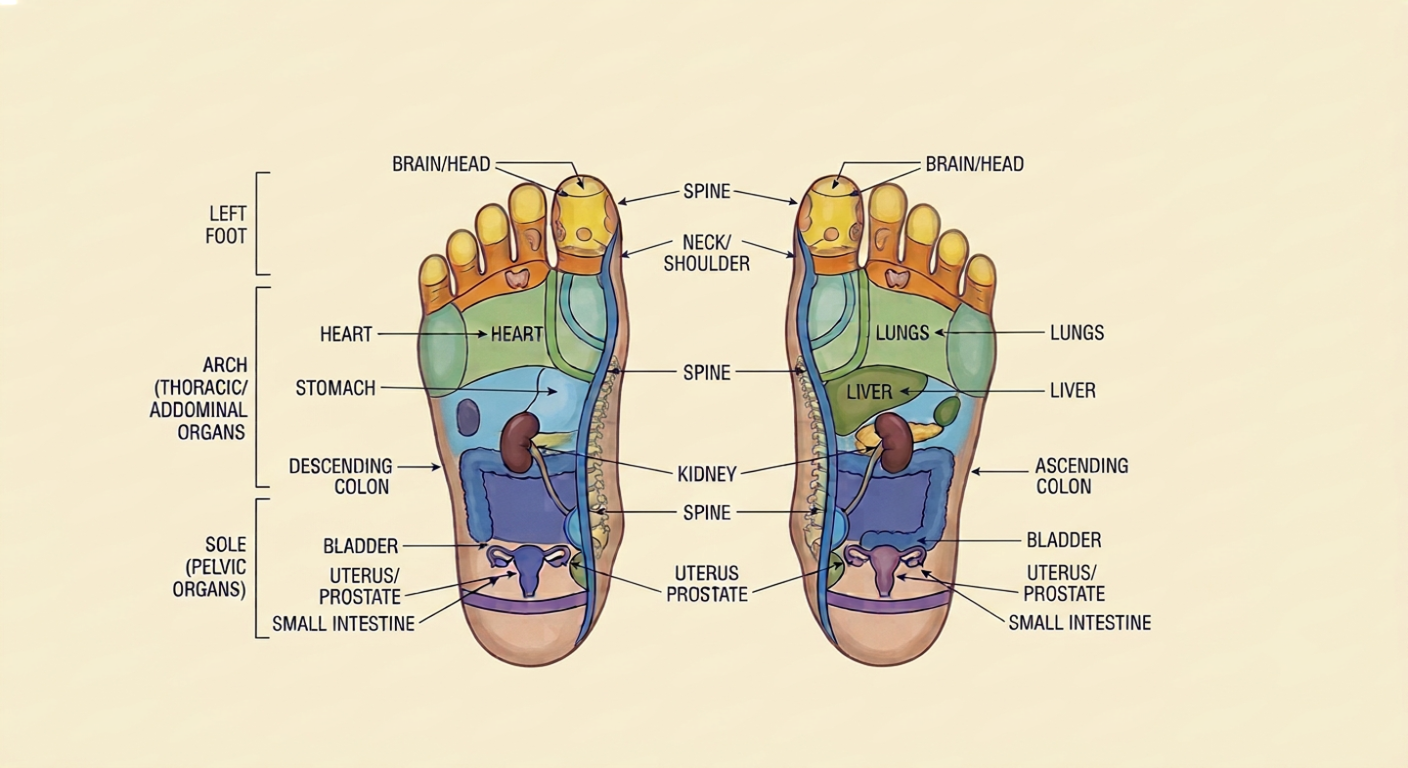
A feet reflexology chart maps different areas of the feet to specific body regions based on traditional reflexology practices. But do you know where these points are located and what each area represents?
Understanding the chart can help you recognise traditional foot zones, compare both feet, and learn how gentle pressure is used during a reflexology session.
What Is a Feet Reflexology Chart?
A foot reflexology chart is a visual guide that divides the feet into different zones. In traditional reflexology, these areas are believed to correspond to body parts such as the head, spine, chest, stomach, and lower body.
A reflexology chart foot diagram typically uses labels, colours, or markings to identify these traditional zones on the soles, sides, and tops of the feet.
The layout may differ between charts, but the main purpose is to help readers identify the traditional pressure-point locations.
The connection between foot and reflexology comes from the belief that applying pressure to certain foot areas may promote relaxation. However, these mapped connections have not been scientifically established.
How to Read a Feet Reflexology Chart
Before identifying individual points, understand how the diagram is arranged. Most foot maps use different colours, labels, or dividing lines to represent traditional body zones.
For a clearer visual reference, see this reflexology chart feet guide to compare the marked areas.
Follow these simple steps:
-
Check whether the diagram shows the sole, top, or side of the foot.
-
Identify the toes, ball, arch, and heel.
-
Read the labels to understand each marked zone.
-
Compare the left and right foot illustrations.
-
Remember that different reflexology traditions may use different layouts.
A female foot reflexology chart shows traditional pressure-point zones across different areas of the foot.
Similarly, traditional body-zone associations can be seen in a reflexology foot map male.
What Do Different Foot Pressure Points Represent?
Traditional charts divide the feet into several areas, each associated with particular body regions. These foot reflexology point labels help explain how reflexology maps are organised.
Common traditional associations include:
-
Toes: Often associated with the head, face, and neck.
-
Ball of the foot: Traditionally linked with the chest and upper body.
-
Middle arch: Commonly associated with the stomach and digestive region.
-
Inner edge: Often represents the spine in traditional diagrams.
-
Heel: Generally associated with the pelvic and lower-body areas.
If you experience heel discomfort, you can also read these heel pain home remedies for practical ways to support foot comfort.
Some diagrams also highlight Female foot massage pressure points to show where gentle pressure or massage movements may be applied. These are traditional reference areas, not confirmed connections to internal organs.
Left Foot vs. Right Foot: What Is the Difference?
Many reflexology charts divide body associations between the two feet. Some traditional maps place left-sided body associations on the left foot and right-sided associations on the right.
A foot reflexology chart left foot may show zones associated with the left side of the body, while a foot reflexology chart right foot displays corresponding right-side areas.
Although some central zones appear on both feet, the illustrations may not be identical. Comparing both diagrams can make it easier to understand the traditional mapping system.
Where Are the Main Reflexology Points Located?
Most commonly shown reflexology zones are located around the toes, ball, arch, inner edge, and heel.
The toes sit at the front of the foot, while the ball is the rounded area directly underneath them. The arch forms the curved middle section, and the heel is the back portion that supports body weight.
People searching for a foot reflexology chart heel pain may find diagrams highlighting the heel area. However, a reflexology chart cannot identify the cause of heel discomfort. Avoid applying pressure to painful, swollen, injured, or irritated areas.
How to Apply Pressure to Foot Reflexology Points
Want to try foot reflexology therapy at home? Start with light pressure and simple movements.
-
Relax your feet before starting.
-
Press gently with your thumb.
-
Move in small circles across the sole.
-
Avoid painful or sensitive areas.
How to Apply Pressure to Foot Reflexology Points
Want to try foot reflexology therapy at home? Start with light pressure and simple movements.
-
Relax your feet before starting.
-
Press gently with your thumb.
-
Move in small circles across the sole.
-
Avoid painful or sensitive areas.
How to Apply Pressure to Foot Reflexology Points
Want to try foot reflexology therapy at home? Start with light pressure and simple movements.
-
Relax your feet before starting.
-
Press gently with your thumb.
-
Move in small circles across the sole.
-
Avoid painful or sensitive areas.
If knee discomfort affects your daily movement, these knee pain exercises at home may offer some gentle movement ideas.
A foot therapy massage can also include gentle rubbing and stroking. Unlike Reflexology foot therapy, which follows traditional foot-zone maps, general foot massage focuses on overall comfort.
What Are the Potential Benefits of Foot Reflexology?
Gentle foot massage can be a relaxing way to unwind and add comfort to your daily wellness routine. Some potential benefits include:
-
Relaxation: Helps create a calming experience.
-
Foot comfort: May ease feelings of tired feet temporarily.
-
Stress relief: Offers a soothing break from daily activities.
-
Better relaxation before sleep: Can be part of a calming bedtime routine.
-
Body awareness: Helps you notice areas of foot tension.
Although reflexology is popular for relaxation, its claimed connections between foot points and internal organs are not scientifically established.
Who Should Be Careful With Foot Reflexology?
Gentle foot massage may not be suitable for every situation. Avoid applying pressure over cuts, blisters, burns, infections, bruises, or swollen areas.
Extra care is important if you have reduced foot sensation, fragile skin, or an injury. Stop if you notice pain, tingling, or increasing discomfort. A chart should never replace proper attention to persistent foot symptoms.
If joint discomfort occurs along with fever or other symptoms, read about the symptoms of chikungunya to understand the condition and its common signs.
Conclusion
A Feet Reflexology Chart provides a visual introduction to traditional foot zones and their associated body areas. By understanding the toes, ball, arch, and heel, you can read the chart more easily and recognise different pressure-point locations. Use gentle movements, respect your comfort level, and remember that traditional reflexology connections are not scientifically proven.
Frequently Asked Questions About Feet Reflexology
1. What is foot reflexology chart?
It is a visual diagram showing traditional foot zones associated with different body areas.
2. Are reflexology points scientifically proven?
The specific connections between foot points and internal organs have not been scientifically established.
3. Can beginners use a reflexology chart?
Yes. Beginners can use one to understand traditional foot zones and their locations.
4. Are left and right foot charts different?
They can be. Traditional charts sometimes assign different body-side associations to each foot.

No Comments