
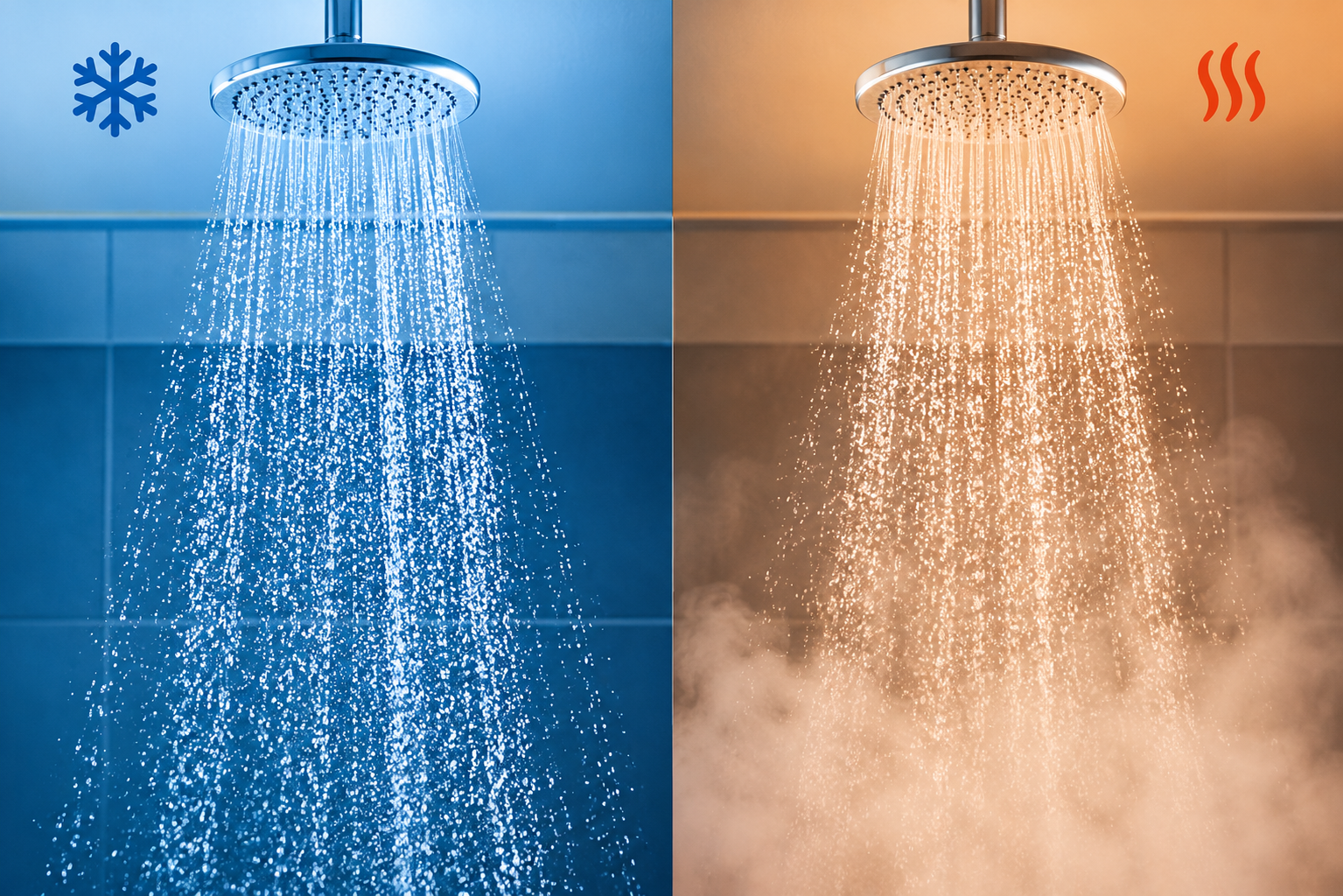
A shower does more than just keep your body clean. The temperature of the water can affect how you feel, how relaxed you are, and how your body responds after exercise. But when it comes to cold vs hot showers, which option is actually better for your health?
The best choice depends on what you want to get from your shower. Hot water can help you relax, loosen tight muscles, and prepare your body for sleep, while cold water may increase alertness and help with post-workout soreness. Neither is automatically better for everyone.
Cold shower benefits
One of the key cold shower benefits is that they can help you feel more awake and alert. Exposure to cold water activates your body’s stress response, which can make you feel more awake and focused. This is one reason some people prefer a cold shower in the morning.
Cold water can also be beneficial after a workout. Research on cold-water immersion suggests that it can help reduce muscle soreness and support short-term recovery after strenuous physical activity. However, a normal shower is less intense than full-body cold-water immersion, so the effects may not be identical.
There is also interest in cold showers and immunity, but claims that they dramatically “boost” the immune system are stronger than the current evidence supports.
So, is a cold shower actually better than a hot shower? Not necessarily. Cold showers have specific advantages, particularly for alertness and recovery, but they aren’t a replacement for good sleep, exercise, nutrition, or medical treatment.
Benefits of hot showers
The benefits of hot showers are mainly associated with relaxation and comfort. Warm water can help loosen stiff muscles and make your body feel more relaxed after a long day.
A warm shower can also be useful before bedtime. Raising your skin temperature with warm water and then cooling down afterward may support the body’s natural transition toward sleep. For people who find that a shower helps them unwind, a comfortably warm shower can become a useful part of a nighttime routine.
Hot water can also make it easier to wash away sweat, oil, and dirt. However, extremely hot water isn’t better for cleaning and may dry out or irritate the skin.
This is an important point when considering the cold shower vs hot shower benefits. The goal isn’t to choose the most extreme temperature. A comfortable temperature that suits your skin and routine is usually the better choice.
Is a cold or hot shower better for your health?
If you’re wondering, are cold or hot showers better for you, there isn’t one universal answer.
Choose a cooler shower if you want to feel more awake in the morning or are looking for a refreshing option after physical activity. Choose a warm shower if you want to relax, loosen up or prepare for bedtime.
So, which is better cold showers or hot showers? It depends on the situation.
For example, someone finishing a tough workout may prefer cool water because cold exposure can help with muscle soreness. Someone getting ready for bed may find warm water more comfortable and relaxing.
This is why the question is a hot or cold shower better shouldn’t be treated as a competition. Both can be useful parts of a healthy daily routine.
Cold showers vs warm showers: pros and cons
Understanding the pros and cons of hot and cold showers can make the choice easier.
Pros of cold showers
-
May increase alertness and mental focus
-
Can feel refreshing, especially in the morning
-
May help reduce post-exercise muscle soreness
-
Can provide temporary relief from feeling overheated
Cons of cold showers
-
The sudden temperature change can feel uncomfortable
-
Very cold water can cause gasping, dizziness in adults, or a rapid heart rate
-
People with certain heart conditions should avoid sudden cold exposure unless cleared by a healthcare professional
-
Cold showers aren’t a proven method for significant weight loss
If you’re asking what the pros and cons of cold showers are, the main takeaway is that moderation matters. You don’t have to use ice-cold water to enjoy the refreshing effects of a cold shower.
Pros of hot showers
-
Can help you relax
-
May loosen tight or stiff muscles
-
Can be comforting before bed
-
Makes it easier to remove oil, sweat, and dirt from the skin
Cons of hot showers
-
Very hot water can dry out the skin
-
Long, hot showers may worsen irritation for people with sensitive skin
-
Excessive heat can make some people feel dizzy or uncomfortable
Shower with cold water or hot water?
So, which is the better choice for your shower: cold water or hot water?
For everyday bathing, lukewarm or comfortably warm water is often a practical middle ground. You don’t need extremely hot or extremely cold water to get clean.
If your priority is relaxation, warm water may be the better choice. Cool water may be a better option if you want to feel more alert in the morning or freshen up after a workout.
And if you’re asking what’s better cold showers or hot showers, consider using both at different times rather than choosing only one.
Does cold water clean your body?
A common question is, does cold water clean your body? Yes. Water temperature isn’t what makes your body clean. Soap or body wash, water, and proper washing technique are what remove sweat, oils, dirt and microorganisms from the skin.
Hot water isn’t required for effective bathing. In fact, water that is too hot can strip the skin’s natural oils and leave it feeling dry.
Do hot showers help detox?
Another popular question is: do hot showers help detox? However, they don’t provide the detox benefits that many wellness claims promise.
Your liver and kidneys handle the body’s natural waste-processing and detoxification processes. A hot shower may make you sweat and feel refreshed, but sweating from a shower doesn’t “flush toxins” from your body.
The better reason to take a warm shower is relaxation, comfort, and personal hygiene—not detoxification.
Cold showers or hot showers: Which should you choose?
Both hot and cold showers offer benefits, depending on your needs and preferences. The best choice depends on your goal and how your body responds.
For morning alertness and a refreshing feeling, try cool water. For relaxation, muscle comfort, and a calming bedtime routine, warm water may be more suitable. For everyday hygiene, comfortably warm or lukewarm water is usually enough.
Rather than asking whether cold showers are better than hot, think about when each type makes sense. The healthiest shower is one that cleans your skin without irritating it and fits comfortably into your daily routine.
FAQs
1. Which is better, cold showers or hot showers?
Neither is universally better. Cold showers may be useful for alertness and post-exercise soreness, while warm showers can promote relaxation and comfort. Choose the temperature based on your needs and tolerance.
2. Are cold showers better than hot showers for recovery?
Cold-water immersion has evidence supporting reduced muscle soreness and some aspects of exercise recovery, although a regular cold shower may not provide the same effect as full immersion.
3. What are the pros and cons of cold showers?
Cold showers may increase alertness and help with post-workout soreness, but they can be uncomfortable and may trigger a strong cardiovascular response. People with heart conditions should seek medical advice before using cold exposure.
4. How cold should cold showers be?
There is no universally required temperature for a cold shower. Beginners should start with cool water and gradually reduce the temperature. Stop if you feel dizzy, have difficulty breathing or become extremely uncomfortable.
5. Do hot showers help detox?
No. Hot showers can make you sweat and feel relaxed, but they don’t remove toxins from your body. Your liver and kidneys perform the body’s primary detoxification functions.
Reference
https://www.healthline.com/health/cold-shower-vs-hot-shower
https://www.medicalnewstoday.com/articles/327461
0 200
No Comments