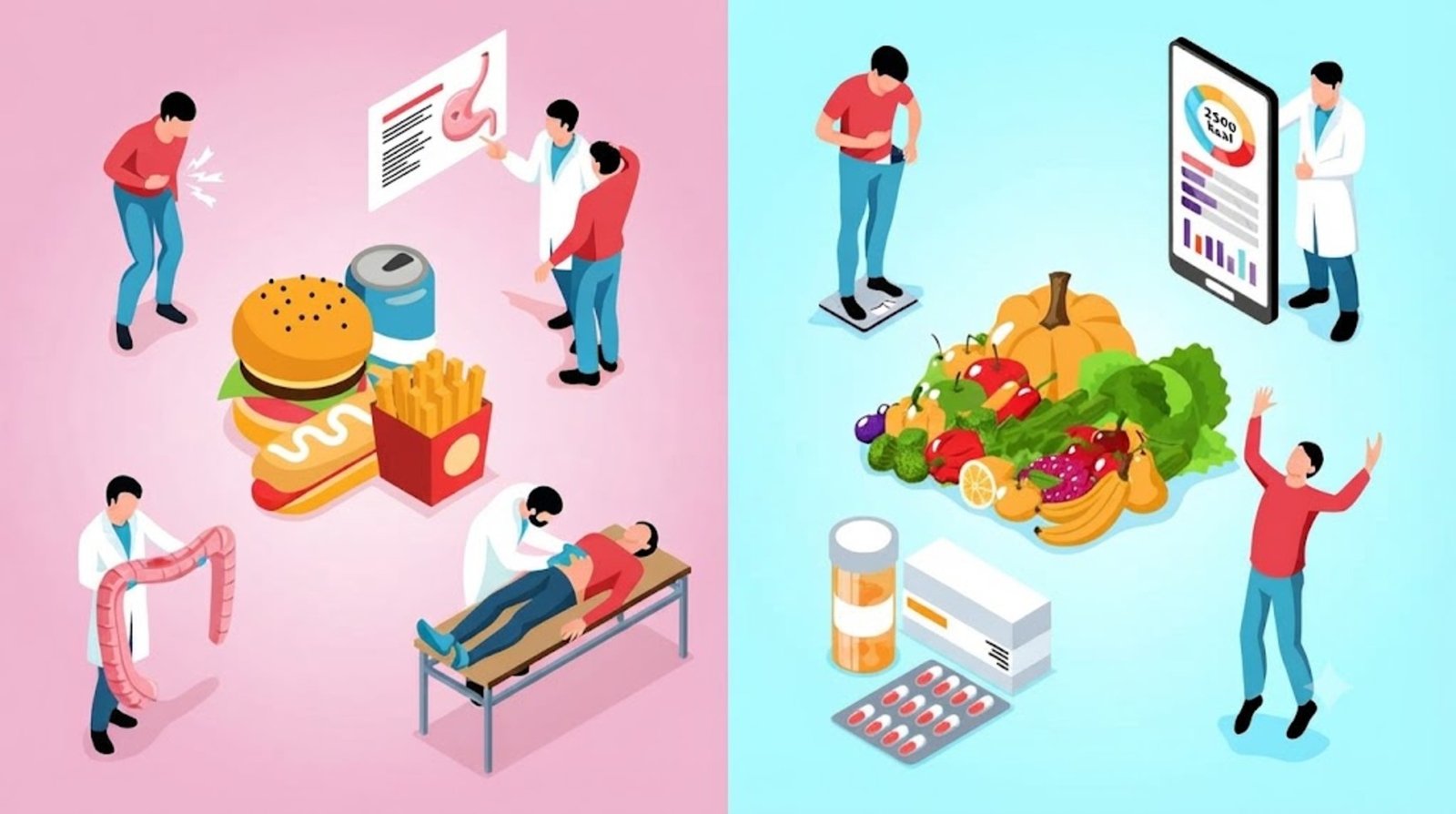
difference between healthy food and junk food

difference between healthy food and junk food

Food plays an important role in keeping our body healthy, active, and strong. The food we eat affects our energy, digestion, immunity, mood, and overall well-being. Understanding the difference between healthy food and junk food can help us make better choices every day. While healthy foods provide essential nutrients, junk foods are often high in calories, sugar, unhealthy fats, and sodium.

What Is Healthy Food and Unhealthy Food?

So, what is healthy food and unhealthy food? Healthy food is food that provides important nutrients such as vitamins, minerals, protein, fiber, and healthy fats. Fruits, vegetables, whole grains, beans, nuts, seeds, eggs, and lean proteins are common examples of healthy foods.

Unhealthy foods, commonly known as junk food, are typically high in added sugar, salt, unhealthy fats, and refined carbohydrates, while offering fewer essential nutrients. Examples include chips, sugary drinks, candy, fried snacks, burgers, and many packaged foods.

Healthy Food and Junk Food Difference

The main healthy food and junk food difference is their nutritional value and effect on the body. Healthy foods supply nutrients that support normal growth, energy production, immunity, and healthy digestion. Junk foods may taste delicious and be convenient, but eating them too frequently can make it harder to maintain a balanced diet.

Healthy Food Junk Food
Rich in vitamins and minerals Often low in essential nutrients
Usually contains more fiber Often contains little fiber
Supports overall health Excessive intake may harm health
Provides sustained energy May provide quick but less lasting energy
Includes fruits, vegetables, grains, and lean proteins Includes chips, candy, sugary drinks, and fried foods

This comparison between junk food and healthy food shows why the quality of our daily diet matters.

Why Choosing Healthy Food Is Better Than Eating Junk Food

Why healthy food is better than junk food is easy to understand when we look at what the body needs. Healthy foods provide nutrients required for growth, tissue repair, strong bone health, healthy digestion, and normal immune function. Foods rich in fiber can also help support digestive health and keep you feeling full for longer.

Eating Healthy vs Junk Food

When comparing eating healthy vs junk food, one major difference is how these foods contribute to your daily nutritional needs. A meal that includes vegetables, whole grains, beans, eggs, or lean protein can provide essential nutrients and contribute to a well-balanced diet.

For example, you could choose a bowl of oatmeal topped with fruit and nuts for breakfast instead of a sugary pastry. Similarly, choosing fresh fruit or yogurt instead of candy can provide useful nutrients along with satisfying your hunger.

The aim is not to completely give up the foods you enjoy, but to eat them in moderation as part of a balanced diet.

Eating Healthy vs Eating Unhealthy

The difference between eating healthy vs eating unhealthy becomes clearer over time. A healthy diet includes a wide variety of nutritious foods from different food groups. Fruits and vegetables provide vitamins, minerals, and fiber, while whole grains provide carbohydrates and fiber. Protein-rich foods help support muscle repair and other body tissues.

An unhealthy eating pattern may rely heavily on processed snacks, sugary beverages, fried foods, and foods high in added sugar or sodium. This type of diet may provide plenty of calories without supplying enough of the nutrients the body needs.

Unhealthy Food Paragraph: What Should You Know?

Here is a simple unhealthy food paragraph to remember: Unhealthy foods are generally foods that are high in calories, added sugar, sodium, saturated fat, or refined ingredients and provide limited nutritional value. Common examples include sugary drinks, candy, chips, deep-fried snacks, and some highly processed foods. Eating these foods occasionally does not automatically make a diet unhealthy, but frequent consumption can make it harder to maintain a nutritious and balanced eating pattern.

Junk Food and Healthy Food Difference in Daily Life

The junk food and healthy food difference can also be seen in everyday food choices. Instead of choosing a sugary soft drink, you can choose water or unsweetened beverages. Instead of frequently eating fried snacks, you can include fruit, nuts, roasted foods, or other nutrient-rich options.

Small changes can make healthy eating easier. You do not have to change your entire diet overnight. Start by adding more vegetables to meals, choosing whole grains more often, drinking enough water, and keeping nutritious snacks available.

Making Better Food Choices

Understanding eating healthy vs junk food does not mean that you can never enjoy pizza, burgers, desserts, or other favorite foods. Balance is important. Try to eat nutrient-rich foods most of the time and enjoy less nutritious foods in moderation.

Reading food labels can also help you compare products. Look at serving sizes and check amounts of added sugars, sodium, saturated fat, fiber, and protein. Choosing foods with more beneficial nutrients and fewer added sugars or excessive sodium can support a healthier eating pattern.

Ultimately, the difference between healthy food and junk food comes down to nutrition, quality, and frequency. Making healthy foods a regular part of your meals can help you build better healthy eating habits and support your overall well-being.

FAQs

1. What is the difference between healthy food and junk food?

Healthy food provides essential nutrients such as vitamins, minerals, protein, and fiber. Junk food is often higher in calories, added sugar, sodium, or unhealthy fats and generally provides fewer essential nutrients.

2. Why is healthy food better than junk food?

Healthy food provides essential nutrients that support your body’s energy, growth, repair, digestion, and overall well-being. Junk food can be enjoyed occasionally, but regularly eating too much of it can make a balanced diet more difficult.

3. Can I eat bad food while following a healthy diet?

Yes. A healthy diet does not necessarily require completely eliminating favorite foods. The key is to enjoy less nutritious foods in moderation while making healthy, nutrient-rich foods the foundation of your daily diet.

4. What are some examples of healthy foods?

Examples include fruits, vegetables, whole grains, beans, lentils, nuts, seeds, eggs, fish, and other lean protein sources. Choosing a variety of foods helps provide different essential nutrients.

5. What are some examples of unhealthy or junk foods?

Common examples include sugary drinks, candy, chips, many deep-fried snacks, and foods that are high in added sugar, sodium, or saturated fat. Their nutritional value varies, so checking food labels can help you make informed choices.

https://www.healthline.com/nutrition/junk-food-vs-healthy-food

https://www.webmd.com/diet/features/junk-food-facts

0 200


You might also like

No Comments

Leave a Reply