
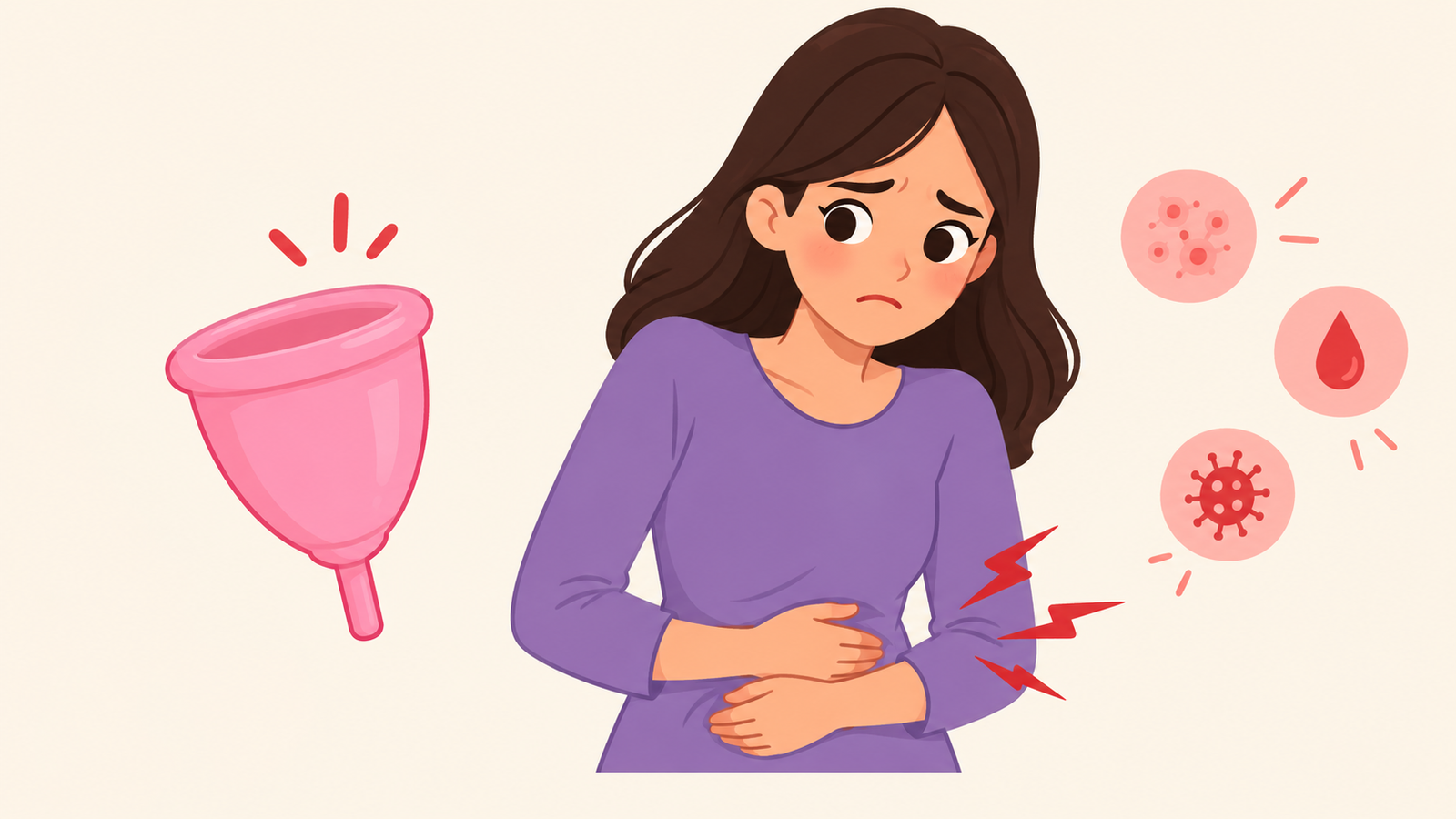
Menstrual cups are reusable period products made from medical-grade silicone, rubber, or elastomer. They collect menstrual blood instead of absorbing it, making them an eco-friendly and cost-effective alternative to tampons and sanitary pads. However, like any menstrual product, they may cause discomfort or side effects when used incorrectly.
Understanding the possible risks can help you decide whether a menstrual cup is suitable for your body. In this guide, we explore common menstrual cup side effects, long-term concerns, infections, and safety tips for comfortable use.
Silicone Menstrual Cup Side Effects
Silicone menstrual cups are popular because medical-grade silicone is flexible, durable, and generally well tolerated by the body. However, silicone menstrual cup side effects may occur in some users.
Possible issues include:
1. Skin or vaginal sensitivity: Although uncommon, some individuals may experience irritationd or sensitivity to the cup material or other components, such as dyes or additives.
2. Pressure or discomfort: A cup that is too firm, too large, or positioned incorrectly may create pressure around the vaginal walls or bladder.
3. Difficulty removing the cup: Strong suction or improper removal techniques may cause discomfort.
If you experience repeated irritation, consider checking the product’s material information and discussing alternatives with a healthcare professional.
Menstrual Cup Side Effects in Uterus: Can They Affect Your Reproductive Organs?
One common concern is whether menstrual cups can cause menstrual cup side effects in uterus or affect reproductive health.
A menstrual cup is placed inside the vaginal canal, positioned below the cervix to collect menstrual blood. It does not enter the uterus when used correctly. Therefore, it does not directly contact the uterus or interfere with the menstrual flow coming from it.
Menstrual Cup Side Effects Long-Term Use
Many users wonder about menstrual cup side effects long term use. Since menstrual cups are reusable, they may be used for several years when maintained properly and replaced according to the manufacturer’s recommendations.
Current evidence does not establish that long-term menstrual cup use causes infertility, permanent vaginal damage, or serious reproductive problems in healthy users.
However, long-term problems may arise from poor hygiene or incorrect usage. These include:
-
Repeated vaginal irritation
-
Inadequate cleaning and bacterial buildup
-
Discomfort from using the wrong size
-
Minor tissue injuries caused by rough removal
-
Increased risk of infection if the cup is not handled hygienically
To reduce risks, wash your hands before handling the cup, clean it thoroughly after each cycle, and sterilize it according to the product instructions.
Can Menstrual Cups Cause BV?
There is limited evidence directly linking menstrual cup use to bacterial vaginosis. However, poor hygiene, leaving the cup in longer than recommended, or introducing bacteria during handling may contribute to vaginal health problems.
To minimize potential risks:
-
Wash your hands before insertion and removal.
-
Clean the cup thoroughly between uses.
-
Follow the recommended wearing time.
-
Do not use a menstrual cup unless it has been thoroughly cleaned.
If you notice a strong fishy odor, unusual discharge, or vaginal discomfort, consult a healthcare professional.
Menstruation Cup Yeast Infection: Is There a Connection?
A menstruation cup yeast infection concern usually relates to whether menstrual cups can encourage the growth of Candida, the fungus responsible for vaginal yeast infections.
There is currently insufficient evidence to confirm that menstrual cups directly cause yeast infections. However, moisture, inadequate cleaning, or irritation may contribute to an uncomfortable vaginal environment in some individuals.
Symptoms of a yeast infection may include:
-
Intense itching
-
Thick, white vaginal discharge
-
Redness or swelling
-
Burning or irritation
If these symptoms appear after using a menstrual cup, stop using it temporarily and seek medical advice. Do not assume every vaginal infection is caused by the cup, as similar symptoms can occur with other conditions.
Menstrual Cup Irritation: Causes and Prevention
Menstrual cup irritation can occur when the cup rubs against vaginal tissue or creates pressure in sensitive areas.
Common causes include:
-
Choosing a menstrual cup that is too large or rigid for your body.
-
Inserting the cup without sufficient relaxation
-
Removing the cup without releasing suction
-
Using scented cleansers or harsh soaps
-
Wearing the cup longer than recommended
To prevent irritation, choose a suitable size, use water-based lubricant if needed, and remove the cup gently by pinching its base to release suction.
If irritation continues, discontinue use and consult a gynecologist.
Prolapse Side Effects Menstrual Cup Dangers
Pelvic organ prolapse occurs when pelvic organs, such as the bladder, uterus, or rectum, shift downward because of weakened supporting tissues.
People with prolapse may worry about prolapse side effects menstrual cup dangers. A menstrual cup does not have established evidence as a direct cause of pelvic organ prolapse. However, inserting or removing a cup may be uncomfortable for someone who already has prolapse or pelvic floor problems.
If you experience vaginal bulging, pelvic pressure, or difficulty inserting a cup, speak with a healthcare professional before continuing use.
TSS from Menstrual Cup: Is Toxic Shock Syndrome Possible?
Although TSS is more commonly associated with tampon use, cases involving menstrual cups have been reported. Therefore, TSS from menstrual cup use is possible, although rare.
To reduce the risk:
-
Wash your hands before handling the cup.
-
Follow the manufacturer’s recommended wearing time.
-
Clean and sterilize the cup as directed.
-
Never use a damaged or contaminated cup.
Seek urgent medical attention if you develop sudden fever, nausea and vomiting, dizziness, rash, or fainting while using a menstrual cup.
FAQs
1. Is there any side effects of menstrual cup?
Yes, possible side effects include vaginal irritation, cramping, discomfort, leakage, and difficulty inserting or removing the cup. Most issues are related to incorrect sizing, placement, or hygiene.
2. Can menstrual cups cause infertility?
There is no strong evidence that properly used menstrual cups cause infertility or permanent damage to reproductive organs.
3. Can menstrual cups cause BV or yeast infections?
There is limited evidence directly linking menstrual cups to BV or yeast infections. Poor hygiene or irritation may contribute to vaginal discomfort, so proper cleaning is essential.
4. Can menstrual cups cause prolapse?
Menstrual cups have not been established as a direct cause of pelvic organ prolapse. However, people with existing prolapse should consult a healthcare professional before using one.
5. Can you get TSS from a menstrual cup?
Yes, TSS is possible but rare. Following hygiene practices and recommended wearing times can help reduce the risk.
Reference
https://pmc.ncbi.nlm.nih.gov/articles/PMC11545970/
https://www.healthline.com/health/menstrual-cup-dangers
0 200
No Comments