
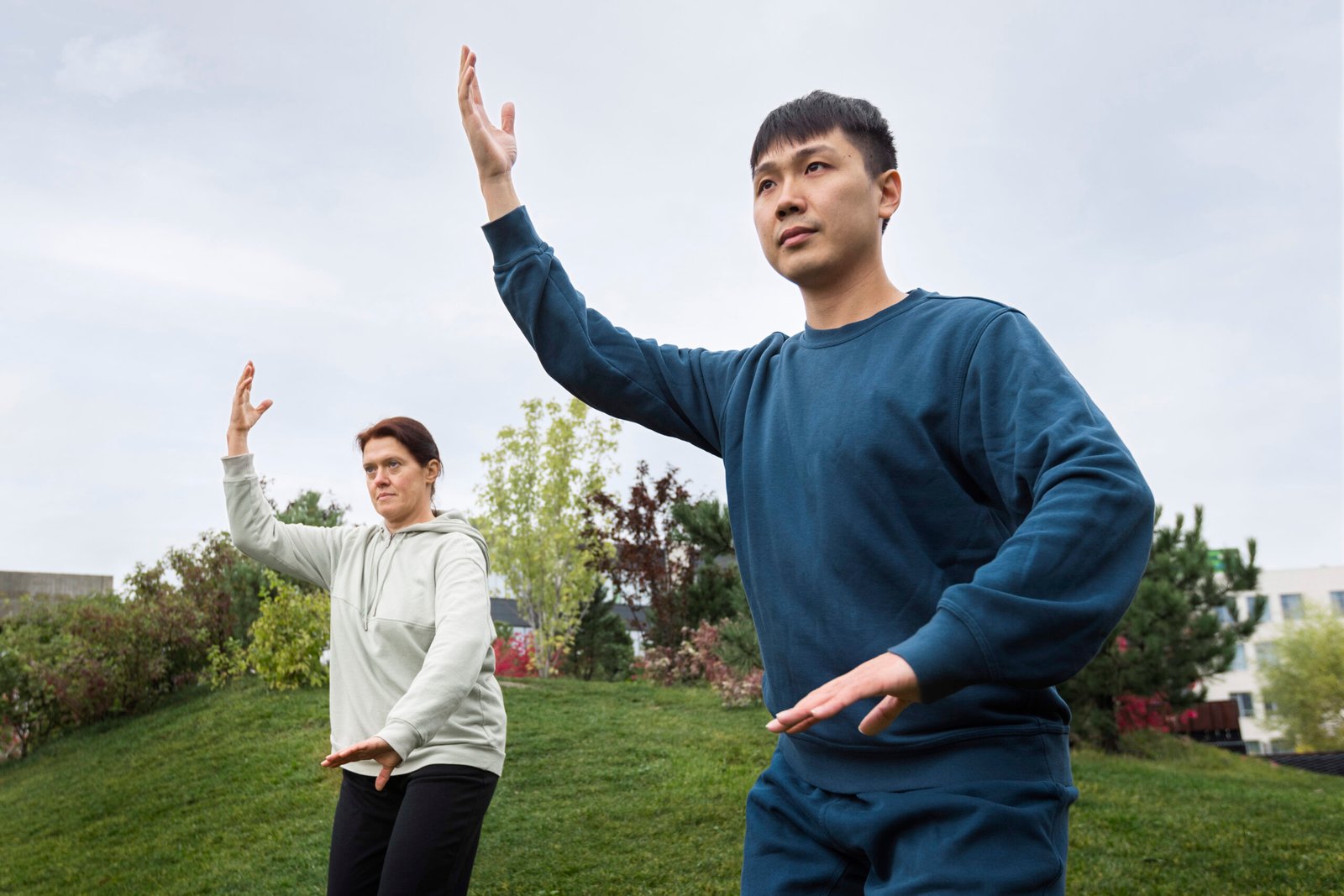
Tai chi exercise is a gentle yet powerful form of movement that blends slow, flowing motions with deep breathing and mindfulness. Originally developed as a martial art in ancient China, tai chi is now widely practiced as a low-impact workout that promotes balance, flexibility, and mental clarity.
If you’ve ever wondered what is tai chi exercise, how it works, or whether it’s suitable for beginners and seniors, this guide will walk you through everything you need to know.
What Is Tai Chi?
To understand what is tai chi, it helps to explore its origins. Tai chi, also known as Tai Chi Chuan, is a traditional Chinese practice that combines controlled physical movement, breathing techniques, and focused intention. The tai chi meaning can be translated as “supreme ultimate,” symbolizing harmony between opposing forces often described as yin and yang.
While it began as a martial art, modern exercise tai chi focuses primarily on health and relaxation rather than self-defense.
So, what is tai chi exercise today? It is a mind-body workout designed to improve physical strength, balance, coordination, and emotional well-being.
Is Tai Chi Good Exercise?
Many people ask, is tai chi good exercise? The answer is yes—especially for those seeking low-impact, joint-friendly movement.
Tai chi may help:
-
Improve balance and stability
-
Enhance flexibility
-
Increase muscle strength
-
Reduce stress
-
Support heart health
-
Improve posture
Because movements are slow and controlled, tai chi is accessible to people of all ages and fitness levels.
Tai Chi Exercises for Beginners
If you are new to tai chi, starting with simple movements is best. Tai chi exercises for beginners focus on basic stances, breathing control, and slow, coordinated arm movements.
Beginner Tips:
-
Wear comfortable clothing.
-
Practice in a quiet space.
-
Focus on slow, steady breathing.
-
Keep movements gentle and relaxed.
Many beginners start with short sessions of 10–15 minutes before gradually increasing practice time. There are also many free tai chi exercises available online to help you get started.
Tai Chi Warm Up Exercises
Before starting a full routine, it’s helpful to perform tai chi warm up exercises to loosen muscles and joints.
Common warm-up movements include:
-
Neck rotations
-
Shoulder rolls
-
Gentle arm swings
-
Knee bends
-
Controlled breathing exercises
These movements prepare your body for deeper practice and reduce the risk of strain.
Tai Chi 8: A Simple Form to Learn
One popular beginner-friendly routine is tai chi 8, also called the “8-form.” It consists of eight simplified movements that are easier to learn than longer traditional sequences.
Tai chi 8 focuses on:
-
Weight shifting
-
Controlled stepping
-
Coordinated hand movements
-
Slow, balanced transitions
This shorter form is ideal for beginners who want to learn structured movement without feeling overwhelmed.
Tai Chi Exercises for Seniors
One of the greatest advantages of tai chi is its suitability for older adults. Tai chi exercises for senior individuals emphasize balance, joint mobility, and fall prevention.
Research suggests tai chi may help seniors:
-
Improve balance and coordination
-
Reduce the risk of falls
-
Strengthen leg muscles
-
Improve flexibility
-
Support mental health
Because tai chi movements are slow and gentle, they are especially beneficial for individuals with arthritis or limited mobility.
The Man of Tai Chi: Cultural Influence
The phrase man of tai chi gained popularity through martial arts culture and even inspired the film Man of Tai Chi, directed by Keanu Reeves. While the movie focuses on martial arts action, traditional tai chi practice emphasizes calmness and internal balance rather than combat.
This contrast highlights the evolution of tai chi—from a martial discipline to a modern wellness practice.
Physical Benefits of Tai Chi Exercise
1. Improves Balance
Tai chi strengthens stabilizing muscles and enhances body awareness, reducing fall risk.
2. Enhances Flexibility
Slow stretching movements improve joint mobility.
3. Builds Muscle Strength
Though gentle, tai chi requires sustained muscle engagement, especially in the legs and core.
4. Supports Heart Health
As a moderate-intensity activity, tai chi may help regulate blood pressure and circulation.
Mental and Emotional Benefits
Beyond physical advantages, tai chi exercise offers powerful mental benefits.
-
Reduces stress and anxiety
-
Improves focus
-
Promotes mindfulness
-
Encourages relaxation
Deep breathing techniques combined with flowing movement create a meditative effect that calms the nervous system.
How Often Should You Practice?
For optimal results, aim to practice tai chi:
-
3–5 times per week
-
20–30 minutes per session
Even short sessions can produce noticeable benefits over time.
Free Tai Chi Exercises: Getting Started at Home
No expensive equipment or gym membership is required to practice. Many free tai chi exercises are available online, including guided videos and beginner tutorials.
When practicing at home:
-
Choose a quiet, open space
-
Follow slow, controlled movements
-
Focus on posture and breathing
-
Avoid rushing
Consistency is more important than intensity.
Safety Tips for Tai Chi Practice
Although tai chi is generally safe, keep these guidelines in mind:
-
Seek advice from a healthcare professional before starting if you have any serious medical conditions.
-
Move within your comfort range.
-
Avoid locking joints.
-
Stay hydrated.
Tai chi is meant to be smooth and pain-free.
FAQs
1. What is tai chi exercise?
Tai chi exercise is a gentle mind-body practice that combines slow, flowing movements with deep breathing and mindfulness to improve balance, flexibility, and mental clarity.
2. Is tai chi good exercise for daily practice?
Yes, tai chi is good exercise for daily practice because it is low-impact, improves strength and balance, and reduces stress.
3. Are there tai chi exercises for beginners?
Yes, tai chi exercises for beginners focus on simple movements, posture control, and breathing techniques. Short routines like tai chi 8 are ideal starting points.
4. Can senior individuals practice tai chi?
Absolutely. Tai chi exercises for senior individuals are specifically designed to improve balance, mobility, and fall prevention.
5. Where can I find free tai chi exercises?
You can find free tai chi exercises through online video platforms, community centers, and beginner-friendly tutorials.
Final Thoughts
Tai chi exercise is more than just a workout—it’s a holistic practice that strengthens both body and mind. Whether you are exploring exercise tai chi for relaxation, looking for tai chi exercises for beginners, or seeking gentle tai chi exercises for seniors, this ancient practice offers benefits for everyone.
If you’re still asking, is tai chi good exercise? The answer is clear. With its combination of movement, breathing, and mindfulness, tai chi provides a safe, effective way to improve overall health and well-being at any age.
Reference
https://health.clevelandclinic.org/the-health-benefits-of-tai-chi
https://torbayandsouthdevon.nhs.uk/uploads/taichi-exercises.pdf
https://www.health.harvard.edu/staying-healthy/the-health-benefits-of-tai-chi
No Comments