
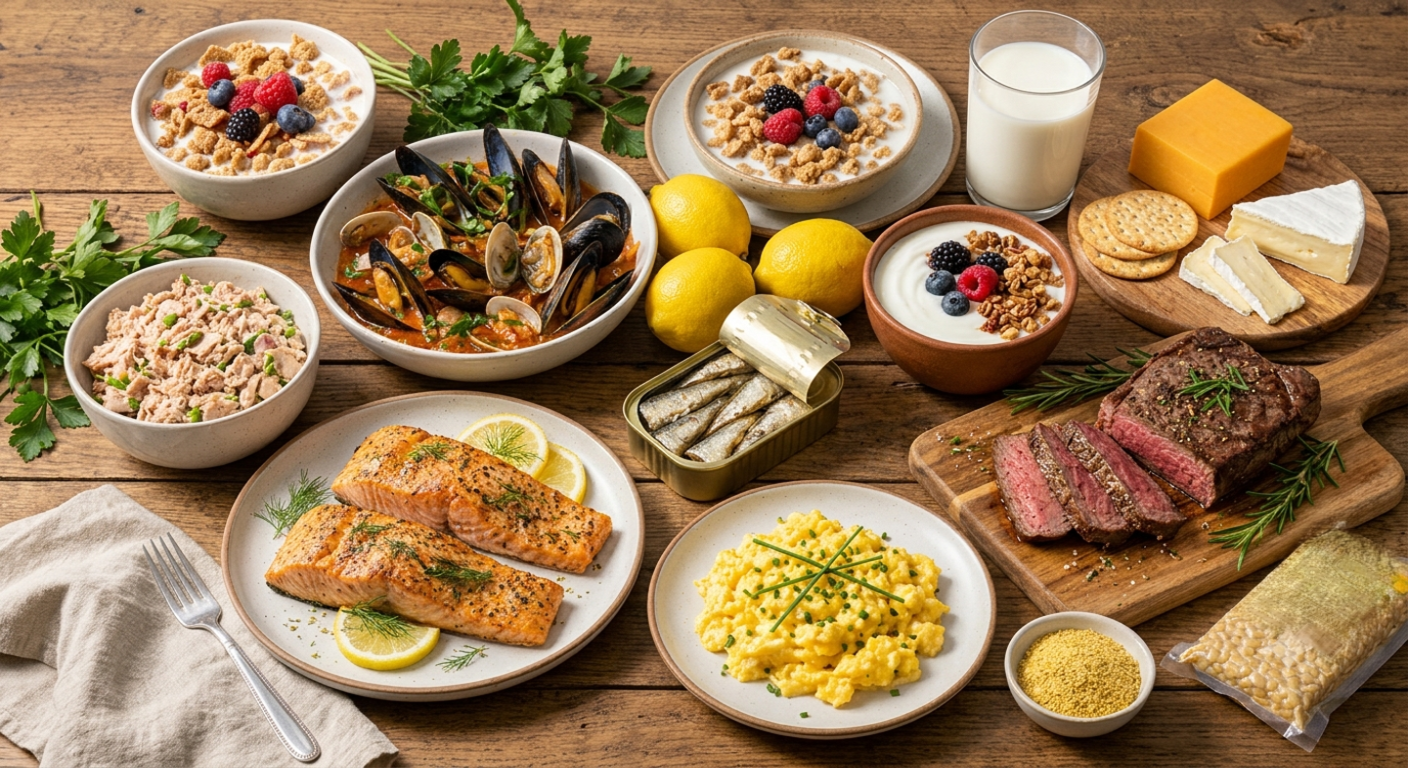
Foods with B12 might already feature in your daily meals, but do you know which choices deliver the highest amounts of this essential nutrient? Eggs, milk, fish, and fortified cereals can contribute to your intake, although their vitamin B12 content varies.
Vitamin B12 plays a role in nerve health, the production of red blood cells, and the creation of DNA. Whether you eat animal products or follow a vegetarian diet, understanding its sources can help you make informed food choices. Explore the main sources, compare their nutritional values, and discover simple ways to include B12 in everyday meals.
Why Does Your Body Need Vitamin B12?
Vitamin B12, also called cobalamin, helps your body perform several essential functions. Although you need only a small amount daily, maintaining an adequate intake supports overall health.
The main benefits of vitamin B12 include:
-
Nerve function: Helps maintain healthy nerves.
-
Red blood cell formation: Supports cells that carry oxygen.
-
DNA production: Supports the creation of genetic material required for cell growth.
-
Energy metabolism: Helps your body process nutrients for normal energy production.
-
Brain health: Contributes to normal neurological function.
When your body cannot obtain or absorb enough of this nutrient, a deficiency of vitamin B12 may develop and interfere with normal nerve function and red blood cell production.
Your dietary choices and ability to absorb this nutrient both influence your intake.
Which Foods Are Naturally Rich in B12?
Animal-derived foods are among the main natural sources of vitamin B12. If you eat meat, seafood, eggs, or dairy, several options may already be part of your usual diet.
Common foods high in vitamin B12 include:
-
Seafood: Clams, sardines, salmon, and tuna.
-
Meat: Beef supplies vitamin B12 along with protein and several other nutrients.
-
Liver: Beef liver is an especially concentrated dietary source of vitamin B12.
-
Poultry: Chicken contributes smaller amounts.
-
Eggs: Read more about their nutrients and health benefits in this guide to egg nutrition.
-
Dairy products: Milk, yogurt, and cheese supply varying amounts.
These foods offer more than B12 alone. Depending on your choice, they may also provide protein, iron, calcium, and other nutrients that contribute to a balanced diet.
Where Is Vitamin B12 Hiding in Your Daily Diet?
Some familiar foods contain considerably more B12 than others. Exploring these vitamin B12 foods and comparing their approximate amounts per serving can help you understand which options.
| Food | Serving | Vitamin B12 |
|---|---|---|
| Cooked clams | 85 g | 17–84 mcg |
| Cooked beef liver | 85 g | 60–70 mcg |
| Cooked salmon | 85 g | 2–3 mcg |
| Canned tuna | 85 g | 2–3 mcg |
| Cooked beef | 85 g | 1.5–2 mcg |
| Milk | 1 cup | 1–1.3 mcg |
| Large egg | 1 egg | 0.5 mcg |
The numbers provided serve as general estimates, since nutrient levels can change with the brand, quantity served, and way the food is prepared.
Most adults need around 2.4 micrograms (mcg) of vitamin B12 daily. Requirements increase during pregnancy and breastfeeding.
Clams and beef liver contain especially high amounts of B12, whereas eggs and milk provide more modest quantities. Including suitable sources regularly can help you meet your nutritional needs.
Which Plant-Based Foods Contain B12?
Most unfortified plant-based foods are not dependable sources of vitamin B12. Fruits, vegetables, nuts, seeds, and legumes are not dependable sources of this nutrient.
People looking for Vitamin B12 foods vegetarian options can include B12-enriched products in their regular meals.
Consider these choices:
-
Fortified breakfast cereals: Vitamin B12 is added to some cereal products during manufacturing.
-
Fortified plant milks: Soy, oat, and almond drinks may provide B12.
-
Fortified nutritional yeast: Certain brands offer varieties with vitamin B12 added during production.
-
Fortified meat alternatives: Some plant-based products are enriched with this nutrient.
Although many people search for vitamin B12 vegetables and fruits, ordinary fruits and vegetables are not reliable sources unless they are fortified.
Read the package information carefully, as the amount of added nutrients can differ from one product to another.
How Can You Add More B12 to Your Daily Diet?
Although dried fruits offer other nutrients, vitamin B12-rich dry fruits are not reliable sources because most contain negligible amounts of this vitamin. Start with familiar foods and choose combinations that fit your preferences.
Try these simple ideas:
-
Breakfast: Enjoy eggs, milk, or fortified cereal.
-
Lunch: Enjoy chicken, fish, or another protein-rich food that matches your usual eating habits
-
Snack: Choose yogurt or a fortified plant-based drink.
-
Dinner: Try a meal featuring fish or meat, or choose a B12-fortified substitute.
-
Vegetarian meals: Add B12-enriched breakfast cereals, fortified non-dairy drinks, or nutritional yeast containing added vitamin B12 to your meal choices.
Consistency and variety are important. If you follow a vegan diet, pay particular attention to fortified products because unfortified plant foods generally cannot provide enough B12 reliably.
Who May Struggle to Get Enough Vitamin B12?
Some individuals may not obtain or absorb sufficient vitamin B12, despite eating a varied range of foods.
Groups who may have a greater risk include:
-
People following vegan diets without reliable fortified sources.
-
Older adults, who may absorb vitamin B12 less effectively.
-
People with certain digestive conditions that affect nutrient absorption.
-
Individuals who consume very few B12-containing foods.
Possible vitamin B12 deficiency symptoms include tiredness, weakness, pale skin, tingling in the hands or feet, and changes in memory or concentration. Chikungunya has its own set of signs, which are described in our guide to the symptoms of chikungunya. These symptoms can have other causes and do not automatically indicate low B12.
Frequently Asked Questions
1. What are the best foods with B12?
Natural sources include clams, liver, fish, meat, eggs, milk, and yogurt. Fortified cereals and plant-based milks can suit people who avoid animal-derived foods.
2. Can vegetarians get enough vitamin B12?
Vegetarians who eat eggs and dairy can get some vitamin B12 from these foods, while vegans can choose products fortified with this nutrient.
3. Do fruits and vegetables contain vitamin B12?
Most fruits and vegetables naturally contain too little vitamin B12 to be reliable sources; fortified varieties are an exception.
4. How much B12 do adults need daily?
Most adults need approximately 2.4 mcg daily. Requirements increase during pregnancy and breastfeeding.
Conclusion
Choosing suitable foods with B12 can support healthy nerves, red blood cell formation, and normal energy metabolism. Seafood, meat, eggs, and dairy provide natural sources, while fortified products offer options for plant-based diets.
References:
- https://ods.od.nih.gov/factsheets/VitaminB12-HealthProfessional/
- https://medlineplus.gov/ency/article/002403.htm
0 200

No Comments