

Amla, also known as Indian gooseberry, is a small green fruit traditionally used in Ayurveda and Indian diets. It is naturally rich in vitamin C and contains plant compounds with antioxidant properties. Amla can be eaten raw, dried, juiced, or consumed as powder. While it may offer several nutritional benefits, eating large amounts or using concentrated products may not be suitable for everyone. Understanding both the benefits and possible side effects can help you include amla safely in your daily routine.
Amla powder is generally well tolerated when consumed in moderate amounts. However, excessive intake may cause acidity, stomach discomfort, diarrhea, or dehydration. It may also affect blood sugar levels and blood clotting, which could increase the risk of side effects when taken with certain medications.
Health Benefits of Amla
Amla provides vitamin C, fiber, and various antioxidant compounds. These nutrients may support overall health when amla is included as part of a balanced diet. Raw amla benefits include its nutritional value, refreshing taste, and contribution of vitamin C and other plant compounds.
Amla Powder Benefits for Skin
The amla powder benefits for skin are often discussed because amla contains vitamin C and antioxidant compounds. Vitamin C plays an important role in normal collagen production and helps protect cells from oxidative stress. Amla powder is also commonly used in traditional hair and skin-care practices. However, applying amla powder directly to the skin can cause irritation in sensitive individuals, so a patch test is advisable before topical use.
Amla Powder Benefits for Female
The amla powder benefits for female health mainly relate to its nutritional content rather than being specific to women. Amla can provide vitamin C and antioxidants and may be a useful addition to a varied diet. Some people also use amla traditionally for hair and general wellness. Amla should not be considered a treatment for menstrual problems, hormonal conditions, infertility, or other medical conditions without professional advice.
Amla Powder Benefits for Male
Similarly, amla powder benefits for male health include its contribution of vitamin C, antioxidants, and other nutrients. Amla is sometimes promoted for male vitality and sexual health, but strong evidence does not establish it as a treatment for erectile dysfunction, low testosterone, infertility, or other specific conditions. It is best viewed as a nutritious food rather than a replacement for medical treatment.
How to Use Amla Powder for Drinking
If you are wondering how to use amla powder for drinking, start with the serving size recommended on the product label. A small amount can generally be mixed into water or another suitable beverage. Some people prefer taking it with food to make the taste easier to tolerate.
Dry Amla Benefits and Side Effects
Dry amla benefits and side effects depend partly on how the product is prepared. Dried amla can provide fiber and plant compounds and can be convenient when fresh fruit is unavailable. However, some packaged dried amla products contain added sugar or salt, which can change their nutritional value.
Amla Powder Side Effects
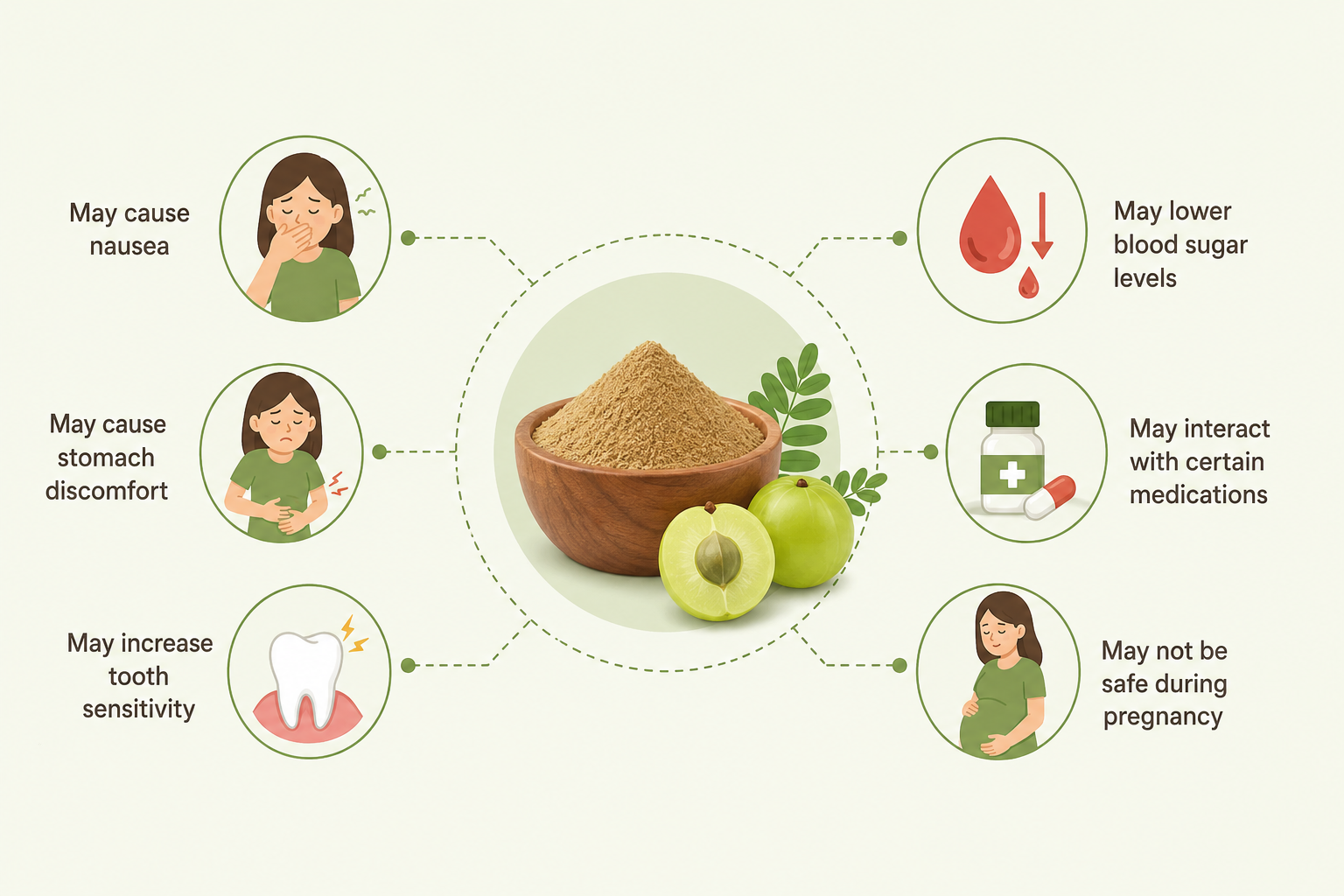
Amla powder side effects may include stomach discomfort, nausea, loose stools, or acidity in some people, particularly when large amounts are consumed. Individual tolerance varies. If you experience persistent symptoms after taking amla powder, stop using it and speak with a healthcare professional.
Amla Side Effects on Liver
Questions about amla side effects on liver are common, particularly when people use concentrated supplements. Amla as a food is generally different from taking high-dose extracts or multiple herbal products. There is not strong evidence that ordinary dietary amounts of amla damage a healthy liver. However, people with liver disease should avoid self-treating with concentrated herbal products and should discuss supplementation with their doctor.
Side Effects of Drinking Amla Juice Daily
The side effects of drinking amla juice daily can depend on the amount, preparation, and whether other ingredients are added. Large quantities may cause digestive symptoms or acidity in some individuals. Commercial amla drinks may also contain added sugar.
Amla Side Effects on Kidney
Concerns about amla side effects on kidney health should be considered individually. Amla is a food, but concentrated supplements may provide nutrients or compounds in amounts that differ from normal dietary consumption. People with kidney disease, a history of kidney stones, or dietary restrictions should ask a healthcare professional before regularly using concentrated amla products.
FAQs
1. Can I eat one amla every day?
For most healthy people, amla can be included as part of a balanced diet. One fresh amla is a reasonable food serving, but individual dietary needs vary.
2. What are the main amla powder benefits for skin?
Amla powder contains vitamin C and antioxidant compounds that support general nutrition and normal collagen production. However, topical amla products may irritate sensitive skin.
3. What are the common amla powder side effects?
Some people may experience stomach discomfort, nausea, loose stools, or acidity, especially after consuming large amounts or concentrated preparations.
4. Is drinking amla juice daily safe?
Moderate amounts may be tolerated by many healthy adults, but daily consumption can cause digestive discomfort in some people. Check for added sugar and avoid excessive quantities.
5. Can amla affect the liver or kidneys?
There is no strong evidence that normal dietary amounts of amla harm a healthy liver or kidneys. People with liver or kidney conditions should consult a healthcare professional before using concentrated amla supplements regularly.
Reference
https://www.webmd.com/diet/health-benefits-amla
https://www.sciencedirect.com/science/article/abs/pii/S245201442030234X


No Comments