
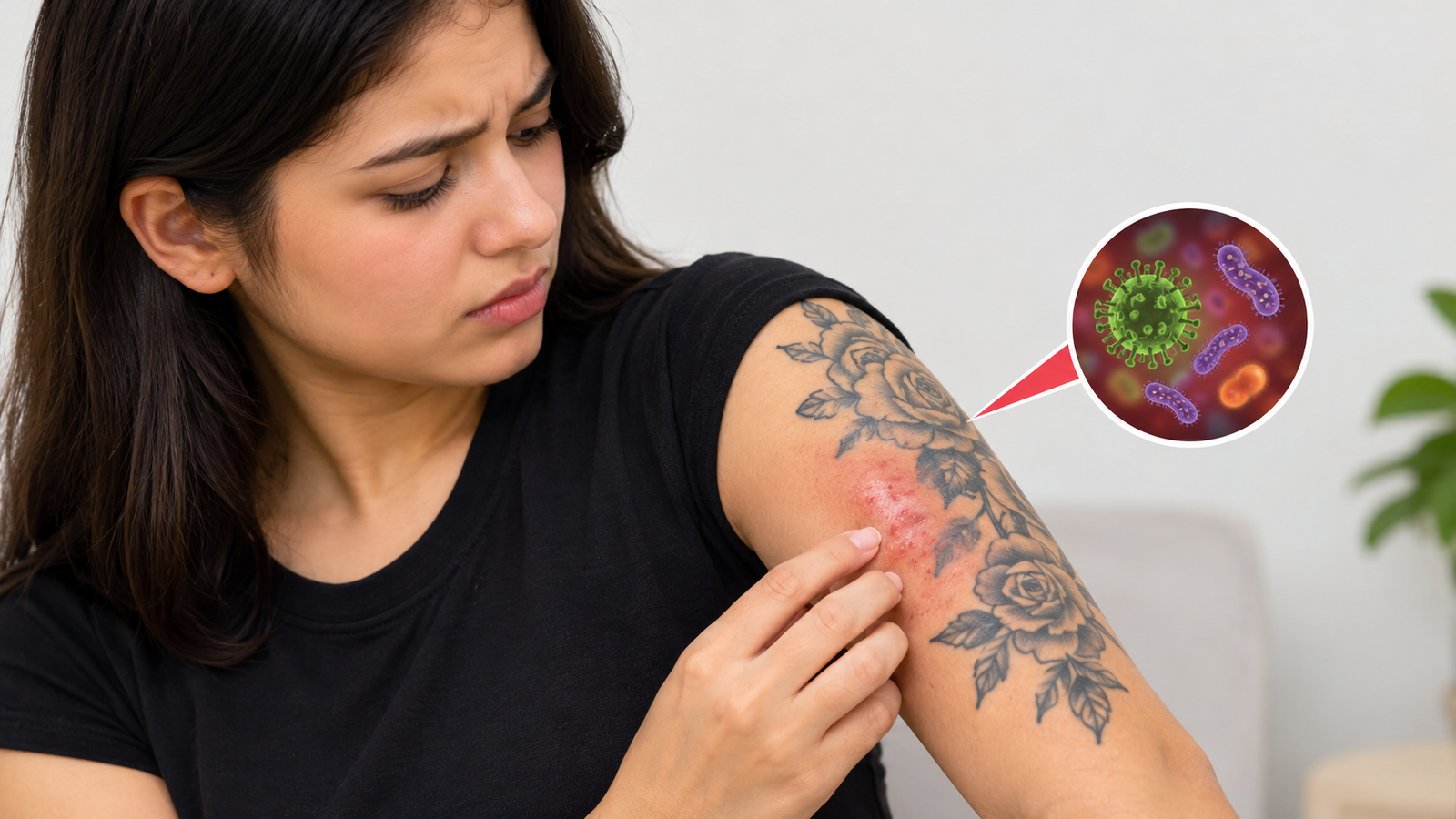
Tattoos can lead to both short-term and long-term health issues. Although many people get tattoos without serious complications, piercing the skin and introducing foreign pigments into the body can pose several health risks.
In this article, we explore common tattoo side effects, potential cancer concerns, effects on blood, and important safety precautions.
What Are the Common Tattoo Side Effects?
Getting a tattoo involves inserting ink into the skin using needles. This process creates a controlled skin injury, so some temporary reactions are normal. However, some symptoms may be signs of an underlying complication.
Common tattoo side effects include:
-
Skin irritation: Redness, swelling, tenderness, and mild discomfort are common shortly after tattooing.
-
Allergic reactions: Some people develop itching, rashes, or raised bumps in response to tattoo pigments. Red ink is associated with certain pigment-related reactions.
-
Skin infections: Unsterile needles, contaminated ink, or poor aftercare can introduce bacterial infections into the skin.
-
Scarring: Improper healing or excessive skin inflammation may result in raised scars or keloids.
-
Delayed healing: Scratching, picking, or exposing a new tattoo to contaminated water can interfere with healing.
These are some of the main tattoo disadvantages to consider before making a decision. Seek medical attention if you experience spreading redness, worsening pain, pus, fever, or increasing swelling.
Can Tattoos Cause Cancer?
The question Can tattoos cause cancer has attracted scientific attention because tattoo ink contains pigments and other substances that may remain in the body for many years.
Some tattoo inks contain compounds that have raised toxicological concerns, including certain aromatic compounds, metals, and pigment breakdown products. However, the presence of a potentially harmful substance does not automatically mean that a tattoo will cause cancer.
Understanding Tattoo and Cancer Research
Research into the relationship between tattoos and cancer is ongoing. Scientists are examining whether tattoo pigments or their breakdown products may contribute to long-term health effects.
Some studies have reported associations between tattoos and particular cancers, including malignant lymphoma. An association means that two factors occur together more often in a study; it does not prove that one causes the other. Results can also be affected by factors such as age, lifestyle, exposure history, and differences in study design.
At present, there is insufficient evidence to conclude that tattoos directly cause cancer. More long-term research is needed to understand whether certain inks, pigment types, or tattoo characteristics influence cancer risk.
Tattoo Ink and Lymph Node Cancer: What Do We Know?
After a tattoo is applied, some ink particles can move from the skin into nearby lymphatic vessels and accumulate in lymph nodes. Lymph nodes are small structures that help the immune system identify and respond to infections and other foreign substances.
This process has raised questions about tattoo ink and lymph node cancer.
Researchers have investigated whether tattoo pigments in lymph nodes might contribute to inflammation or other biological changes. Some studies have reported a possible association between tattoos and malignant lymphoma, but the evidence remains limited and does not establish a direct cause-and-effect relationship.
Can Tattoos Increase the Risk of Lymphoma?
The question Can tattoos increase the risk of lymphoma remains under investigation. Some observational research has found an association, while other evidence is insufficient to establish a consistent relationship.
Could tattoos be associated with an increased risk of lymphoma? There may be a statistical association in some studies, but that is not the same as proving that tattoos cause lymphoma. Researchers need larger studies, longer follow-up periods, and better information about ink ingredients to determine whether any relationship is real and clinically significant.
People with tattoos should not assume they will develop cancer. If you notice a persistent, unexplained lump, swollen lymph nodes, night sweats, unexplained weight loss, or a prolonged fever, consult a healthcare professional. These symptoms can have many causes and do not automatically indicate lymphoma.
What Is the Tattoo Effect on Blood?
The tattoo effect on blood depends on factors such as hygiene, the condition of the skin, and the person’s overall health. Tattooing does not normally cause permanent changes to the blood, but unsafe practices can introduce infections into the bloodstream.
Potential concerns include:
-
Bloodborne infections: Reusing needles or using contaminated equipment can transmit infections such as hepatitis B, hepatitis C, and HIV.
-
Immune response: The body recognizes tattoo ink as foreign material and activates immune cells to respond to the pigments.
-
Temporary inflammation: The skin may become red, swollen, and tender while healing.
-
Rare complications: In some cases, a severe skin infection may spread to other parts of the body and lead to a more serious illness.
Choosing a professional tattoo artist who follows strict hygiene practices can help reduce these risks. Make sure new, sterile needles are used and that the artist follows appropriate infection-control procedures.
Can I Donate Blood After a Tattoo?
Yes, you can generally donate blood after getting a tattoo, provided you meet the blood donation service’s eligibility requirements.
Some blood donation services impose a waiting period after tattooing, particularly when the procedure was performed in a facility that does not meet their approved safety standards. Other services may permit donation sooner under specific conditions.
If you are wondering, Can I donate blood after tattoo, contact your local blood bank before donating. Eligibility rules vary by country, donation organization, and the circumstances of your tattoo.
In India, check the current eligibility requirements with an authorized blood bank or the relevant blood donation service. Always disclose recent tattooing when asked during the screening process.
FAQs
1. Can tattoos cause health problems?
Yes. Tattoos can cause skin infections, allergic reactions, scarring, and inflammation. Serious complications are less common when tattooing is performed hygienically and proper aftercare is followed.
2. Can tattoos cause cancer?
Current research has not established that tattoos directly cause cancer. Scientists are investigating possible long-term effects of tattoo pigments, but more evidence is needed to determine whether particular inks or tattoo practices affect cancer risk.
3. Is there a link between tattoos and lymphoma?
Some observational studies have reported an association between tattoos and malignant lymphoma. However, the findings do not prove that tattoos cause lymphoma, and further research is needed to clarify the relationship.
4. Does tattoo ink stay in the lymph nodes?
Yes. Some tattoo pigment particles can travel through the lymphatic system and accumulate in nearby lymph nodes. This is a recognized process, but its long-term health significance is not yet fully understood.
5. Can I donate blood after getting a tattoo?
Yes, in many cases. However, waiting periods and eligibility requirements vary between blood donation services. Contact your local blood bank to confirm when you can safely donate.
Reference
https://pmc.ncbi.nlm.nih.gov/articles/PMC11739707/
0 200
No Comments