
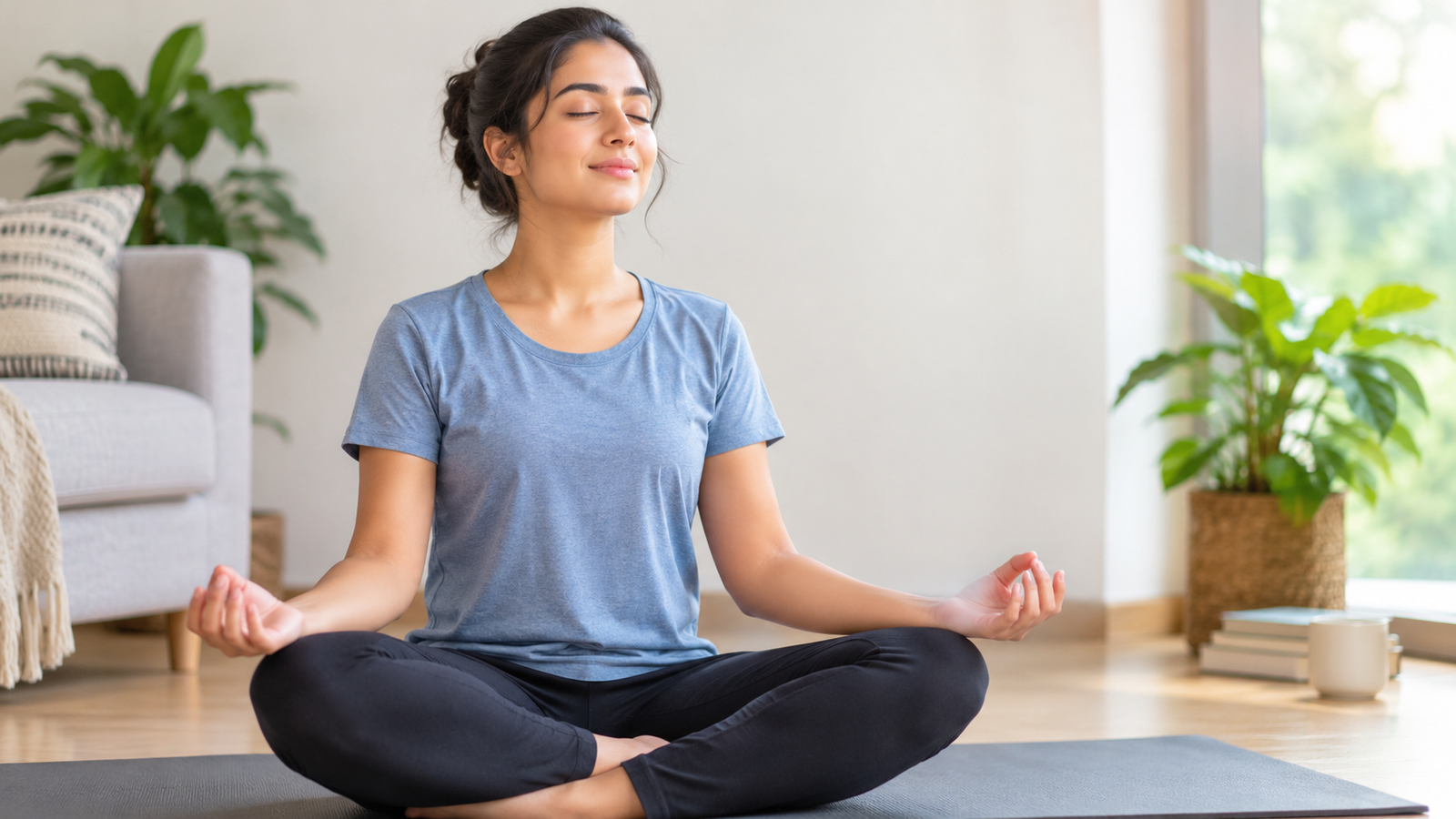
Stress is a normal part of life, but constant stress can leave you feeling mentally exhausted, distracted, and unable to relax. Mindfulness is a simple technique that can help you manage stress by focusing on the present moment and observing your thoughts and feelings without judgment.
Mindfulness can help manage stress by promoting relaxation, potentially reducing cortisol levels, and teaching your mind to focus on the present rather than reacting impulsively to anxious or overwhelming thoughts
How can mindfulness help you manage stress?
So, how can mindfulness help you manage stress? Instead of reacting immediately to stressful thoughts, mindfulness helps you take a moment to observe your thoughts, understand your emotions, and notice your body’s responses. You learn to pause, observe your thoughts, and respond more calmly.
This can be useful when you’re dealing with high blood pressure, relationship problems, busy schedules, or everyday worries. Mindfulness doesn’t remove stressful situations, but it can change how you respond to them.
This is one reason mindfulness for stress management has become a popular approach for people looking for practical ways to manage everyday pressure.
7 simple mindfulness techniques for stress relief
1. Practice mindful breathing
Mindful breathing is an easy way to begin practicing mindfulness. Find a comfortable position, loosen your shoulders, and concentrate on your breathing. Notice the sensation of air flowing into and out of your body with each breath. Whenever your thoughts drift away, calmly bring your focus back to your breathing.
Even a few minutes of focused breathing can give you a short break from stressful thoughts. It is also an easy mindfulness exercise for stress because you can practice it almost anywhere.
2. Try a body scan
A body scan is a mindfulness technique that involves focusing on different parts of your body one at a time and paying attention to the sensations you notice. Start with your feet and gradually move your attention upward toward your head.
Notice sensations such as tension, warmth, pressure, or relaxation without trying to change them.
This exercise can help you identify areas of tension in your body when you feel stressed. It is a useful example of mindful techniques for stress because it connects your attention to physical sensations rather than allowing your mind to remain focused on worries.
3. Take a mindful walk
You can practice mindfulness while walking by noticing your surroundings and keeping your attention on the present moment.
Notice the movement of your feet, the rhythm of your breathing, the temperature of the air, and the sounds around you. Try not to rush. Mindful walking is particularly useful if sitting meditation feels difficult.
It is an easy mindfulness exercise for stress that you can naturally include in your everyday routine.
4. Practice mindful thinking
Mindfulness thinking doesn’t mean trying to stop negative thoughts. Instead, you learn to notice thoughts without immediately believing or reacting to them.
For example, instead of thinking, “Everything is going wrong,” you might notice, “I’m having a stressful thought right now.”
This simple shift can help you step back from your thoughts and view them more objectively. Over time, this awareness may help you respond to difficult situations with greater clarity.
5. Use active mindfulness
Mindfulness doesn’t have to mean sitting quietly with your eyes closed. Active mindfulness involves bringing your attention fully to whatever you’re doing.
You can practice it while washing dishes, eating lunch, exercising, gardening, or even taking a shower.
Focus on the sights, sounds, smells, textures, and physical sensations involved in the activity. This turns ordinary moments into opportunities for mindfulness and relaxation techniques.
6. Try a short meditation
Meditation is another practical tool for mindfulness for stress reduction. Start with five minutes rather than expecting yourself to meditate for a long period.
Sit comfortably and focus on your breathing. When thoughts arise, notice them without judgment and calmly bring your focus back to your breathing.
There are many mindfulness methods available, so experiment with different approaches to find one that feels comfortable and realistic for your lifestyle.
7. Combine mindfulness with gentle movement
Gentle stretching, yoga, and mindful movement can combine physical activity with present-moment awareness.
Some people explore MBSR yoga as part of a broader mindfulness routine. Mindfulness-Based Stress Reduction (MBSR) is a structured program that combines mindfulness meditation with other techniques to help people recognize stress and respond to it with greater awareness.
You don’t need to follow a formal program to benefit from mindful movement. Simple stretching while paying attention to your breathing and body sensations can be a good place to start.
Mindfulness practices for stress and anxiety
There isn’t one perfect mindfulness routine for everyone. Some people prefer breathing exercises, while others enjoy walking, meditation, yoga, or body scans.
The key is consistency. Practicing for five or ten minutes each day may be easier to maintain than trying to complete a long session once a week.
You can also combine several mindfulness stress reduction techniques. For instance, practice mindful breathing in the morning, enjoy a brief mindful walk during lunch, and take five minutes before bed to do a body scan.
These simple habits can help you incorporate mindfulness into your daily routine without making it feel like an extra responsibility.
What is mindfulness-based stress reduction?
Mindfulness-Based Stress Reduction (MBSR) is a structured mindfulness program developed to teach practical skills for managing stress. It commonly includes mindfulness meditation, body awareness, and mindful movement.
MBSR is often discussed when people search for mindfulness for stress management because it provides a more organized approach than practicing individual exercises on your own.
If you’re considering MBSR or using mindfulness for significant anxiety or ongoing stress, a qualified healthcare or mental health professional can help you decide what approach is appropriate.
FAQs
1. How Can Mindfulness Help You Manage Stress?
Mindfulness helps you notice stressful thoughts, emotions, and physical sensations without immediately reacting to them. This can help you pause, become more aware of your response, and approach stressful situations more calmly.
2. What is the best mindfulness exercise for stress?
There isn’t one exercise that works best for everyone. Mindful breathing is a good starting point because it’s simple, requires no equipment, and can be practiced almost anywhere.
3. How often should I practice mindfulness for stress relief?
Consistency is more important than long sessions. Try practicing for five to ten minutes a day and gradually increase the time if it feels comfortable.
4. Can mindfulness help with stress and anxiety?
Mindfulness practices may help people become more aware of anxious thoughts and physical tension. Mindfulness practices for stress and anxiety can include breathing exercises, meditation, body scans, and mindful movement.
5. What is MBSR therapy?
MBSR stands for Mindfulness-Based Stress Reduction. It is a structured program that teaches mindfulness meditation, body awareness, and related practices to help people develop skills for managing stress.
Reference
https://www.mayoclinic.org/tests-procedures/meditation/in-depth/mindfulness-exercises/art-20046356
https://pubmed.ncbi.nlm.nih.gov/28863392/
0 200
No Comments