
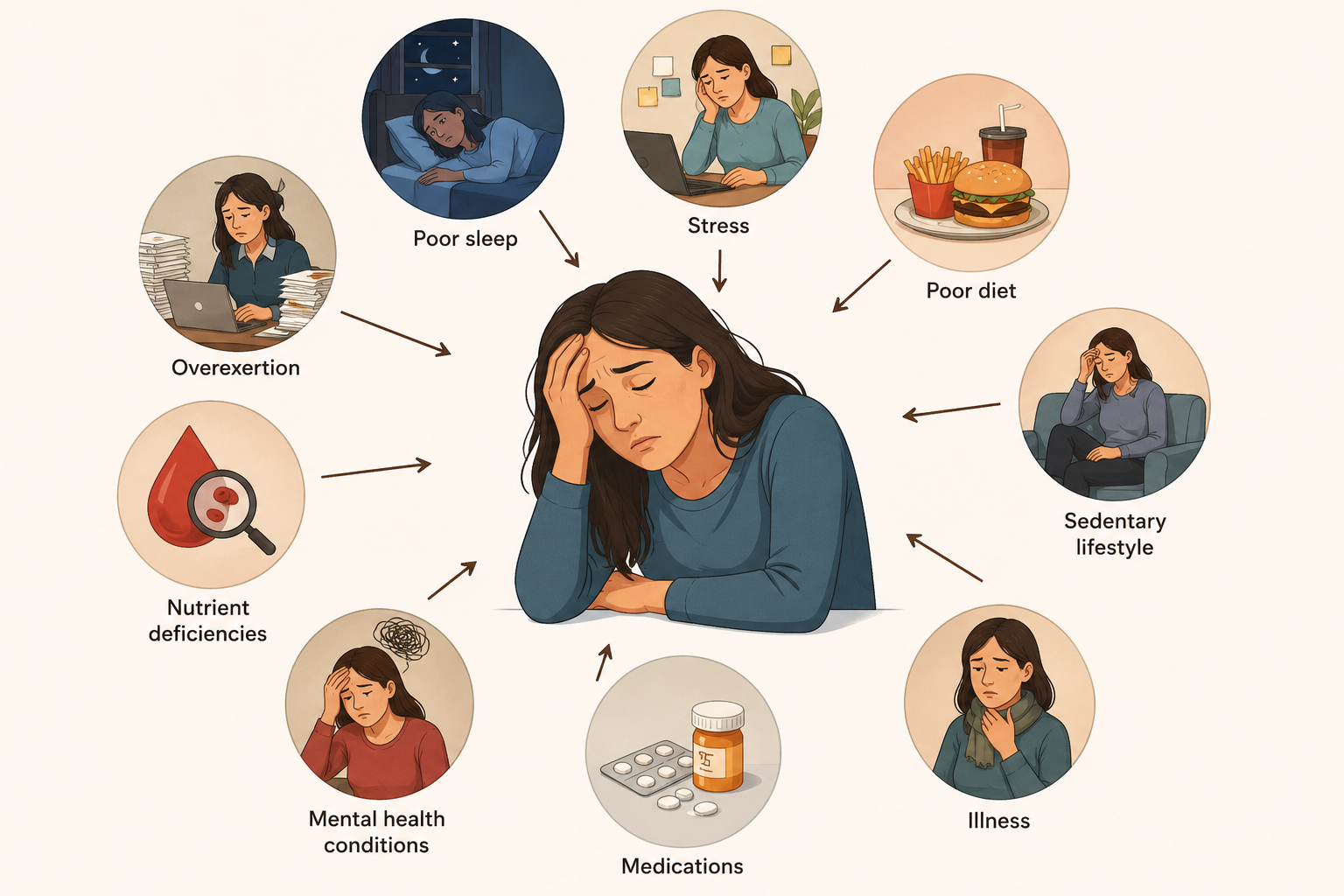
Fatigue is more than just feeling sleepy after a long day. It is a persistent lack of energy that can affect your physical performance, mental focus, and overall quality of life. While occasional tiredness is normal, ongoing fatigue may signal an underlying health issue or lifestyle factor that needs attention. Understanding the various fatigue causes can help you identify the root problem and take steps toward improving your energy levels.
What Is Fatigue?
Fatigue is a condition characterized by extreme tiredness, weakness, and a lack of motivation. Unlike normal tiredness, fatigue does not always improve with rest. It can interfere with daily activities, work productivity, and personal relationships. Many people experience fatigue symptoms such as difficulty concentrating, muscle weakness, headaches, and reduced stamina.
Common Fatigue Causes
1. Poor Sleep Quality
One of the most common causes of fatigue is inadequate or poor-quality sleep. Adults typically need around seven to nine hours of restful sleep per night to function at their best. Sleep disorders such as insomnia, sleep apnea, and restless leg syndrome can prevent restorative sleep, leaving you exhausted during the day.
2. Stress and Mental Health Issues
Chronic stress, anxiety, and depression can significantly drain your energy reserves. Emotional strain often leads to disrupted sleep patterns and reduced motivation. Many individuals experiencing stress also report mental fatigue symptoms such as difficulty concentrating, forgetfulness, irritability, and reduced productivity.
3. Nutritional Deficiencies
A lack of essential nutrients can contribute to persistent fatigue. Deficiencies in iron, vitamin B12, vitamin D, and magnesium are frequently associated with low energy levels. Poor nutrition can also lead to weakness and fatigue causes that affect both physical and mental performance.
4. Dehydration
Even mild dehydration can reduce energy levels and impair cognitive function. Not drinking enough water may result in fatigue symptoms, including headaches, dizziness, and decreased alertness.
5. Lack of Physical Activity
While exercise requires energy, regular physical activity actually helps boost stamina and reduce fatigue. A sedentary lifestyle can make you feel sluggish and contribute to ongoing tiredness.
Medical Conditions Linked to Fatigue
Anemia
Anemia occurs when the body lacks enough healthy red blood cells to carry oxygen effectively. Common symptoms include weakness, dizziness, shortness of breath, and fatigue.
Thyroid Disorders
When the thyroid gland is not functioning properly, energy levels can suffer. In particular, hypothyroidism slows metabolism, making people feel constantly tired while also contributing to weight gain and sensitivity to cold weather
Kidney Disease
Chronic kidney disease can result in toxin buildup and anemia, both of which contribute to fatigue. Some common renal fatigue symptoms include persistent tiredness, swelling in the legs, poor concentration, and decreased physical endurance.
Diabetes
High or unstable blood sugar levels can cause fatigue by preventing the body’s cells from efficiently using glucose for energy. Frequent thirst, increased urination, and blurred vision may accompany fatigue.
Heart Disease
When the heart struggles to pump blood efficiently, less oxygen reaches the body’s tissues. This can lead to fatigue, weakness, and shortness of breath during routine activities.
Fatigue Causes in Men
Several factors contribute specifically to fatigue causes in males. Hormonal changes, particularly low testosterone levels, can reduce energy, muscle strength, and motivation. Because sleep apnea is more common in men, it can be a hidden cause of fatigue that often goes unrecognized. Additionally, work-related stress, poor diet, and chronic health conditions can be significant fatigue causes men should not ignore.
Pregnancy and Fatigue
Persistent tiredness is among the most common and earliest signs that a woman may be pregnant. Hormonal changes, increased blood production, and the body’s efforts to support fetal development can lead to exhaustion. Common fatigue symptoms of pregnancy include increased sleepiness, reduced stamina, mood changes, and difficulty completing routine tasks. Fatigue often improves during the second trimester but may return later in pregnancy.
Muscle and Eye Fatigue
Muscle Fatigue Causes
Overexertion, dehydration, electrolyte imbalances, and certain medical conditions can contribute to muscle fatigue causes. Muscle fatigue occurs when muscles lose their ability to generate force efficiently, leading to weakness, soreness, and reduced physical performance.
Eyes Fatigue Causes and Symptoms
Extended screen time, poor lighting, and uncorrected vision problems are common eyes fatigue causes and symptoms. People experiencing eye fatigue may notice blurred vision, dry eyes, headaches, eye discomfort, and difficulty focusing. Taking regular breaks and maintaining proper screen distance can help reduce symptoms.
Heat-Related Fatigue
Hot weather and excessive physical activity in high temperatures can lead to heat exhaustion. Common heat fatigue symptoms include excessive sweating, dizziness, weakness, headache, nausea, and rapid heartbeat. Staying hydrated and avoiding prolonged exposure to extreme heat are important preventive measures.
Signs You Should Seek Medical Attention
While occasional tiredness is normal, consult a healthcare professional if fatigue:
- Persists for several weeks or longer
- Interferes with daily activities
- Occurs alongside unexplained weight loss
- Is accompanied by chest pain or breathing difficulties
- Causes severe weakness or dizziness in adults
- Develops without an obvious explanation
Early medical intervention can improve outcomes by identifying and treating the root cause of fatigue.
How to Reduce Fatigue Naturally
You can often improve energy levels by making healthy lifestyle changes:
- Get 7–9 hours of quality sleep each night.
- Follow a balanced diet rich in fruits, vegetables, lean proteins, and whole grains.
- Stay hydrated throughout the day.
- Exercise regularly to improve stamina and circulation.
- Manage stress through meditation, relaxation techniques, or counseling.
- Limit excessive caffeine and alcohol consumption.
- Give your eyes frequent rest periods during screen use to reduce fatigue and discomfort.
Conclusion
Fatigue can result from many factors, including poor sleep, stress, nutritional deficiencies, and underlying medical conditions. Recognizing fatigue symptoms and understanding potential causes can help you take the right steps toward recovery. From excessive fatigue causes and muscle weakness to eye strain and pregnancy-related tiredness, identifying the underlying issue can help restore energy, improve daily functioning, and promote better overall health.
FAQs
1. What are the most common fatigue causes?
The most common fatigue causes include poor sleep, stress, dehydration, nutritional deficiencies, lack of exercise, and medical conditions such as anemia, thyroid disorders, and diabetes.
2. What are common mental fatigue symptoms?
Mental fatigue symptoms often include difficulty concentrating, forgetfulness, lack of motivation, irritability, reduced productivity, and trouble making decisions.
3. What are the main fatigue causes in males?
Fatigue causes in males commonly include low testosterone levels, sleep apnea, stress, poor diet, lack of exercise, and chronic health conditions.
4. What are common fatigue symptoms of pregnancy?
Fatigue symptoms of pregnancy may include excessive tiredness, increased sleepiness, low energy, mood changes, and reduced physical endurance, especially during the first trimester.
5. When should I see a doctor for fatigue?
You should seek medical advice if fatigue lasts several weeks, worsens over time, interferes with daily activities, or occurs alongside symptoms such as weight loss, chest pain, or shortness of breath.
Reference
https://my.clevelandclinic.org/health/symptoms/21206-fatigue
https://pmc.ncbi.nlm.nih.gov/articles/PMC8579431/
0 200

No Comments